Hal Jordan Might Be Training His Greatest Threat | Lanterns Episode 2 Explained
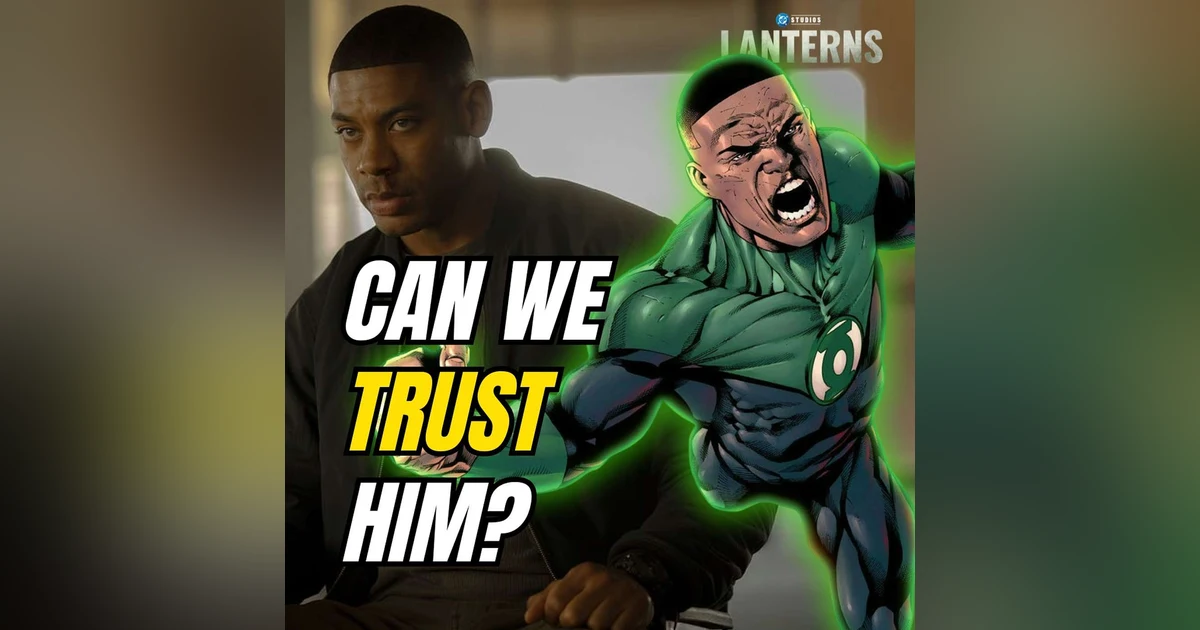
Can you trust a mentor who constantly criticises you, keeps information from you and knows you're being trained to replace him? In this deeper analysis of Lanterns Episode 2, “Trust Fall,” Aaron explores the evolving relationship between John Stewart and Hal Jordan and why trust—not willpower—may be the most important challenge facing both Green Lanterns. John's strange bird construct reveals just how much potential he possesses, but what he really wants from Hal isn't another lesson—it's r...


 RSS Feed
 Can you trust a mentor who constantly criticises you, keeps information from you and knows you're being trained to replace him?
In this deeper analysis of Lanterns Episode 2, “Trust Fall,” Aaron explores the evolving relationship between John Stewart and Hal Jordan and why trust—not willpower—may be the most important challenge facing both Green Lanterns.
John's strange bird construct reveals just how much potential he possesses, but what he really wants from Hal isn't another lesson—it's recognition. When John is abducted and warned not to trust Hal, he ultimately makes the episode's defining choice: “I report to you.” John makes himself vulnerable without knowing what Hal will do with that trust.
But Hal then makes a fascinating choice of his own. Instead of going to the Guardians, he seeks help from his former mentor, Sinestro. We explore how Sinestro immediately targets Hal's insecurity about being replaced, why mentors have enormous influence over how we see ourselves and others, and whether Hal will eventually view John's growth as his greatest achievement—or as a threat.
Ultimately, Trust Fall asks a bigger question about mentorship: can you prepare someone to replace you without resenting them when they finally become your equal?
#Lanterns #GreenLantern #JohnStewart
In This Episode
Why Trust Fall is the perfect title for Episode 2
John Stewart's mysterious Green Lantern bird construct
How John's abilities connect to his comic-book history
Why John desperately wants Hal's approval
The psychology behind trust and mentorship
Ability, benevolence and integrity in trusting relationships
What Hal Jordan's lonely home reveals about him
Anton and the Manhunter threat
Why John ignores Anton's warning and trusts Hal
The importance of John's “I report to you” moment
Why Hal doesn't report to the Guardians
Sinestro's arrival and his history as Hal's mentor
How Sinestro manipulates Hal's fear of being replaced
Why John Stewart's growth threatens Hal's identity
John's relationship with authority
Why good mentors eventually make themselves unnecessary
The real-life lesson behind Trust Fall
Chapters
00:00 Can John Stewart Really Trust Hal Jordan?
01:28 John Stewart's Mysterious Bird Construct
03:42 The Psychology of Trust & Mentorship
05:22 What Hal Jordan's Lonely Life Reveals
06:10 The Manhunter Threat & Anton's Ultimatum
06:58 John Stewart Chooses to Trust Hal
08:06 Why Hal Jordan Turns to Sinestro
09:27 Sinestro Begins Manipulating Hal
11:02 The Dangerous Power of an Old Mentor
12:14 John Stewart Learns to Question Authority
13:22 Hal Jordan's Biggest Mentorship Problem
16:02 The Real Meaning of Trust Fall
Question of the Week
Who has the bigger trust fall ahead of them?
Is it John Stewart, trusting a mentor who continually keeps him at arm's length?
Or Hal Jordan, trusting John enough to stop seeing him as his replacement and start seeing him as his equal?
Let me know in the comments.
Keywords
Lanterns, Lanterns Episode 2, Lanterns Episode 2 explained, Lanterns Episode 2 analysis, Lanterns Trust Fall, Trust Fall explained, Green Lantern, John Stewart, Aaron Pierre John Stewart, Hal Jordan, Kyle Chandler Hal Jordan, Sinestro, Lanterns Sinestro, Hal Jordan Sinestro, John Stewart Hal Jordan, Green Lantern DCU, Lanterns HBO, Lanterns DCU, Manhunters, Lanterns Manhunters, Green Lantern Corps, Guardians of the Universe, John Stewart bird construct, John Stewart powers, Hal Jordan mentor, Green Lantern analysis, Lanterns theories, DCU, DC Studios, Fandom Portals
Contact Us:
Website: https://www.fandomportalspodcast.com/
YouTube: https://www.youtube.com/@FandomPortals
Instagram: https://www.instagram.com/aaron_fandomportals/?locale=en Threads: https://www.threads.com/@aaron_fandomportals
TikTok: https://www.tiktok.com/@aaron_fandomportals
Email: fandomportals@gmail.com
Letterboxd: https://letterboxd.com/fandomportals
Discord: https://discord.gg/7Q4TAmSP
00:00 - Trust As A Risky Choice
01:34 - The Green Bird And Approval
06:10 - Anton’s Warning And John’s Decision
08:00 - Sinestro Reframes John As A Threat
16:20 - What Trust Looks Like In Real Life
18:18 - The Big Question And Farewell
Trust As A Risky Choice
SPEAKER_00Would you trust someone who constantly criticizes you? Someone who barely teaches you, keeps information from you, and seems almost annoyed that you're supposed to replace him. Because that's exactly what's happening with Jon Stewart in episode two of Lanterns. And that's why I think Trustful is the perfect title. John doesn't trust Hal because he simply becomes a great mentor. He trusts him while there is still a genuine possibility that Hal could let him down. And maybe that is what trust actually is. Not knowing somebody will catch you, but deciding they're worth falling for. Welcome to the Fandom Portals Podcast, the show that proves that the biggest pop culture movies have something to teach you. I'm Aaron, a teacher and a film fan, and today we're looking at episode two of Lanterns. Appropriately titled Trust Fall, because while Hal and John spend a surprising amount of this runtime of the episode apart, their relationship actually gets stronger throughout. And John wants a mentor who takes that job seriously, and Hal seems reluctant to actually mentor his replacement. But underneath Hal's sarcasm and hazing, we're actually starting to see some genuine concern, which I love. And by the end of the episode, John makes one really huge decision. He chooses to trust Hal. If you enjoy deeper conversations about the stories and fandoms we are in love with, then please subscribe to the Phantom Portals on YouTube or follow the podcast on Spotify and Apple Podcasts. Full spoilers from here on ahead for episode two of Lanterns and also the Lanterns series in general.
The Green Bird And Approval
SPEAKER_00The episode of Lanterns, episode two Trustful, actually starts with something very, very simple. It starts with a very small bird. And throughout this episode, Hal is supposedly training John. I say supposedly because Hal's approach to mentoring appears to be giving John just enough information to help him survive and then seeing what happens after that. John wants to learn to fly. Fair enough. He's a Green Lantern. Flying feels fairly important for someone with that job description. Hal's advice is essentially fly. Just do it. And John tries, and he doesn't fly. Instead, he accidentally creates a small green bird. At first, it looks like another mistake until John removes that ring and the bird stays. It continues following him throughout the episode, and Hal immediately understands that what John has done isn't normal. Maintaining a construct like this is extremely difficult, particularly for somebody this inexperienced in the Green Lantern's core. And this actually connects really nicely to Jon Stewart's comic books history. John was created by Danny O'Neill and Neil Adams in Green Lantern 87 in 1971. In the comic books, John is an architect, and that eventually becomes a defining feature of the way he creates his constructs. DC has said multiple times before that John creates his constructs as if they're being built from the inside out. He imagines the structure, the internal components, the engineering. That's how John's mind works. This John hasn't built a structure. He's created something that almost feels alive. It looks alive. And what I find most interesting isn't simply the mystery of how he did it. It's his reaction to Hal. John wants Hal to recognize what he's accomplished, or at least at the end of the episode, he does. And Hal does so sarcastically. Normally John can brush Hal's comments off. Here it kind of actually gets under his skin because John doesn't want information from Hal anymore. He wants approval from him. He actually asks him, you know, would it be too much to give me a hoorah? And that's where mentorship becomes vulnerable for John. When you accept somebody as your mentor, part of what you're saying is your judgment matters to me. And psychologically, trust is often understood through three broad ideas, and that's ability, benevolence, and integrity. Psychologists sometimes say that they developed this influential model of organization in trust in the 1990s. And it says ability is something that says, can this person actually do what I'm trusting them to do? Benevolence asks, do I believe this person genuinely wants something good for me? And integrity says, Does this person behave according to principles that I myself can believe in and rely on? John already trusts Hal'ability. That's never been a problem. Episode one established that. John says he respects him, and he says he respects Hal because he's experienced, decisive, and in John's words, he's actually fearless. But benevolence is harder. Does Hal actually want John Stewart to succeed? I'm not too sure. Because he doesn't behave like a conventional mentor, he withholds praise. He constantly tests John. He's sarcastic, and John knows that the ultimate purpose of his training is actually succession. John is being prepared for a world where Hal Jordan is no longer the Green Lantern, and that creates tension immediately. But episode two gives us little indications that Hal actually cares considerably more than he is actually admitting, because he immediately recognizes the importance of John's bird. He tells John to keep it alive, and as far as we know, he hasn't reported this unusual ability to the Guardians yet. We don't know why he hasn't, but maybe he's protecting John. Maybe he's suspicious. Maybe there's something else going on, but Hal is paying attention. And what Hal sends John to his house to retrieve, the Green Lantern power battery. John gets something Hal hasn't deliberately given him yet. He gets some context. Hal's house is enormous, beautiful, full of evidence of his extraordinary life as the Green Lantern. It's got Green Lantern uniforms, it's got objects connected to his past, and obviously, and also has Earl, his carnivorous plant, but there is something noticeably absent, and that is people. There's no obvious partner, no obvious family, very little evidence of any genuine connection at all. After Kerry's comment in episode one that Hal isn't feel as he's lonely, this house suddenly matters. John knows the legend. Now he's starting to see the man. And I think that's important because trust often grows when we get more context for somebody's behavior. Context doesn't excuse someone's shitty behavior, but it can make them easier
Anton’s Warning And John’s Decision
SPEAKER_00to understand. And then John gets abducted. The group that takes him is led by Anton. They show John what happened to their civilization. A manhunter destroyed their world. And that's a significant Green Lantern reference. Before the Guardians created the Green Lantern Corpse, they created the Manhunters, artificial peacekeepers, machines designed to impose order. Like a lot of the Guardians' brilliant ideas, it went catastrophically wrong. Anton believes another manhunter is hiding in Rushville. John gets 48 hours to find it. If he doesn't, Anton's people are prepared to destroy Rushville to make the Manhunter show itself and be sure that it doesn't escape. By then they give John another instruction, and this one's the most interesting one. Don't tell Hal. And that's where John actually trustful begins, the falling of his trust. Because John has plenty of reasons to keep quiet. Hal keeps secrets from him all the time. He knows that. Hal doesn't fully explain the Guardians. He still treats him more like an inconvenience than a partner. And now John has just been told that the Guardians themselves may have hidden something incredibly dangerous on Earth. But John comes back and tells Hal everything. Why does he do that? John explains it in one incredibly important line. I report to you. That's the moment this episode turns for me. John doesn't say I report to the Guardians. He doesn't say you outrank me, so I have to tell you. He's making a choice. Anton tells him not to trust Hal. John decides that he will. That's the trustful. Because trust isn't certainty. If John knew exactly how Hal would react, there wouldn't be much vulnerability involved now, would there? Trust requires the possibility that the other person might disappoint you, but John tells him anyway. And that's an important shift in their relationship, or at least on John's part. John entered this series wanting Hal to be his mentor. Here, he's starting to treat Hal as his
Sinestro Reframes John As A Threat
SPEAKER_00partner. But what happens next shows us that trust is much more complicated than simply choosing the right person because John trusts Hal, and Hal immediately goes to someone he trusts, Sinestro. The ending of Trust Fall finally gives us Ulrich Thompson's Sinestro, and I think introducing him in this particular episode is incredibly deliberate. John has just made himself vulnerable to Hal. He tells him about Anton, the Manhunters, the threat to Rushville, and the possibility that the Guardians know more than they're admitting. Hal doesn't go straight to the Guardians with this. That's interesting by itself. Both men talk about reporting to the Guardians, and they say it throughout this episode quite a bit, but Hal doesn't. We know John doesn't. And for whatever reason, there's still already some disillusionment there. Instead, Hal goes to his old mentor, and this is where the mentorship theme gets much bigger. It gets much muddier. Hal has spent two episodes acting like having a student is the most irritating thing that's ever happened to him, but the moment he doesn't know what to do, he goes looking for his own teacher, his own teacher in Sinestro. And that relationship is deeply rooted in the Green Lantern mythology. Sinestro was introduced by John Broom and Gil Kane in Green Lantern No. 7 in 1961. But later, Green Lantern stories expanded his history enormously, especially through the Jeff Johns run Green Lantern's Secret Origins, which ran through Green Lantern 29 to 35 in 2008. Sinestro becomes an important figure in Hal's early development. Sinestro is experienced. He's powerful, he's knowledgeable, and for a young Hal Jordan, he's definitely someone worth listening to. Which makes what Sinestro does in episode two much more dangerous. Hal asks about the manhunters, and Sinestro redirects the conversation immediately towards John. He suggests that if a manhunter is a threat, it might even be the fact that Hal's biggest threat is somewhere else. Then he starts talking about John Stewart. Think about how effective that is. Sinestro doesn't need to invent Hal's insecurity. It's already there. Hal is reluctant to train John. He's resistant to succession. He spent two episodes treating John as the person coming to take something away from him. Then Sinestro simply points at that insecurity and gives it meaning. Maybe John isn't your student. Maybe John is your threat. We know from the trailer he says John's the replacement. And that is another side of trust that we don't talk about enough, is that trust doesn't only affect who we share information with, it affects how we interpret information. The people we can trust influence how we see everybody else. If someone whose judgment matters to you says, hey, watch that person. They're trying to replace you. Suddenly, ordinary behavior starts looking really suspicious. John disagrees with Hal. Maybe he's actually challenging him. John does something impressive with the ring, maybe he's becoming more dangerous. And then John gains more confidence. Maybe he's actually preparing for that takeover moment. Same behavior, different interpretation. All because Sinestro knows exactly how to talk to Hal because he helped shape him. That's the power of an old mentor. They know your strengths, but they also know the areas where you're vulnerable. Carl Chandler himself has described Sinestro as almost like a father figure to Hal, and that creates this fascinating generational chain. Sinestro mentored Hal, now Hal is mentoring John. There's one relationship, and it went disastrously wrong. Sinestro and Hal's relationship is at its end. John and Hal's relationship is at the beginning. And episodes two starts asking whether Hal is going to repeat the same mistakes because John has done something incredibly trusting. He ignored Anton's warning and told Hal the truth. Hal now has a choice. Does he reward that vulnerability? Or does Sinestro convince him that John's honesty is something he should fear? That's where trust becomes dangerous. Trust is powerful because we lower some of our defenses when we hear it. That also means the person we trust gains influence, and influence can guide us or it can manipulate us. Sinestro's greatest weapon in this scene isn't the yellow ring that he eventually gets. It's that Hal still cares what he thinks. I think this is where the episode moves the Hal and John relationship forward. Not because they're suddenly friends, they're absolutely not, no way. Hal is condescending, John is increasingly frustrated, they're still keeping things from one another, but John is beginning to make a decision between authority and trust. And that's important for this character because John starts the series incredibly rigid. He's procedural, he wants those rules, he wants hierarchy, he says himself he respects the chain of command. There's clear expectations. But now he has multiple authorities telling him different things. Anton says, Don't tell Hal. The Guardians sit above both Green Lanterns. Hal has his own authority over John, and John makes his own decision. He tells Hal. He unclenches, as it is said in this episode. That's actually very consistent with Jon Stewart's comic book beginnings. Back again to Green Lantern 87, Hal initially worries about John's distrust of authority. He questions whether John is the right person to become his backup. But during John's first mission, John Gemin demonstrates that his independent judgment is exactly what makes him valuable. He doesn't simply follow Hal, he assesses the situation himself. More than 50 years later, Lanterns is working with that very same idea. John isn't becoming a good Green Lantern by learning to obey Hal. He's becoming one by learning when Hal deserves to be trusted. And Hal has his own trustful to make as well, because mentorship is reciprocal. John has already already demonstrated vulnerability. The bird is actually a perfect small example of that. John creates something extraordinary. He wants Hal to notice. That's vulnerability. Then he walks through Hal's private life and begins understanding him better. Then he tells Hal about Anton, even after being explicitly warned not to. Each time John gives Hal a little more access, but Hal's challenge is different. He has to give up control. And that's much harder for him. A good mentor can't simply teach the student how to follow their judgment. Eventually, they have to trust the student to develop their own judgment as well. And this is exactly where Hal struggled in episode one. Hal knows how to be a Green Lantern. He is less comfortable with the idea that John might learn to be a Green Lantern differently to him. But John is already proving that he will. The bird proves that. His constructs don't behave like Hal's. His instincts aren't Hal Jordan's. His relationship with authority isn't Hal's either. And that's a good thing. The goal shouldn't be creating Hal Jordan 2.0. The goal is John Stewart. Studies on trust in mentoring consistently show that effective relationships require more than the mentor being competent. Reliability matters. Communication matters. Interest in the learner matters too. And critically, so does sharing control. That's where Hal still has work to do. He clearly has knowledge. He clearly has ability. And we're starting to see that care hiding well underneath the sarcasm brought to life by Carl Chandler. But John shouldn't have to decode every insult to find out whether his mentor actually believes in him or not. John doesn't need Hal constantly praising him, no. He just wants honest acknowledgement. He wants acknowledgement that he did something exceptional, and Hal struggles to give it at times. Maybe because praise creates equality, maybe because recognizing John's potential forces Hal to confront what that potential means. We don't know that yet. We don't know. But that's the emotional tension underneath this whole succession story. John's development means Hal becomes less necessary. That's what successful mentoring eventually does. The student starts dependent, then capable, then independent, and sometimes eventually they become your equal. That's the trustful. And the mentor has to take it. John's trustful is I'm going to tell Hal the truth, even though I can't control what he does with it. Hal's future trustful is going to be, I'm going to help John become powerful, even though I can't control what he becomes. And that's much harder. And so Nestro immediately threatens that process by whispering exactly the opposite message. Don't see John's growth as success, see it as danger. Which means this relationship could go one of two ways. He can treat John like his replacement, or he can start treating him like his partner. And John might have already made his choice. Now we need to see what Hal does with that trust.
What Trust Looks Like In Real Life
SPEAKER_00Now that brings us to our portal out segment, the part of Phantom Portals, where we leave the fictional universe behind and ask, what can we actually take back to our own universe? And I think Trustfall episode two gives us one really useful lesson, and that is that trust requires vulnerability. If there's no possibility of disappointment, there isn't much trust involved at all. That's why trust can feel uncomfortable. You're giving another person something they could potentially mishandle, misuse, information, responsibility, your reputation, your feelings, your dependence. John does exactly that. He can't guarantee Hal will believe him. He can't guarantee Hal won't tell the guardians. He can't even guarantee that Anton was wrong to warn him, but he tells Hal anyway. But trust also isn't blind obedience. John proves that too. He doesn't automatically trust Anton because Anton has that information. Hal shouldn't automatically trust Sinestro because Sinestro knows him well and knows about the manhunters. Healthy trust doesn't mean turning off your judgment. It means believing enough in another person's ability, intentions, and integrity that you're willing to become vulnerable to, while still thinking for yourself. And that matters enormously in mentorship. The student has to trust the mentor enough to say, I don't know. I made a mistake, I need help, or even, I think you're wrong. But the mentor has to become vulnerable too. They have to accept that one day the student might not need them. They might solve the problem differently. They might disagree. They might be much better at it than them. That's not mentorship failing, that's mentorship working. So maybe the real trust fall of lanterns isn't John learning to rely on Hal Jordan. John is already starting to do that. Maybe it's Hal learning that helping John Stewart become a great Green Lantern doesn't mean losing something. It means leaving something behind. And that makes Sinestro's warning incredibly important because Sinestro is encouraging Hal to see John's growth as that threat. So here's my question
The Big Question And Farewell
SPEAKER_00of the week. Who has the bigger trust fall ahead of them? Is it John Stewart trusting a mentor who consistently keeps him at arm's length? Or is it Hal Jordan trusting John enough to stop seeing him as his replacement and start seeing him as his equal? Let me know in the comments on YouTube. And if you're listening on Spotify, jump into the episode comments there and give me your answer as well. Because after episode two, I think John has already started falling. Now we need to see whether Hal is willing to catch him. If you enjoyed this deeper look at lanterns, then subscribe to the Phantom Portals on YouTube. And if you'd rather listen, follow the Phantom Portals podcast on Spotify and Apple Podcasts. We've got plenty more to unpack as the Manhunter Mystery Sinestro and the relationship between Hal and John continue to develop. I'm Aaron, keep learning, keep growing, and keep loving fandoms. And I'll see you guys through the next portal.


