Hal Jordan Took Everything From John Stewart | Lanterns Explained Episode 3


 RSS Feed
 Before Hal Jordan ever became Green Lantern, the ring came for John Stewart’s father. He admitted he was afraid—and spent years believing that one answer cost him the opportunity of a lifetime.
In this deeper analysis of Lanterns Episode 3, “Outcast,” Aaron explores how John Stewart’s childhood completely changes our understanding of his relationship with Hal Jordan. When the Stewart family discovers that John may one day receive the same opportunity his father lost, his childhood becomes preparation: control your fear, follow the mission and never make the same mistake.
But that preparation comes with a cost. John grows into someone disciplined, patient and incredibly controlled, while Hal develops in almost the opposite direction. Hal responds to trauma through action and instinct; John responds through preparation and control. Those differences eventually collide when Hal’s actions destroy John’s military career—without either man realising just how deeply connected their histories already are.
We also explore whether John truly feels no resentment toward Hal, why the Guardians may find John’s obedience appealing, the important parallel between John and the Manhunter*, and why becoming a great Green Lantern may require John to stop living out the unfinished ambitions of everyone around him.
Ultimately, Outcast asks a powerful question: is John Stewart becoming Green Lantern because it’s what he wants—or because his entire life has been built around correcting a failure that was never his?
#Lanterns #JohnStewart #GreenLantern
In This Episode
Why the Green Lantern ring originally chose John Stewart’s father
Why John Stewart Sr. believed fear cost him the ring
How Hal Jordan became a symbol of the Stewart family's lost opportunity
Why John’s parents began preparing him to become Green Lantern
How parental expectations shaped John’s childhood
Why young John’s artistic side matters to his future as Green Lantern
The significance of the Guardians supposedly watching John
Emotional regulation vs emotional suppression
Why Hal Jordan and John Stewart respond to trauma completely differently
How Hal’s intervention destroyed John’s military career
Why John claims he doesn’t resent Hal Jordan
How Hal becomes connected to two lost futures within the Stewart family
Why the Guardians may value John’s obedience
John Stewart’s comic-book history of challenging authority
The thematic connection between John’s obedience and the Manhunters
Why Hal and John may actually need each other
How resentment could threaten their partnership
What families unknowingly pass from one generation to another
Why John may eventually need to choose his own identity
The real meaning behind the question: “Are you afraid?”
Chapters
00:00 The Green Lantern Ring Chose John’s Father
02:09 John Stewart’s Green Lantern Interview
03:24 How Hal Jordan Became a Family Regret
05:23 John Stewart’s Childhood Becomes Training
07:28 Did John Learn to Control His Emotions?
09:34 Why Hal Jordan and John Stewart Are Opposites
13:30 How Hal Destroyed John’s Military Career
17:14 Does John Stewart Resent Hal Jordan?
19:15 Why the Guardians Really Want John Stewart
21:29 John Stewart, Authority & the Manhunters
23:24 The Real Meaning of John Stewart’s Childhood
Question of the Week
Do you think John genuinely doesn't resent Hal Jordan—or has he simply become incredibly good at preventing resentment from affecting his actions?
And did John's parents prepare him to become a great Green Lantern, or prepare him so intensely that part of becoming John Stewart will involve unlearning what they taught him?
Let me know in the comments.
Keywords
Lanterns, Lanterns Episode 3, Lanterns Episode 3 explained, Lanterns Episode 3 analysis, Lanterns Outcast, Outcast explained, John Stewart, John Stewart Green Lantern, Aaron Pierre John Stewart, Hal Jordan, Kyle Chandler Hal Jordan, Green Lantern, Green Lantern DCU, John Stewart father, John Stewart childhood, John Stewart parents, John Stewart origin, John Stewart Hal Jordan, Hal Jordan John Stewart, John Stewart military, John Stewart sniper, John Stewart resentment, Green Lantern ring, Guardians of the Universe, Lanterns Guardians, Lanterns Manhunters, Manhunters DC, Green Lantern Manhunters, John Stewart comics, Green Lantern 87, Lanterns HBO, Lanterns DCU, DC Studios, Fandom Portals
Contact Us:
Website: https://www.fandomportalspodcast.com/
YouTube: https://www.youtube.com/@FandomPortals
Instagram: https://www.instagram.com/aaron_fandomportals/?locale=en Threads: https://www.threads.com/@aaron_fandomportals
TikTok: https://www.tiktok.com/@aaron_fandomportals
Email: fandomportals@gmail.com
Letterboxd: https://letterboxd.com/fandomportals
Discord: https://discord.gg/7Q4TAmSP
00:00 - The Ring That Passed His Father
02:03 - The Strangest Job Interview
03:10 - John Sr’s Fear And Hal’s Fame
06:04 - A Childhood Built For Destiny
10:40 - Control, Suppression, And The Apple
12:25 - Two Fathers, Two Blueprints For Fear
13:50 - Grey Wolf And A Career Lost
17:28 - Orders Versus Judgement
19:24 - Succession And Resentment Goes Both Ways
21:16 - Do The Guardians Want Obedience
23:37 - Manhunters And The Danger Of Compliance
26:12 - The Question We Take Home
The Ring That Passed His Father
SPEAKER_00Before Hal Jordan ever became Green Lantern, the ring came for John Stewart's father. It asked him one simple question: Are you afraid? And John Sr. said yes. He had a wife, he had children, a life he didn't want to lose. And then the ring left. And eventually it chose Hal Jordan. So John Sr. had to spend years watching another man live the future he believed could have been his. Then the Stuart family learned something extraordinary. Their son, John Jr., might get the same opportunity. And from that moment on, John's childhood became preparation. It was don't panic, don't fail, don't make the mistake that your father made. So when John finally sees Hal Jordan, he isn't just meeting his mentor. He's meeting the man connected to his father's greatest regret. And eventually, one of his own. Is Jon Stewart becoming the Green Lantern? Or is he correcting a failure that was never his? Welcome to the Fandom Portals podcast, the show that proves that the biggest pop culture movies have something to teach you. I'm Aaron, a teacher and a film fan, and episode three of Lantern's Outcast completely changes the relationship between Jon Stewart and Hal Jordan. Because Hal isn't just becoming John's reluctant mentor without even knowing it, Hal Jordan has been present in the background of John's family for almost his entire life. We're looking at family trauma, parents overcorrecting for their own experiences. And we're also looking at John and Hal and how they were raised in almost completely opposite ways, yet somehow ended up wearing that same Green Lantern ring. If you enjoy deeper conversations about the stories and fandoms we love, then please subscribe to the fandom portals on YouTube or follow the podcast on Spotify. There's also Apple Podcasts, where our podcast is as well. Full spoilers from here on out, guys, for episode three of Lanterns and just lanterns, the series in general. Because
The Strangest Job Interview
SPEAKER_00technically, John's Green Lantern interview begins in an abandoned shopping center in 2016. That's where this episode begins too. But emotionally, I think it begins with his father laying in his bed decades earlier. Episode three is framed like a job interview. John arrives in this strange abandoned shopping center. A woman tells him to sit down, so John sits. Then she disappears. Hours pass, night falls, morning comes, and John Stewart is still sitting there. He hasn't wandered off. He hasn't complained. He hasn't apparently decided that maybe this is the worst recruitment process in the universe. He was told to sit, so John sits. Eventually we learn that the woman interviewing him is one of the guardians of the universe. And before she has asked him a single question, John has already demonstrated something about himself that he can wait. He can endure discomfort. And when somebody gives him a task, he doesn't abandon it so easily. What I really like about Outcast is that it spends the episode explaining where those qualities from Jon Stewart come from.
John Sr’s Fear And Hal’s Fame
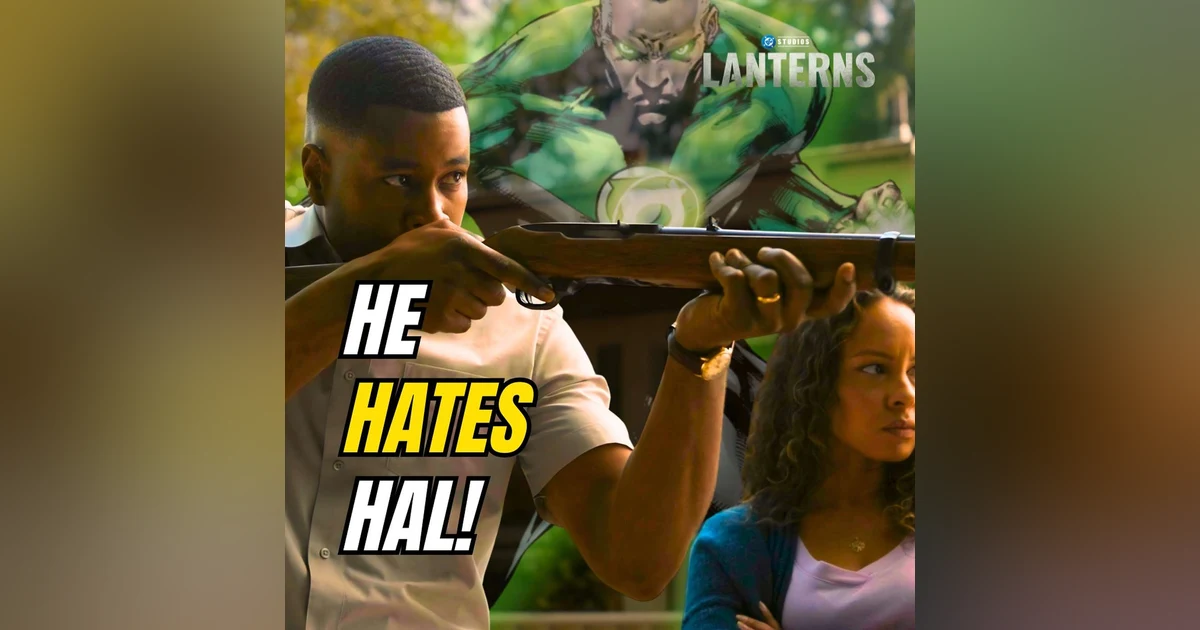
SPEAKER_00Because John wasn't simply born disciplined. He wasn't trained to become disciplined. And that training begins with his father. Before Hal Jordan receives Abinsua's ring, the ring finds Jon Stewart Sr. It takes him away from his family and asks him, Are you afraid? And John Sr. says yes. And honestly, why wouldn't he? He has no idea what's happening. He's been ripped out of his bed, his wife is there, his children are in the house. He doesn't know whether he'll ever see them again. And then the ring leaves. And eventually Hal Jordan gets it. Now I think there's a massive psychological difference between never getting an opportunity and being shown that you were almost capable of something extraordinary. John Sr. doesn't just lose the ring. He discovers that he had that potential, that there was another possible version of his life, and he knows exactly where he believes he failed. Fear. Then Hal Jordan becomes famous. He becomes the Green Lantern and the world celebrates him. People call him fearless, and John Sr. has to watch that every day. There's a scene where Hal is being praised on television, and John Sr. shoots the television. That tells us a lot. Hal hasn't done anything to him. Hal didn't steal the ring off him. Hal probably doesn't even know John Sr. exists, but Hal becomes a symbol to him. Every time Hal appears, John Sr. is potentially being reminded. That could have been me. And I think that kind of resentment is really interesting because it isn't necessarily hatred towards the other person. Sometimes another person's success just becomes a mirror for your own regret. Someone else gets the job. Someone else gets the opportunity. Someone else achieves that thing that you almost did. And even if they did absolutely nothing wrong, their existence can still hurt. That's where Hal sits in John Sr.'s life. He represents the future that got away. Then the Guardians eventually visit the Stuart family and confirm something massive. John Sr. wasn't imagining the encounter. The ring really did come for him. But the bigger revelation is baby John. Whatever quality attracted the ring towards John Sr. might also exist in his son. It's genetic. And suddenly the lost opportunity hasn't disappeared. It's moved down a generation. And this is where I think the family trauma angle gets really powerful in this episode because the Stuart family can now do something with Senior's failure. They can make sure it doesn't happen again. Now I want to be careful here. The show doesn't make John Sr. the sole architect of what happens next. He's more conflicted. Bernadette appears to be the stronger force pushing the idea that John must be ready. And I think that makes the story much better. Signor knows how badly this experience damaged him. Bernadette sees an opportunity for the family to take control of that pain. And eventually, they start preparing
A Childhood Built For Destiny
SPEAKER_00John. That's actually psychological research that gives us a useful framework for this. Research by Eddie Brumelman and colleagues looked at how parents can sometimes project their own unrealized ambitions and potential onto their children. It doesn't mean every parent who pushes a child is trying to live through them, no. And I'm not saying this study somehow diagnoses the Stuart family, but the idea fits what the episode is exploring. A parent's unfinished story can become a child's assignment. And John's childhood quickly starts looking like one really long assignment. And he's only five years old. John wants crayons for his birthday. Instead, his birthday begins introducing him to the destiny his parents think is waiting for him. He gets Green Lantern imagery, he gets weapons, training, and I really love the contrast because young John wants to create, his parents want to prepare him. And that artistic side of him doesn't disappear. Later in his life, it becomes one of the most important parts of the Green Lantern he ends up becoming. But as a child, the mission comes first. His brothers get to be kids. They listen to Outcast. They bond. John increasingly has something else to do. That's why I think the episode title works beyond the music reference. John is becoming the outcast inside his own family. Not because they didn't love him, but because he has been given a destiny none of them have. Then there are the birds. John is told the guardians are watching him, monitoring him, judging his progress. That isn't true. But John believes it. And think about what that does to a child. Every mistake matters. Every moment becomes evidence. Every weakness might be the reason the opportunity disappears. Eventually his mother tells him the Guardians aren't impressed. And John is devastated because from his perspective, what more could he possibly do? He's training, he's enduring, he's pushing himself, and somehow he still thinks he isn't enough. Aaron Pierre has talked about the emotional effect of this childhood on John. He describes adult John as incredibly controlled on the outside, while internally there's almost a raging sea of emotions. And that distinction matters because I don't think John's parents successfully taught him to feel nothing. They taught him to function while feeling it. We see that in the Apple test. John is asked to shoot an apple from his father's head, mirroring what we saw in episode one. And he hesitates, and that hesitation is absolutely, completely understandable. He loves his father and he doesn't want to hurt him. Bernadette acknowledges that as well. Then John agrees to try the test again, with his mother standing there instead. And this time he succeeds. So what has actually changed here? Not necessarily the emotion. John hasn't stopped caring. He hasn't become fearless. He has learnt to perform despite what he is feeling. And that's something psychological research around emotional regulation and suppression can help us to understand. Regulating emotion means recognizing what you feel and choosing how to respond to it. Suppressing emotion is more about hiding or inhibiting the outward expression of that emotion. Those aren't the same thing. And adult John sits right in the middle of that question. Is he processing emotion incredibly well? Or is he simply exceptional at making sure nobody else can see it? I don't think episode three answers that yet, but it definitely wants us to ask because look at adult John. He waits all night during the interview, he stays calm, he follows instructions, he can endure enormous discomfort. The training obviously worked. The problem is, Hal Jordan is now part of what all the training was designed around. And Hal's childhood couldn't have looked more different from John's. Hal Jordan and John Stewart are both shaped by their fathers. But almost in reverse, Hal loses his father. John grows up underneath his father's expectations. And I think that difference explains a huge amount about the men they eventually become. Hal tells us in episode one that his father died when he was young. And Hal connects that loss directly to his understanding of fear. His logic is essentially: I've already experienced one of the worst things that could possibly happen to him. So what is left to fear? Green Lantern comics have played with that relationship for decades. In Jeff John's and Ivan Rhea's Green Lantern Secret Origin, young Hal watches his father, Martin Jordan, die in a test flight accident. And what does Hal
Control, Suppression, And The Apple
SPEAKER_00do with that trauma? Does he stay away from aircraft? No. Because of course this is Hal Jordan. He goes straight toward them. He becomes a pilot. He chases the same danger associated with his father. That's Hal's pattern. Fear becomes something to confront directly. Loss becomes something to outrun. Trauma becomes movement, and Hal watches a test pilot die and basically decides, yep, that there, that looks like the career for me. And that sounds ridiculous when you say it like that, but it tells us exactly who Hal is. He goes towards danger. Now let's look at John. John gets the opposite experience. His father survives. John Sr. is there throughout his entire upbringing. He trains him, he watches him, he becomes part of this preparation. So John doesn't grow up with absence, he grows up with expectation. Hal's father becomes an ideal Hal chases. John's father becomes a warning. John is supposed to correct. And both boys learn something about fear from that. Hal's lesson becomes, I've already survived the worst loss. So he acts. And John's lesson becomes, fear costs my father everything. So he prepares. Hal becomes instinctive. John becomes precise. Hal acts quickly. John waits. Hal is comfortable breaking rules when he believes the situation requires it, and John initially wants structure, procedure, clear expectations. And this is where their personalities stop feeling like generic television opposites. Episode three actually gives us a reason for their difference. Hal's response to trauma is movement. John's response is control. And both strategies work. Hal's decisiveness
Two Fathers, Two Blueprints For Fear
SPEAKER_00has saved lives. John's patience makes him an elite sniper. The problem is that both strengths have a dark side. Hal's decisiveness can become arrogance. John's discipline can become obedience, and Hal may act when he should stop, while John may wait when he should actually challenge. And this gets even more interesting when you go back to the comic history between them. John Stewart is introduced in Green Lantern 87 in 1971 by Danny O'Neill and Neil Adams. The Guardians select John as a possible relief for Hal Jordan. And Hal has reservations almost immediately, similar to the episode of Lanterns we just saw. John does things differently. He thinks differently. That's baked into these characters. The television series has now given that disagreement a family history as well. Because John isn't just meeting a man who thinks differently from him. He's meeting the man who has been sitting inside his family's story since he was a baby. And that's what makes what happens with Grey Wolf so important. Because Hal doesn't just become associated with John Sr.'s lost future without even knowing it. He eventually walks into John's future too.
Grey Wolf And A Career Lost
SPEAKER_00John grows up. And importantly, he doesn't just sit around waiting for the Guardians to give him his Green Lantern uniform. He builds his own life. He follows his father into the military. He becomes a Marine. Eventually, he becomes a sniper. And once again, the qualities developed during his childhood make him incredibly good at what he does. He can wait. He can stay on mission. He can control himself. He can focus on a single objective for months. John is sent after a target known as Grey Wolf and he waits. Not a day, not a week. John waits months. He waits for the moment. He gets the opportunity and then a green construct appears. Hal Jordan arrives on the scene. He arrives to protect Grey Wolf and removes him from the situation, and that intervention destroys John's military career. The United States wasn't supposed to be conducting that operation, and Hal exposes what is happening. Someone has to absorb the political consequences, and John becomes that fool guy. And he leaves with a dishonorable discharge. So think about that from John's perspective. Hal Jordan is already the man who received the ring after his father failed. And now John builds a completely separate future, and Hal's actions destroy that too. Hal is now associated with two different lost futures inside the same Stuart family. John Sr.'s possible future as a Green Lantern and John's military career. Again, Hal doesn't deliberately target either of them. He didn't steal Senior's ring. He didn't arrive thinking, how can I ruin John Stewart's career today? But intent and impact are two different things. That's where resentment becomes complicated. You can understand intellectually that someone didn't mean to harm you and still be angry about what their actions cost you. And the Guardians know this. That's why they push John on to Hal during the interview. Does he resent him? John says no. And then he explains Hal's military intervention using the framework John understands best. Duty, orders, mission. Hal was doing his job. And then the Guardians tells him something John didn't know. Hal wasn't following orders. The Guardians had specifically told Hal not to interfere in these kinds of terrestrial conflicts, and Hal did it anyway. Because Hal believed he was right. That information matters specifically because of who John is. John can live with Hal hurt me because he had a responsibility. That makes sense to him. He can put that in the right box. But now he has to deal with Hal hurt me because he decided his judgment mattered more than what the order did. And that's much harder, especially for John. And once again, that's the difference between these two men. John has spent most of his life being told that discipline means following through on the mission. Hal spent most of his life learning that sometimes the mission is wrong. And now, I don't want to say John secretly hates Hal. We don't know that. We don't have enough evidence for that yet. John explicitly says he doesn't resent him. We should take that seriously. But the episode clearly wants us to ask another question. Has John genuinely processed everything Hal represents? Or is John simply really, really good and making sure resentment doesn't affect his performance? Because John's whole childhood trained him for exactly that. Feel the discomfort. Do the job anyway. He can remain calm while he's angry. He can remain disciplined while he's hurt. He can continue performing. That doesn't automatically mean the emotions are gone, which makes the end of the episode really, really interesting. John passes the interview. This is it. The thing his family has been preparing
Orders Versus Judgement
SPEAKER_00him for his entire life. He gets home excited. He wants to tell his parents and who's already there. Hal Jordan. Of course he is. Somehow Hal managed to arrive inside another major Stewart family moment before John gets to own it himself. Then they go outside, and Hal makes the reality very, very clear. He doesn't want a sidekick. He doesn't want a backup. And John isn't getting the ring. Then Hal basically follows that with training starts Monday. And John watches him fly away and says, I think he likes me. Which might be the funniest possible ending to an episode built around generational trauma and unresolved resentment. But underneath the joke, there's something important. For the first time, Hal now has a reason to resent John too. John represents succession. The Guardians aren't simply asking Hal to teach somebody, they're preparing someone to replace him. And this matters because Green Lantern has become part of Hal's identity. We've seen younger Hal publicly announce his dedication to fighting evil. We've seen the older Hal become protective of the ring. So John doesn't simply mean new trainee. John means there will be a Green Lantern after me. Now the resentment can run both ways. John can look at Hal and see the man connected to things his family lost, and Hal can look at John and see the man connected to something he is about to lose. And neither man actually caused the other's deepest wound. That's what makes this relationship interesting. They could easily reduce each other to what they represent. John could see Hal as the person who keeps taking things. Hal could see John as the person coming to take something off him. And if that's where they stay, the partnership possibly fails. But the Guardians appear to be very interested in John, precisely because he seems so different from Hal Jordan. And that might not be entirely good news. I want to make this really clear. This part is theory. The episode does not tell us that the Guardians chose
Succession And Resentment Goes Both Ways
SPEAKER_00John because he is controllable. But once you look at the interview, I think the question becomes impossible to ignore. Look at what they test. John is told sit, he sits all night. They bring up his family, he stays controlled. They bring up Hal, he stays controlled. They tell him he may eventually replace Hal. And John doesn't immediately ask, do I want this? He asks whether those are the orders. And that matters because if replacing Hal is the job, John will do the job. Now compare that with Hal. The Guardians have reportedly told him not to interfere with Earth-based conflicts. And he does it anyway. Episode two already suggests Hal isn't reporting everything back to them either. The Guardians are dealing with one of the most experienced Green Lanterns alive, who increasingly believes his judgment outweighs theirs. Then Jon Stewart walks in. Patient, disciplined, precise, he's obedient. From an institutional point of view, John probably looks fantastic. But here's the complication. The Guardians personally choosing John does have comic book precedence. Back in Green Lance in 87, the Guardians chose John as Hal's backup when Guy Gardner is unavailable. So the idea that a Guardian would directly select John isn't automatically suspicious, but the kind of John they select in the comics is really interesting. Original Jon Stewart is not introduced as somebody who blindly respects authority. It's almost the opposite, in fact. When Hal encounters him, John is challenging a police officer over his treatment of black civilians, and Hal worries that John's attitude towards authority makes him unsuitable. The Guardian disagrees. And John's first mission ultimately proves that his independent judgment is one of his strengths. That's why I think the HBO version may be setting up something really interesting. Maybe this Jon Stewart starts the story too obedient.
Do The Guardians Want Obedience
SPEAKER_00Maybe the point isn't that this show has removed the part of John that challenges authority. Maybe we're watching him grow towards it. Because right now, the Guardians may look at John and see exactly what hell is it. But Green Lantern history tells us that Jon Stewart becomes something great. And he eventually develops judgment that belongs to Jwart. And this is where the Manhunters become a really useful thematic warning. Before the Green Lantern Corpse, the Guardians created the Manhunters. Machines. They could follow programming, they could carry out orders. They didn't have complicated human emotions to deal with, and the experiment became absolutely catastrophic. So what's the point of replacing machines with living Green Lanterns? Surely part of the answer has to be judgment. A person can look at an order and they can say, no, that matters. And John currently has a lot of qualities that guardians might value. But if obedience becomes his defining quality, then what exactly separates a perfect lantern from a perfect machine? Again, John is not literally a manhunter. That's not the point here. The parallel is about obedience. And I think it gives us a great clue about where John's character may need to go. Hal needs to learn just because I disagree with authority doesn't automatically mean I'm right. And John may need to learn just because authority gave the order doesn't automatically mean it's right. That is where these two men might actually be perfect for one another. Because Hal can teach John how to question, and John can teach Hal how to listen. John can slow Hal down, and Hal can push John to act. But before any of that really works, they're probably gonna have to confront what sits underneath their relationship, and that is resentment. John is incredibly good at it during difficult situations. He's been doing it since childhood. But endurance and resolution are not the same thing. John can work beside Hal while angry. He can follow the mission while he's hurt. He can keep going while he's resentful. The harder thing might be looking Hal directly in the face and saying, Well, you did affected my life, and allowing that relationship to survive that honesty. Because maybe becoming John Stewart isn't about learning how to endure even more. Maybe it's learning when he no longer has to endure more. And that brings us to our portal out, the part of Phantom Portals
Manhunters And The Danger Of Compliance
SPEAKER_00where we leave the fictional universe behind and ask, what can we actually take back into our lives? And for me, Outcast gives us a really interesting lesson about what families pass down. Sometimes children don't inherit the original wound. They inherit the strategy the family created to survive it. John Sr. experiences rejection. He believes fear cost him an extraordinary future. His family gets another opportunity through John, so they develop a strategy. Prepare, stay disciplined, control fear, don't panic, don't miss, be ready. And those things genuinely do help John. That's why I don't think the lesson here is John's parents ruined him completely. That's way too simple. They gave him strength, they definitely did. He's got discipline, he's got patience, he's got resilience, he's got precision, he's got the ability to function under pressure, but they also gave him an unfinished assignment. Don't repeat what happened to us. And that's a heavy thing for a child to carry. There's a difference between telling somebody, learn from my mistakes and telling them, maybe without even realizing it, fix my mistakes. John's life becomes connected to something his father couldn't achieve. And I think the contrast with Hal makes that even clearer. Hal loses his father and spends his life chasing the thing associated with him. And John grows up with his father and spends his life preparing to achieve the thing his father lost. One is shaped by absence, the other by expectation, and neither of them chose what happened. But eventually, they do get to choose what they continue carrying. Hal doesn't have to turn his father's death into permanent fearlessness, and John doesn't have to turn his father's rejection into permanent obligation. And maybe John Sr.'s real mistake wasn't saying that he was afraid. He had a family, he had children, something worth losing. So maybe the question that defined the Stuart family, are you afraid, was never the best measure of courage. Maybe the better question should have been, what do you choose to do while you're afraid? And that's where I think Jon Stewart eventually has to arrive. Not fearlessness, because his parents trained him to perform that way. Not obedient because the Guardians expect that from him. Not resentful because Hal Jordan represents everything his family lost, but capable of looking at all of that history and deciding which parts actually belong to him. His parents chose the preparation. The Marines chose the mission. The Guardians chose the succession. Hal thinks he gets to choose whether John gets his ring. At some point, Jon Stewart has to choose himself. He has to choose Jon Stewart.
The Question We Take Home
SPEAKER_00So here is my question of the week. Do you think John genuinely doesn't resent Hal Jordan? Or has he simply become really good at preventing resentment from affecting his actions? And do you think John's parents prepared him to become a great Green Lantern or prepared him so intensely that part of becoming Jon Stewart will involve unlearning some of what they taught him? Let me know in the comments on YouTube. And if you're listening to this on Spotify, jump into the episode comments there and give me your answer as well. Because John and Hal can probably work together while all of this stays buried. I'm not convinced they can become genuine partners until they actually talk about it. If you enjoyed this deeper look at lanterns, subscribe to the Fandom Portals on YouTube. And if you'd rather listen, follow the Fandom Portals podcast on the Spotify or Apple Podcasts. We've got plenty more to unpack as John Hal, the Guardians, and the Manhunter mystery continue to develop through this series. I'm Aaron. Keep learning, keep growing, and keep loving fandoms. And I will see you guys through the next portal.


