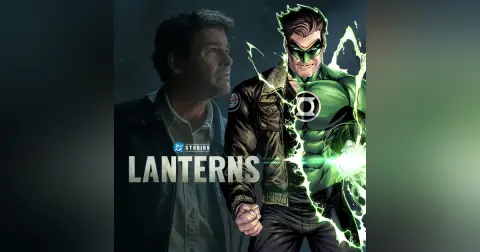
The Real Reason Hal Jordan Is Broken | Lanterns Explained


 RSS Feed
 Hal Jordan believes he is “broken,”... Lanterns Episode 7 finally explains him.
🚨 SUBSCRIBE for more Lanterns Explained deep dives into the characters, scenes, lore and bigger ideas behind the DCU series.
In this Lanterns Explained deep dive, Aaron explores why Hal Jordan believes he is “broken,” why John Stewart’s childhood still controls his relationship with fear, and how their unlikely friendship begins changing both men.
We break down the meaning of Hal’s baseball, the Halogram, John’s hallucinations, the canoe scene, Sinestro’s return and the importance of “Great arm, kid.” Ultimately, Lanterns Episode 7 is a story about legacy: we cannot choose everything we inherit from our parents and mentors, but we can decide what deserves to be carried forward, what needs to change and what we finally need to let go.
💬 Join the discussion! What do you think Hal Jordan should carry forward from his father — and what does he need to finally let go?
Key Questions We Tackle Today:
• Why does Episode 7 finally explain Hal Jordan’s behaviour?
• What does Hal’s baseball really represent?
• How did Martin Jordan and John Stewart Sr. shape their sons’ relationships with fear?
• Why is the Halogram so different from the older Hal Jordan?
• What does “Great arm, kid” reveal about Hal and John’s relationship?
• What is Lanterns Episode 7 really saying about legacy?
Chapters
00:00 Episode 7 Finally Explains Hal Jordan
01:30 The Real Meaning of Legacy
03:35 What Hal Jordan Inherited From His Father
07:00 Why Hal Jordan Believes He Is Broken
09:30 John Stewart Inherited a Different Kind of Fear
12:00 Hal Jordan’s Baseball Explained
15:00 Why Hal Can’t Let Go of the Green Lantern Ring
18:00 The Halogram Changes How We See Hal
20:30 Hal and John Finally Understand Each Other
23:00 Why “Great Arm, Kid” Matters
25:30 What Lanterns Episode 7 Is Really About
Question of the Week
What part of Hal Jordan’s legacy do you think John Stewart should carry forward?
Hal inherited resilience, determination and enormous willpower from the people who shaped him — but he also inherited silence, fear and the belief that his burdens had to be carried alone.
When Hal finally becomes John’s mentor, does he successfully pass on the best parts of himself without passing on the damage?
Let me know what you think in the comments!
#Lanterns #HalJordan #JohnStewart #GreenLantern #DCU #LanternsExplained
Tags
Lanterns Episode 7, Lanterns Episode 7 explained, Lanterns Episode 7 breakdown, Lanterns explained, Hal Jordan, Hal Jordan explained, John Stewart, Hal Jordan John Stewart, Hal Jordan father, Martin Jordan, Hal Jordan baseball, Halogram, Green Lantern DCU, Lanterns legacy, Sinestro Lanterns
Contact Us:
Website: https://www.fandomportalspodcast.com/
YouTube: https://www.youtube.com/@FandomPortals
Instagram: https://www.instagram.com/aaron_fandomportals/?locale=en Threads: https://www.threads.com/@aaron_fandomportals
TikTok: https://www.tiktok.com/@aaron_fandomportals
Email: fandomportals@gmail.com
Letterboxd: https://letterboxd.com/fandomportals
Discord: https://discord.gg/7Q4TAmSP
00:00 - A Baseball And A Buried Past
00:25 - Why Hal Finally Clicks
02:27 - Legacy As A Human Inheritance
03:03 - Fathers, Mentors And The Burden
05:11 - Fearlessness Built From Being Broken
07:56 - The Baseball, Ring And Holding On
11:54 - Emotional Armour And What It Costs
14:13 - The Canoe Scene And Real Connection
18:03 - Sinestro Returns And Passing It On
20:35 - The Portal Out: Choosing Your Legacy
22:48 - One Episode Left And Where To Listen
A Baseball And A Buried Past
SPEAKER_00A baseball, a childhood memory, and a version of Hal Jordan we barely recognize. Episode 7 forces Hal and John to confront the things they've spent years burying, and suddenly their relationship begins to change. But the real question isn't whether they can overcome their fathers, it's whether they can choose what parts of those fathers they carry forward.
Why Hal Finally Clicks
SPEAKER_00Welcome to the Phandom Portals podcast, the show that proves that your favorite pop culture, fandoms, has something to teach you. I'm Aaron, a teacher and a film fan, and today we're going to talk about Lanterns episode 7. And I think this might be the episode that finally makes Hal Jordan make sense to everybody. For most of the season, Hal has been abrasive, arrogant, stubborn, and incredibly possessive over that Green Lantern ring. He pushes people away. He acts like he doesn't need anybody. And until now, that has mostly looked like his personality. But episode seven revealed something deeper. Hal isn't fearless because he has somehow conquered fear. He's built an entire identity around simply surviving it. And Jon Stewart has inherited his own relationship with fear as well. His father spent years teaching him that fear had to be confronted, controlled, overcome. So even though Hal and John seem completely different, they've spent their entire lives wrestling with different versions of the same problem. Both of them are sons living in response to the men who shaped them. And that makes what this episode is all about legacy. Not superhero legacy, human legacy. The things people leave with us fear, expectations, coping mechanisms, ways of loving people, and ways of protecting ourselves, and sometimes ways of hurting people. For me, the most valuable takeaway from episode seven is this. We can't choose everything we inherit from the people who shape us, but we can choose what parts of that legacy we carry forward and what we finally choose to put down. Hal and John have inherited different versions of the same message, and that is that fear should be overcome privately. Strength should be demonstrated outwardly, and Hal hides what hurts while John proves that he can survive what hurts. And both of them have spent most of their lives performing strength instead of letting another person see the fear that is underneath it. And
Legacy As A Human Inheritance
SPEAKER_00episode seven changes that through three ideas that we're going to look at today. First, it shows how fathers and mentors pass far more down than knowledge to the people who come after them. Second, it uses Hal's baseball, the ring, and the halogram to show how resilience can turn into emotional armor when somebody never learns how to let go. And finally, it shows how connection gives Hal and John the chance to change what gets passed on. Because neither one of them becomes fearless. They just stop being afraid alone. Episode
Fathers, Mentors And The Burden
SPEAKER_007 is full of father-son relationships, but I think the clever part is that it keeps broadening what that actually means. You've got Martin, Jordan to Hal Jordan, John Stewart Sr. to John Stewart Jr., then you've got Sinestro to Hal, Hal to John, and eventually the Halligram to John as well. Some of those relationships are biological, but some are mentorships. But every one of them involves the same basic process. One person comes first, the next person learns from them, and something gets passed on. Sometimes it's confidence, sometimes it's fear, sometimes expectations, and sometimes it's unresolved problems as well. Sometimes it's ways of coping with the world. That's why Martin, calling the family secret the Jordan Boys Legacy, matters so much. Legacy usually sounds like a positive thing, a name, an achievement, something worth remembering. But Martin's version is darker. He tells young Hal that this burden belongs to Hal's grandfather, then it belonged to Martin himself, and now it belongs to Hal. So Hal doesn't simply inherit information, he inherits a model of what strength is supposed to look like. Martin hides the pain, he carries it alone. He doesn't want his family to truly see what he's experiencing, and eventually Hal learns the truth only after Martin is gone. Pain is private, pain is hidden, pain is something that the Jordan men must carry alone. And you can see exactly how that shapes Hal. Because back in episode four, Hal tells John that having fewer connections makes things so much easier. And at the time that sounded like classic Hal. Detached, cynical, above needing anybody. But episode seven changes that line. Now it feels less like independence and more like protection. If Hal believes something inside him is broken, then keeping people at a distance makes so much sense. If nobody gets close, then nobody sees that break. If nobody depends on him, maybe he won't disappoint them. If he never lets anyone fully know him, then maybe they never have to carry what he is carrying. And then Hal finally gives us the truth underneath that bravado.
Fearlessness Built From Being Broken
SPEAKER_00Best line in the whole episode. I'm not fearless because I'm brave. I'm fearless because I'm broken. That line completely reframes him. Fearlessness hasn't always looked like Hal's defining strength. He charges in, he refuses to hesitate, he keeps going when everyone else would stop. But now there's another possibility behind that. Maybe Hal doesn't believe he has beaten fear. Maybe he has spent so long suppressing it that he has built this whole identity around not letting anyone see it at all. And showrunner Chris Mundy has said Carl Chandler knew about this hidden family history before filming. So the pain was supposed to be sitting underneath Hal's all season long. The bravado wasn't separate from the wing. It was part of the response to it. And then we look at John. John gets a different version of the same inheritance. John Stewart Sr. doesn't hide fear, he attacks fear head on. He trains John around it, he tests him, he pushes him, he makes fear something John consistently has to defeat. So Hal learns hide your fear, and John learns beat your fear. Both different methods, same underlying message. Fear says something about your worth. And episode seven proves how deeply that lesson still sits inside John when the toxin hits him. John doesn't hallucinate Sinestro, no. He doesn't hallucinate the guardians. He sees his father. He sees his younger self. He sees the apples, the gun pressure. That old lesson, don't be afraid. What a scene played by Aaron Pierre as well. Perfectly illustrates why he was perfect for the role of Jon Stewart. For me, that scene makes Hal and John suddenly look far more similar to each other. On the surface, they've been opposites for so long. Hal is reckless, John is controlled, Hal is cynical, and John is disciplined. But underneath that, both of them are still trying to prove their fathers don't define them. And that's where the idea of legacy becomes bigger than blood. Because research into intergenerational trauma suggests that what moves between generations isn't necessarily the original traumatic event itself. It can be patterns, family environments, coping styles, ways of communicating, or not communicating for that matter. It could be ways of defining strength. And importantly, that research also makes it clear that these patterns are not destiny. Strong relationships, healthier ways of processing emotions, they can change what gets carried forward. And that is exactly what this episode is slowly building towards because Hal and John have inherited things, yes, but inherited does not mean permanent. And the real question becomes, what do they do with what
The Baseball, Ring And Holding On
SPEAKER_00they are given? I think for Hal Jordan, the baseball is the cleanest symbol for understanding him because Hal survives by holding on. As a kid, he holds onto that ball. As an adult, he holds onto the ring. He holds onto his father's secret the whole time. He doesn't even tell his mother. He holds on to responsibility and he even holds on to the guilt of it all. He holds on to his identity. And interesting thing is that holding on isn't automatically bad. It actually might make him a really good Green Lantern, but he has enormous willpower as a result of it. He endures, he keeps moving, he refuses to yield. This is heroic when everybody else is giving up, but episode seven asks what happens when that same response gets applied to everything, when every problem gets the same answer. Hold tighter, push harder, endure longer, and never let go. That's when perseverance can become rigidity. And Martin basically teaches Hal this exact lesson with the baseball. Young Hal's still holding it after the game is over, and Martin tells him you can't keep carrying it forever. Because eventually, and he says it'll get fucking exhausting. Hal finally throws that ball away, and Martin tells him, Great Armed Kid, that should be the lesson. Hal let's go. His father praises him for that, but then Martin dies. And at the end of the episode, Hal goes back. He finds that baseball and he picks it up again. Now, when I first saw this, I didn't really understand what that was really alluding to. But I think after Martin's death, it represents the why. And for me, that choice explains Hal so much. He didn't learn how to let go, but loss taught him to pick the burden back up again. That's why I don't think the baseball represents one thing. I think it isn't just trauma, it's the act of holding on. And Hal holds on to a lot. He holds his father, pain, pride, responsibility, fear, his identity, and eventually the Green Lantern ring. He even says over my dead body. Because adult Hal is doing exactly what young Hal did. Somebody says your turn is ending, somebody else is coming in. Give up the ball. It's someone else's turn to pitch. And Hal's answer is basically nope. John isn't simply an annoying replacement at this stage, then. John represents life after the Green Lantern core. And Hal doesn't know who he is in that world. And Carl Chandler backs this up. He says, compared to Hal losing the ring with retirement, there's years of building purpose in your role and identity. And one day that role is gone. So who are you without it? For Hal, Green Lantern isn't just something he does. It's proof that he matters, proof that he's needed, proof that he is strong. Maybe even proof that he's not broken. So when John succeeds, that becomes threatening. Not because John is doing anything wrong, but because John's succeeding proves the world can continue without him. We heard him say, I hope I'm at it. And the halogram becomes really important in this instant because this is the earlier Hal, not necessarily the real Hal. I don't think we need to romanticize the past like that with this, but he is Hal before another decade of hurt hardened this man. And the differences matter here. He's still sarcastic, you can see that. He's still stubborn at times, he's still very suspicious, but he's softer, he's less cynical, and he's actually more willing to recognize John, which was amazing. And when John does something genuinely extraordinary with the ring by maintaining that halogram without wearing it, this Hal actually tells him, he acknowledges him in that achievement. He says really great job. He recognizes that John can do something that Hal can't do. And John is thrown through a loop by this. He doesn't know how to receive praise because John has spent his entire life under that expectation. His father evaluated him. The military evaluated him. The guardians evaluated him. And even older Hal evaluated him. But he rarely receives acknowledgement without another demand attached to it later. It was just that was impressive. He did that well. And that shows us what Hal's emotional armor has cost him over the years because there's interesting psychological research around emotional suppression.
Emotional Armour And What It Costs
SPEAKER_00An analysis of some studies found that greater emotional suppression was actually associated with poorer social well-being, lower social support, worse relationship quality, lower social satisfaction, and that fits Hal pretty much perfectly. The walls that stop people seeing your fear can also stop them from seeing your affection. And Carrie's football analogy proves that. She tells John that Hal thought about him like a favorite football team. You get angry, you get disappointed, you yell, but you never stop watching. You're still a fan, you never miss a game. That means Hal cared about John far more than John ever knew, and he never told him. He did notice him, he followed his progress, he watched him succeed. He just couldn't communicate it in that way that John could actually receive. And that's the saddest part about their relationship because Hal being gone now, the only thing he has left is the halogram. And they're finally starting to heal after interacting with it. It's the tragedy of this emotional armor. It doesn't just stop people from hurting you, it can also stop them from knowing you. And eventually it can stop them from seeing your softer parts as well. I don't want to excuse Hal here and what he does in Rushville. We're just understanding his destructive behavior here, and it develops in different ways, and that's not saying it's acceptable. Hal can be wounded and still be responsible for his actions. But episode seven lets us see that pattern. The ring gave him a purpose. Then he couldn't imagine himself without it. The distance protected him from loss, then it made him lonely. Kerry called it from episode one. The stubbornness helped him to survive, then he couldn't surrender. I know there's a lot of research that says that people generally cope better when they can adjust strategies to fit different situations. Sometimes strength means pushing through. Sometimes it means changing direction, getting a fresh start. Sometimes it means holding on, and sometimes it means putting something down. But Hal's problem isn't perseverance, that's for sure. It's that perseverance has become the answer to everything. And that's why Martin's lesson is something that Hal can't forget. You can't carry something forever. Eventually it does become exhausting. So even though Martin left him with this terrible legacy, I think there's a tiny little piece of evidence there that there's something good that Hal has kept from his father, Martin. And then we get to that canoe scene. And for
The Canoe Scene And Real Connection
SPEAKER_00me, this is the emotional center of episode seven because this is where both men, John and Hal, finally stop performing. John gets hit by the toxin. Everything he has kept under control comes flooding back. His father, his childhood, the fear, the pressure, all of it. The younger version of himself, who was taught that being afraid was unacceptable, shows up and Hal sees it. John's vulnerability is no longer private. Somebody else gets to witness that. And that matters because John's childhood taught him that fear means this is another test. It's another demand. It's another chance to prove that he is strong enough. And Hal does something different here too. He actually saves him. John shows fear, and instead of punishment, he gets help. Then Hal reciprocates later on. He tells John about Martin, tells him about the safe, tells him about his grandfather, the Jordan boys' legacy, all of it. Most importantly, what he fears it means about himself. For the first time, neither one of these men is hiding behind the identity they usually perform. John isn't the perfect trainee. Hal isn't the fearless legend in this moment. They're just two sons in a boat talking about their fathers, and John actually calls him Hal. Not Jordan, Hal. That sounds tiny, but it actually really matters. Jordan is the Green Lantern, the arrogant veteran, the guy John spent the season fighting. Hal's the person underneath that. And I feel like that's really important, the way that they use those languages, because it shows a connection that's developing between them as well and a respect. John's sympathetic in this moment too. He actually empathizes and says, I'm really sorry that you had to go through that. And this is where I think that the episode's argument about connection becomes its strongest. I think lots of things, lots of research into resilience and social support repeatedly points to strong human connection as a proactive factor in limiting issues of depression. And research into emotional sharing shows that people who feel more supported are generally more likely to share emotions rather than suppress them as well. Meaning that if somebody shares with you, you're more likely to share back. And that's exactly what happens here in this episode. Connection doesn't erase either man's history either, by the way. It changes how that history is carried for both of them. John's fear is seen, he's allowed to feel it properly without being judged for feeling it, as his father and mother and family did all his life, and Hal stays. And Hal's brokenness is seen in this moment too. And then John stays. Neither man judges the other, and neither man becomes fearless in this moment. They just stop being afraid alone. And then even the language between them starts to shift as well. We talked about the fact that he calls him Hal, but older Hal constantly called John Jr. And I've always read that partly as Hal asserting his superiority. It pretty much says, I'm the veteran, you're the kid. But John is also literally John Stewart Jr., that's his name. So whether it was intentional or not, the nickname keeps connecting him back to John Sr. and the identity he has spent his life carrying and probably secretly hating. But the halogram starts using trainee. And I think there's a meaningful difference there. Junior says, you're beneath me. Whereas Trainee says something different. Trainee says, I'm responsible for teaching you. That's mentorship. That is what John wanted this whole time. And Hal stops seeing John purely as the guy taking his place and starts respecting the fact that he's got a responsibility to help this guy become his own Green Lantern. And that fits what mentoring research tells us too. Good mentoring isn't just evaluation, it also involves guidance, teaching, support, recognition, helping the next person build their own identity instead of just becoming a copy of you. That's what Hal finally starts doing here. And then at
Sinestro Returns And Passing It On
SPEAKER_00the very end, Sinestro shows up. That mustache twirling villain pokes his head out of the shadows, quite literally, he's even wearing a hood. Suddenly the entire legacy structure is standing in the open. It's all in one place. Sinestro to Hal, Hal to John. Mentor to student, mentor to student. And the question stops being, what did Hal inherit? And now it becomes, what will Hal pass on to John? Then John hits Sinestro and Hal says, Great arm kid. That sounds familiar. It sounds familiar because that's the whole episode. Because Martin said those words to Hal. Now Hal gives them to John, but Hal doesn't pass on everything Martin gave him. He doesn't hand John the silence. He doesn't give him another secret to carry. He doesn't teach him pain has to be hidden or part of his past. He chooses deliberately or instinctively one of the good parts that Martin gave him. He chose encouragement, recognition, pride. And that's why I think this episode is saying something more interesting than just break the cycle. Because breaking the cycle can sound like rejecting everything that came before it, but families don't work like that. Mentors don't work like that. People don't work like that. Someone can hurt you and still give you something valuable. Someone can fail you and still teach you something worth keeping. I think there's no denying that Martin loved Hal. He encouraged him. He also gave Hal a burden he never really knew how to carry himself. John Senior damaged John, but he also believed his son could become extraordinary. Hal treated John terribly at times, but he also saw what John could become as well. Legacy can be messy. You inherit pieces, and then adulthood becomes the process of deciding which pieces deserve to continue. You have the capacity to evaluate it then, and Hal finally does that too. He takes something good from Martin, that encouragement, and passes it forward. Great arm kid. There's something really tragic about the timing of that because John finally gets his version of Hal after the real Hal is gone, but he does get that mentor. He gets the acknowledgement, the version of Hal capable of saying what older Hal apparently felt he could barely express. They finally discover the relationship they might have been capable of much earlier, if they'd met sooner. But maybe that's also what legacy means. The person doesn't have to remain for something of them to remain in you. Martin remains in Hal. Sinestro also is there in Hal. And Hal now remains in John. The important question is what survives? This
The Portal Out: Choosing Your Legacy
SPEAKER_00is our portal out segment. This is where we take the lessons from this episode of Green Lantern and to see what we can take back into our real life. And for me, maybe that's what legacy is really about. It's not your surname, it's not your career, it's not whether you become exactly like the person who came before you. It's the pieces of other people that keep traveling through you as time goes on. Some of those pieces are worth keeping. Someone teaches you to work hard, that's worth keeping. How to keep going, how to care about people, how to believe in yourself. But sometimes those same people give us other feelings as well, like fear and possible expectations, as it was for John. Silence when you needed emotional support, ways of protecting ourselves that probably once made sense, but don't anymore. And Hal spends most of his life believing the Jordan boy's legacy is something that he has to survive. His grandfather carried the pain, his father carried the pain. Somewhere inside Hal is the question, am I next? We know he had a lot of self-doubt. I hope I mattered. But episode seven changes what legacy means. Legacy isn't just what reaches you, it's what passes through you. And when Hal finally gets the chance to pass something forward to John, he doesn't give him the whole burden. He gives him one of the good pieces. Great arm kid. He believes in him. And maybe growing up isn't about pretending our past didn't shape us. And it isn't about rejecting everything that people before us gave us. Maybe it's learning to look at what we inherited and say, I'll keep this part. I'll transform that part. And this, I'm finally going to put that down. Because we can't use everything that people before us leave behind. But growing means learning what deserves to be carried forward, what needs to change, and what we finally have to let go. That was Linton's episode seven, and I think this one might be the episode that finally makes Hal Jordan's entire story click. The baseball, the ring, the halogram, Martin, John. It all comes back to the same idea. Hal has spent his entire life proving that he can hold on. Maybe the lesson he actually needed was sometimes strength means knowing when to let go. We've
One Episode Left And Where To Listen
SPEAKER_00got one episode left now. Sinestro is back. John and Hal's relationship has completely changed, and we're still needing the full truth about what happened to that guy who killed Hal in Rushville. So if you've enjoyed these lanterns deep dives, make sure you subscribe to our YouTube. And if you'd prefer to listen, definitely go and check out our Spotify or Apple podcasts. You can find us at the Fandom Portals podcast everywhere. Until next time, I'll see you guys through the next portal.


