Magneto vs Charles Xavier, Why I Changed My Mind | X-Men (2000) Explained


 RSS Feed
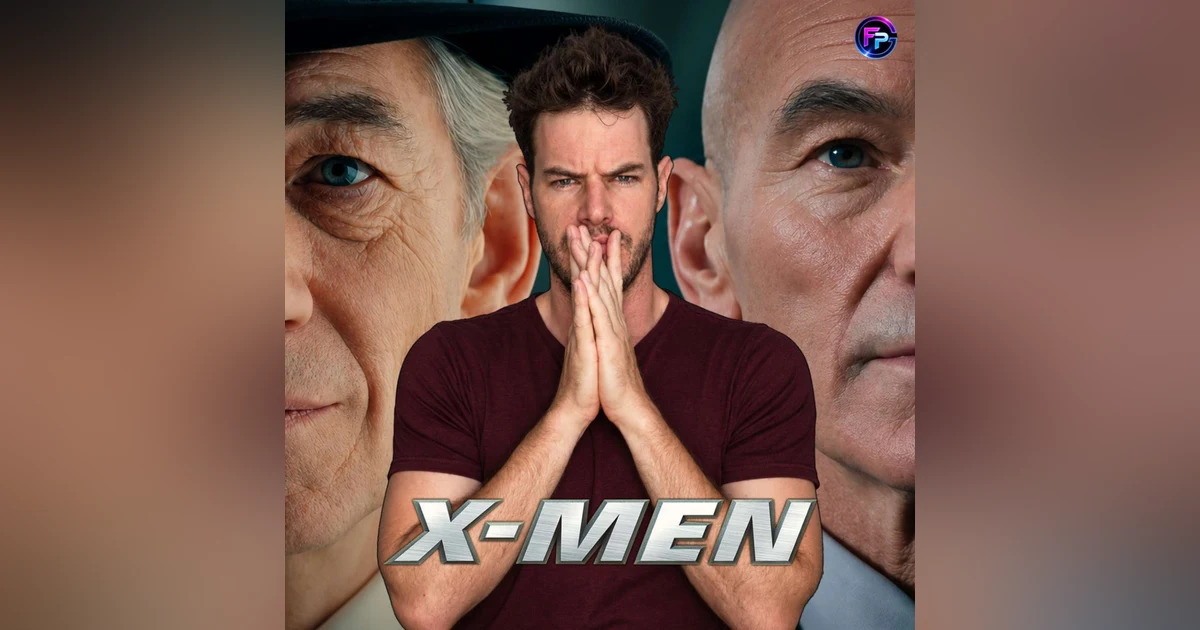
Magneto vs Professor X: Who was really right in X-Men (2000)?
When I was younger, I believed Magneto was justified in fighting back against humanity. But rewatching the original X-Men film as a father and teacher has completely changed how I understand Charles Xavier's leadership.
In this X-Men character breakdown, I explore how Magneto and Professor X respond to fear, trauma and prejudice. From Magneto's Holocaust experience to Senator Kelly, the train station confrontation and the final chess scene, we examine why Charles chooses compassion without abandoning his responsibility to protect mutants.
What can these two Marvel characters teach us about leadership, courage and the influence we have on others?
Subscribe to Fandom Portals for weekly character analysis and lessons from our favourite films.
CHAPTERS
00:00 Magneto vs Professor X: Who Would You Trust?
00:52 Why Magneto Was Right to Be Afraid
03:52 How Their Leadership Shapes the X-Men and Brotherhood
08:49 The Train Station: Charles Faces an Impossible Choice
11:53 Magneto's Betrayal of Rogue
14:54 The Chess Scene That Changed My Mind
QUESTION OF THE WEEK
When you first watched X-Men, did you agree with Magneto or Charles Xavier? Has your opinion changed as you've gotten older?
ORIGINAL FILM REFERENCE
X-Men (2000)
Director: Bryan Singer
Screenplay: David Hayter
Studio: 20th Century Fox
Featured cast: Patrick Stewart, Ian McKellen, Hugh Jackman, Anna Paquin and Halle Berry.
Original film material is referenced for criticism, commentary and character analysis. Copyright in the original film remains with its respective rights holders.
#XMen #Magneto #ProfessorX
Contact Us:
YouTube: https://www.youtube.com/@FandomPortals
Instagram: https://www.instagram.com/aaron_fandomportals/?locale=en
Email: fandomportals@gmail.com
Magneto Or Charles
SPEAKER_00Magneto has every reason not to trust humanity, and Charles believes that people can change. I used to think the choice was pretty obvious, but which of them would you trust with your future? I'm Aaron, and every week I break down the characters from our favorite films and TV shows to see what they can teach us about becoming better people. When I was younger, Magneto made a lot of sense to me, but rewatching the X-Men in my 30s as a father and as a teacher has made me see that there might be more to Charles Xavier's perspective than I first thought. And it's not as easy as saying that Magneto is the villain and Charles is the hero. There are three conversations between these men in the movie X-Men that reveal something about fear, leadership, and the choices that we make. And there's one decision I'll talk about later that really challenged what I used to believe.
Why Magneto Fears Humanity
SPEAKER_00So why was Magneto right to be afraid? I think the opening scene of X-Men gives us every reason to understand why Magneto doesn't trust humanity anymore. We're taken back to the Holocaust, where a young Eric Lyncher is being separated from his parents by Nazi soldiers. He's desperately trying to reach his mother, but there's nothing that he can do to stop them, and it's horrible. And whoever the kid is that played that part deserves an Oscar or something because that was pure, raw emotion. Now, knowing what Jewish people suffered under the Nazis would 100% shape Eric's view of humanity. He's witnessed firsthand what happens when prejudice becomes government policy. So when Senator Kelly starts campaigning for mutant registration years later, Magneto recognizes the warning signs straight away. And during his first conversation with Charles in the movie, he tells him, Don't give up on them, Eric. What would you have me do, Charles? I've heard these arguments before. Batline carries so much weight when we remember his childhood. And I think he's right to be concerned, to be honest, because Kelly wants mutants identified and monitored because of what their abilities might allow them to do. He's encouraging people to fear an entire group of people because they're different and he's afraid of what he doesn't understand. Now let's put yourself in those shoes. Imagine being a mutant, listening to that hearing. Would you feel safe knowing politicians were discussing whether you should have the same rights as everybody else? I certainly wouldn't. And when I was younger, that's exactly why Magneto made sense to me. Why should mutants have to wait for humanity to accept them? Why shouldn't they fight back against people that are trying to take away their rights? But Charles Xavier sees things differently. He still believes humanity can change. When Magneto questions what Charles is searching for in them, Charles responds that I'm looking for hope. I will bring you hope, old friend. And I think that's where the beliefs begin to separate for these two people. Magneto's experiences have taught him to expect the worst from humanity, whereas Charles recognizes that danger but refuses to believe everyone will behave the same way. And there's something in Magneto's response that I overlooked years ago. He believes mutants are the future, and ordinary humans no longer matter.
SPEAKER_01We are the future, Charles, not them. They no longer matter.
SPEAKER_00That's a pretty concerning position for someone who's experienced the consequences of people being treated as inferior. Screams hypocrisy to me. I still understand his anger though, don't get me wrong, but I do question whether he's allowing the worst of humanity to determine how he judges everybody else. Because it's one thing to be frightened of people and what they might do, and it's another one entirely to teach that fear to the people who depend on us, like those who listen to us or follow us. And that's where these leaders become really interesting when we look at how they influence the people around them. So
What Leaders Teach Their People
SPEAKER_00what are we teaching the people that trust us? Something I appreciate much more about Charles Xavier now is what he's trying to achieve through his school. Let's look at Rogue, for example, in X-Men 1. She's frightened of her abilities because she can't touch somebody without potentially hurting them or maybe even killing them. She's isolated, desperate, and she wants somewhere to belong. And who's there to offer that? Charles Xavier. He offers her the opportunity. A place where she can understand her abilities, develop confidence, and be accepted. That's the number one thing. But Magneto's followers have also suffered the same rejection that Rogue has.
SPEAKER_01Mystique tells Senator Kelly You know, people like you are the reason I'm afraid to go to school as a child.
SPEAKER_00So both Rogue and Mystique know what it feels like to be judged because they're different. But look at what their leaders encourage them to do with those experiences. Charles wants his students to become confident enough to live alongside humanity, while Magneto wants his followers to become powerful enough so that humanity can never threaten them again. And I understand where Magneto's message would appeal to someone who hasn't had power their entire life and has spent a lot of time feeling powerless. But here's what I started thinking about as a father and as a teacher. The way we respond to the world influences how the people around us learn to respond to it too. If I constantly treat people with suspicion or anger, what am I teaching my children and what am I teaching my students? I want them to recognize when they're being treated unfairly, yes. But I don't want them growing up assuming everyone who disagrees with them is an enemy. And I think that's reflected in the X-Men. Cyclops, Gene, and Storm have incredibly dangerous abilities, they've been feared by humanity in the past, and they've gone through some pretty terrible prejudice as well, but Charles has taught them to control their abilities and use them to protect others. Meanwhile, Magneto's Brotherhood regularly uses its powers to intimidate, manipulate, and attack people. The difference isn't their powers. It's how they're choosing to use them. And their leaders have helped shape those choices.
Kelly, Rights, And Compassion
SPEAKER_00But there's a problem here. What happens when someone genuinely hates mutants? When someone is actively trying to take away their rights. Because that's what Senator Kelly does. He gives us them an opportunity to see whether Magneto's approach actually works. So does fighting back make us any better? Senator Kelly is frightened of mutants because of what they might be capable of doing. Keyword might. And during the Senate hearing, Gene Gray challenges the idea that people should have their rights restricted simply because they're different.
SPEAKER_01After all, the wrong person behind the wheel of a car can be dangerous. Well, we do license people to drive. Yes, but not to live.
SPEAKER_00Now I understand why Magneto would be furious with Kelly. I do. And when I was younger, I probably would have found this plan to turn Kelly into a mutant quite satisfying, to be honest, because who hasn't wanted someone to experience what we've experienced so they'll finally understand a perspective. There's literally a common saying about it, walk a mile in my shoes. We've all heard it. But watching it now, I see a problem with that because Magneto isn't giving Kelly the opportunity to understand. He's forcing something upon him. And the transformation he eventually goes through actually kills him. And that's a pretty disturbing contradiction, especially when we consider what Magneto experienced during the Holocaust. Now let's compare that with Storm, because when Kelly arrives at Xavier's school, frightened and dying, she stays beside this man. Despite everything he has said about mutants, she treats him with compassion. And when Kelly asks whether she hates ordinary humans, she's honest. She admits that sometimes she's afraid of them.
SPEAKER_01I suppose I'm afraid of them.
SPEAKER_00And I actually really appreciate that from Storm. What a powerful character. She's not pretending that Kelly's prejudice is acceptable, but she is recognizing that he's frightened and needs help too. And that's something I've come to value much more as I've grown older because when someone treats us badly, it's so tempting to return the favor. We've all probably done it. Heck, I've done it before. But what are we actually achieving? We're allowing someone else's behavior to determine our own. And Charles is teaching his students that they can challenge someone without actually treating them as less deserving of compassion. But here's the problem. Compassion doesn't guarantee a good outcome. Kelly still dies, and mutant registration, it's still a threat. So is Charles actually protecting his students or is Magneto right that sometimes we need to be willing to do whatever it takes?
The Train Station Moral Test
SPEAKER_00Well, there's a confrontation outside the train station in this movie that completely changes how I answered that question. I think this train station scene is one of the most revealing scenes in the X-Men movie because at this point Magneto's taken Rogue and the police officers are trying to stop him. But he turns their guns against them, and those officers are completely powerless here. Magneto could kill them at any moment with a flick of his hand, whenever he chooses sapiens and your guns. And Charles responds by telepathically controlling Sabretooth and Toad and trying to force them to release Rogue. Charles isn't afraid to use force when it's necessary here. He's prepared to defend his people. Magneto turns the confrontation into a test of Charles' beliefs. He challenges Charles to kill him if he wants to save Rogue, and when Charles refuses, Magneto fires and the officer's weapons go off. He stops the bullet just before they hit, but Charles eventually releases control to protect their lives, and Magneto tells him that he's still unwilling to make those sacrifices. He sees Charles's refusal as a weakness. Now, when I was younger, Magneto did seem like the stronger leader here. He was prepared to do whatever it took to achieve his goal and protect his people. But watching this scene now, I think I had strength completely backwards because look what Magneto is actually asking Charles to sacrifice. He's asking him to sacrifice other people's lives. People who have absolutely no say in his cause. And that's something I never really considered before because it's easy to talk about making sacrifices like Magneto does when someone else is paying the price for it. But Charles refuses. And that's what makes his decision so difficult. Magneto gets away with Rogue, of course he does. And someone he cares about is now in danger, but he refuses to abandon his values to guarantee that victory. And that takes far more strength than Magneto gives him credit for. Because when we're responsible for other people, it can be tempting to force the outcome that we want. We want to prevent the mistakes, we want to protect the people from being hurt. And sometimes we convince ourselves that we should do that through any means possible because our intentions are good. But because our intentions are good doesn't mean that the decisions that we make must be right. But having the power to make someone do something also doesn't mean that we should make them do it. And I think that's what I missed about Charles. That's why he's a better leader, in my opinion. He's willing to defend himself and his students without treating everyone else as expendable. And that's the kind of strength that I want to demonstrate in my life. And if you enjoy looking at these characters and the breakdowns and what they can teach us, then consider subscribing to the Fandom Portals. We have another X-Men video looking at how Rogue saved Wolverine, and we're exploring character dynamics like this every week on Fandom Portals, so please, buttons just down below
Rogue, Sacrifice, And Control
SPEAKER_00there. Because there's another side to Magneto's belief about sacrifice that I find much harder to defend than this one, and it involves the very person that he's actually supposed to be protecting. There's a detail in Magneto's conversation with Rogue at the Statue of Liberty that I find really sad. He tells her he first saw that statue in 1949 when he came to America and he believed he was going to be living in a place of tolerance and peace. Now, let's think about that. Despite everything he'd experienced during the Holocaust, there actually was a time in his past when Magneto still believed that humanity could offer something better. He had hope. But somewhere along the way, he lost that, and now he's convinced that peace is impossible unless he forces the world's leaders to become mutants too. The problem is, his machine nearly killed him when he tested it. So rather than risk his own life again, he transfers his power to Rogue and makes her operate it. And when she asks if he's gonna kill her, he's very honest and he admits that he is. Our cause will be theirs.
SPEAKER_01Your sacrifice will mean our survival.
SPEAKER_00Now, that line really bothers me now because Rogue hasn't chosen to sacrifice herself. She's a frightened girl who's already experienced rejection in her life and isolation because of her abilities, and she's probably exactly the kind of person Magneto claims to be fighting for. Yet he's prepared to sacrifice her life for his vision. And this is where his childhood makes the situation even more tragic here because Magneto knows what it's like to be powerless while someone else has the reins on your life to decide your future. He's experienced a cruelty of people believing that they have the right to control others. Yet here he is prepared to take that same freedom away from Rogue. He's become so focused on preventing mutant persecution that he's actually committing mutant persecution. He's hurting an individual along the way. Now compare that with Logan. He risks his own life to save Rogue 2. And when she's dying, he allows her to absorb the healing ability that could kill him and heal herself. Now think about the difference between their decisions there and what it tells us. It's probably something important. Magneto expects Rogue to give up her life for his vision, and Logan chooses to risk his own life so that Rogue can have a future. One is deciding what someone else should lose, and the other is deciding what he's prepared to give. And that's something I didn't appreciate either. As a father now though, I want to protect my children from harm, but I think I can't prevent them from experiencing every challenge or disappointment in their life. Nor should I. And I can't control every person they're going to encounter. What I can do is help them develop the confidence, compassion, and judgment they'll need to face those challenges themselves. And that is exactly what I've come to appreciate about Charles. He's preparing his students for a world that he can't control and possibly one that he won't be in in the future. Magneto is trying to control the world so that mutants will never have to be afraid again. There's a huge difference between those two approaches, but there's one final conversation that made me reconsider Charles' optimism because it actually reveals something about him that I completely overlooked when I was younger.
Chess, Fear, And Choosing Hope
SPEAKER_00So this is why I've come to believe in Charles. At the end of the X-Men movie, Charles and Magneto sit across from each other and they're playing chess. Very famous scene. Magneto asks Charles whether he's frightened that humanity will eventually come knocking on his door to find him and his students, and Charles admits that he is afraid.
SPEAKER_01Doesn't him awake you in the middle of the night. The feeling that someday they will pass that foolish law. Or one just like it. And come for you. And your children. It does indeed.
SPEAKER_00Now that's what I didn't understand about Charles when I was younger. He refuses to let that fear determine how he treats everyone else. Now that's power. And there's something else about that final scene I appreciate too, because Charles is still visiting Magneto. Despite everything that's happened, he hasn't given up on his old friend. That tells me his belief in people, being capable of change, isn't something he only expects his students to practice. He's actually trying to live by it himself too, and I think that's what I've come to admire about him most. When I was younger, I thought Magneto was stronger because he's willing to fight back. Charles seemed far too trusting, but now I recognize that Charles understands the danger just as well as Magneto did. He knows he can't guarantee humanity will change. He can't guarantee his students will always be safe. But he is giving people the opportunity to prove they can be better. And he's preparing his students to help create that future as well. And that's the kind of person that I want to become. I want my children to know how to stand up for themselves without treating everyone who disagrees with them as an enemy. I want my students to become confident enough to make their own decisions as well. And I want to be someone who recognizes that people can make mistakes, learn, and then change. Because Magneto has every reason to be frightened of humanity. We know that. But that fear has convinced him that controlling others is the only way to guarantee his people's safety. And Charles actually recognizes that same danger. He's just choosing not to make everyone else pay for it. And that is why my perspective has changed. When I was younger, I admired Magneto because he refused to let the world hurt him again. Watching X-Men in my 30s, I've come to admire Charles because he's refusing to let the world's cruelty determine the kind of person and the kind of man that he becomes. And that's the example that I want to follow. And if you enjoy finding out lessons about becoming better people in our favorite films, then subscribe to the fandom portals, the button's just over there, guys, and watch my original X-Men reaction video next, where I comment on all of this in real time alongside the X-Men film. That'll be right over this side. And I'm curious as well, whether your perspective has changed over time too. When you first watched X-Men, did you agree with Magneto or did you agree with Charles? And has that changed as you've gotten older? Let me know in the comments below, guys. Keep learning, keep growing, keep loving fandoms. I'm Aaron, and I'll see you through the next portal.


