Lessons from Supergirl (2026)
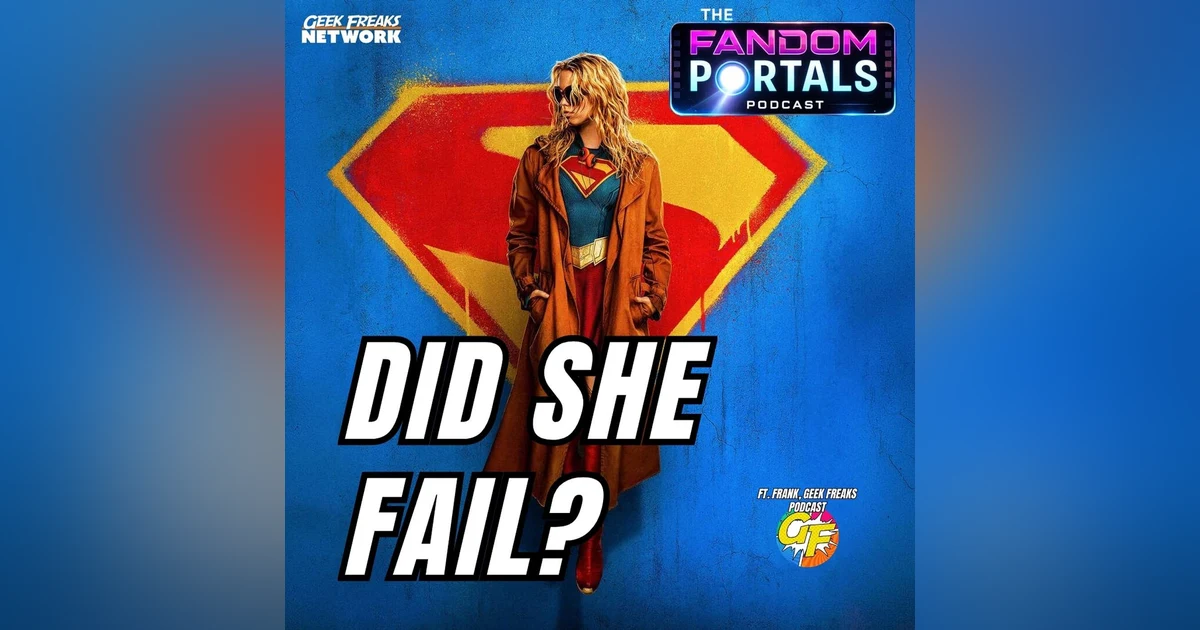

What happens when one of DC's most hopeful heroes loses hope? Supergirl (2026) is much more than another superhero blockbuster. Beneath the cosmic adventure is a deeply emotional story about grief, trauma, vengeance, and learning how to hope again. This week Aaron is joined by Frank from the Geek Freaks Network to break down James Gunn's latest DC Universe film, exploring Millie Alcock's debut as Kara Zor-El, the adaptation of Tom King's Supergirl: Woman of Tomorrow, the controversial endin...


 RSS Feed
 What happens when one of DC's most hopeful heroes loses hope?
Supergirl (2026) is much more than another superhero blockbuster. Beneath the cosmic adventure is a deeply emotional story about grief, trauma, vengeance, and learning how to hope again.
This week Aaron is joined by Frank from the Geek Freaks Network to break down James Gunn's latest DC Universe film, exploring Millie Alcock's debut as Kara Zor-El, the adaptation of Tom King's Supergirl: Woman of Tomorrow, the controversial ending, Jason Momoa's introduction as Lobo, and why this may be one of DC's most emotionally mature stories yet.
Is Supergirl trying to become Superman... or is she trying to become herself?
In This Episode
Millie Alcock's performance as Supergirl
Why Kara is fundamentally different from Superman
The hidden meaning behind Supergirl's grief
Kara and Ruthie's mirrored emotional journeys
Why revenge can never truly heal trauma
Comic vs movie: Woman of Tomorrow
Was Krem supposed to be a symbolic villain?
Did Lobo actually belong in the film?
Breaking down the controversial ending
What Supergirl teaches us about hope
Most Valuable Takeaway
Grief that isn't processed often becomes vengeance—but vengeance can never heal unprocessed grief. Healing begins when our pain stops dictating our future, and we choose hope instead of allowing our suffering to define us.
Key Takeaways
Kara's greatest enemy isn't Krem—it's unresolved grief.
Hope isn't the absence of pain; it's choosing to move forward despite it.
Supergirl and Superman represent two very different versions of hope.
Ruthie mirrors the younger Kara, forcing Kara to confront her own trauma.
Krypto symbolizes Kara's final emotional connection to Krypton.
Revenge promises closure but rarely delivers healing.
Healing is a lifelong process, not a single decision.
The people we try to save often end up saving us.
The film asks whether compassion is stronger than vengeance.
Supergirl is still becoming the hero she's meant to be.
Chapter Breakdown
00:00 Cold Open – Is Supergirl Really About Grief?
03:02 Introduction & Episode Overview
04:24 Supergirl Synopsis
06:02 Fan Reactions & The Snyder Debate
08:05 Millie Alcock's Performance
09:09 The Life Lesson of Supergirl
10:40 Kara & Ruthie: Parallel Journeys
15:06 Why Krypto Matters
20:07 Supergirl vs Superman's Hope
27:25 Why This Doesn't Feel Like Superman
31:40 Comic vs Movie Comparison
36:44 Ruthie's Character & Emotional Arc
44:14 Is Krem a Good Villain?
49:15 Did Lobo Need to Be Here?
52:50 Breaking Down the Ending
58:50 Final Thoughts
1:02:23 Question of the Week
Question of the Week
Did Kara make the right choice at the end of Supergirl?
Was it:
Justice?
Revenge?
Protecting Ruthie?
Or did she betray her own lesson?
Leave your answer in the comments—we'd love to continue the discussion.
Featured Guest
🎙️ Frank – Geek Freaks Network
Huge thanks to Frank for joining the show to discuss one of DC's most emotionally layered films.
Be sure to check out the Geek Freaks Network for more fantastic discussions on movies, comics, television, gaming, and pop culture.
Why This Episode Matters
Most superhero movies ask:
"Can the hero save the world?"
Supergirl asks a different question:
"Can someone who has lost everything still choose hope?"
If you've ever experienced grief, struggled to let go of anger, or wondered whether revenge can really bring peace, this conversation is for you.
Keywords
Supergirl, Supergirl review, Supergirl ending explained, Supergirl analysis, Supergirl Woman of Tomorrow, Tom King Supergirl, James Gunn DCU, DC Universe, Millie Alcock, Jason Momoa Lobo, Superman, Krypto, comic vs movie, superhero movie analysis, Fandom Portals Podcast
Contact Us:
Website: https://www.fandomportalspodcast.com/
YouTube: https://www.youtube.com/@FandomPortals
Instagram: https://www.instagram.com/aaron_fandomportals/?locale=en Threads: https://www.threads.com/@aaron_fandomportals
TikTok: https://www.tiktok.com/@aaron_fandomportals
Email: fandomportals@gmail.com
Letterboxd: https://letterboxd.com/fandomportals
Discord: https://discord.gg/7Q4TAmSP
00:00 - Big Questions About Hope And Revenge
00:28 - Welcome And Guest Introduction
01:59 - Quick Plot Synopsis And Setup
03:00 - Fan Reactions And Online Discourse
05:16 - Millie Alcock’s Take On Kara
06:24 - Grief That Turns Into Vengeance
07:29 - Kara And Ruthie As Mirrors
12:05 - Krypto As Home And Attachment
17:30 - Hope Through Trauma Versus Upbringing
23:47 - Space Tone And DCU Worldbuilding
27:21 - Comic Art Versus Film Choices
34:43 - Adaptation Changes And Comic Twists
38:56 - Krem As Symbol More Than Threat
40:41 - The Brigands And A Bold Villain Choice
43:11 - Lobo’s Role And Franchise Setup
47:06 - The Ending That Divides Viewers
52:49 - Final Thoughts On DCU Direction
56:01 - Question Of The Week And Sign-Offs
Big Questions About Hope And Revenge
SPEAKER_01What happens when one of DC's most hopeful heroes loses hope? Can revenge ever heal the pain of losing everything? Is Toubagirl really a superhero movie, or is it a story about grief? We discuss this and more on this episode of the Phantom Portals podcast.
Welcome And Guest Introduction
SPEAKER_01Welcome everyone to the Phantom Portals Podcast, a podcast that proves your favorite movie has something to teach you. I'm Aaron, a teacher and a film fan, and today I am joined by Frank, a very special friend from Over the Pond, USA. Frank is the moderator or the leader in charge of the Geek Freaks Network, which is what our podcast is part of. Frank, how are you going today?
SPEAKER_00I'm doing quite well. Excited to talk about Supergirl for sure.
SPEAKER_01Absolutely. Thank you for joining us today. Brash is currently on holidays. So to fill his spot, we got the the boss man. But absolutely, we're talking about Supergirl today. It is obviously drawn from Tom King's comic book, Supergirl Woman of Tomorrow, and the recent movie coming out, part of James Gunn's DC Universe, or has come out. And today we'll be talking about whether Millie Alcott delivers the definitive Supergirl, why the ending has audiences divided, whether Lobo actually belongs in this movie. And of course, we'll also talk about the life lesson that this film has to teach us. We'll also go into a little bit of the comic versus the movie discussion, as both of us are fans of the comic book as well. And we'll also go into that pivotal ending that a lot of people are divided upon the ending of this movie. So I didn't warn you about this, Frank, but I'm pretty sure you're pretty used to it. I'd like you to give us a quick synopsis because Brash usually does it and he's not here. So job falls to you. I don't time you, so feel free to fumble about and I'll make it sound good in post. There's some old challenge accepted setting in where I'm like, Here we got two minutes in luck in it. Exactly. Exactly.
SPEAKER_00Okay, let's go ahead and begin.
Quick Plot Synopsis And Setup
SPEAKER_00Supergirl starts off with a Kara who is distraught as she remembers the anniversary of her planet's death and uh the leaving of her family. She goes to a red sun solar system so that she's able to get drunk. In the meantime, Ruthie, a young girl who just lost her family to Krem, walks into the bar and says, I need someone to seek revenge for me. Supergirl defends her, not super invested, but then crypto gets shot, and that throws the two into a whirlwind adventure as they try to seek revenge against Krem of the Yellow Hills and these brigands. And uh that takes them across the entire universe until their conclusion, where they fight it out on a planet, and in the meantime, they're trying to free, you know, six slaves that they got going on and defeat the these bad guy pirates and save Lobo, of course. And at the end, Supergirl is trying to make sure that her hands stay dirty while Roots stays innocent. That's pretty much it.
SPEAKER_01Yep. And then we end the movie there with Cara obviously going back to Clark and uh asking for some help, basically, which I thought was a very nice ending. I did too.
Fan Reactions And Online Discourse
SPEAKER_01Yeah. All right, so this film is I've got a largely positive response from our threads community on this film, but there were a couple of people that thought that there were some issues to do with pacing. The inclusion of Lobo was brought up, which we'll get into a little bit later, and then the ending obviously has people divided. But a lot of people are saying, and I think it comes back to that Snyder debate that people are saying with this new DC movie that just doesn't seem to die or end. Like people can't let go of the past, like this is too different from what they've expected, or this hero isn't what they want it to be. Um, what's your experience with the fans of this movie and and the discourse that you're hearing around it at the moment, Frank?
SPEAKER_00Well, I like that you brought up the Snyder thing, so we'll talk about that in a second. But I would say that for the most part, this is a a masterfully mediocre movie. It it is fun to watch and it's definitely some good HBO fodder, but it might be one of those things where it's like check the Matinee out. Don't necessarily need to see it on the day one. Uh, it is it's a fun watch, and there are things that are lacking, but you know, back in the 90s we used to do a lot of mid-budget movies, and I feel like this is one of those. As for the fan reaction, unfortunately, there are two camps, I feel like they're prominently in my country, that are incredibly Zack Snyder-verse and think that it's the end all be all, and everything beyond that is nonsense. And then there are also people who are the bros, is what most of us would call them, and they feel like Millie Alcock is not hot enough, and that seems to be the thing that's really pushing them. And I think it's silly, obviously, but because it doesn't matter if she's hot or not, and obviously she is, but nevertheless, people are judging the entire movie off of that too. So it's like the discourse around this movie makes it to where sometimes people are just like not interested in entering into the fray, and it's like it's just a movie, guys. Have fun. That's all it comes down to.
SPEAKER_01Yeah, I think that's true. And Millie Alcott's also Australian, so she's automatically okay with me, and and most of my country, I'd say. But uh, yeah, when I put something out on threads about this movie, I feel like 45-ish percent of the people said that this movie was okay by them, and then the rest of them were all talking about how nobody went to see this movie because like of misogyny and all that kind of stuff, and all that that exactly what you're saying about how Millie Alcott didn't look the part in terms of what their uh fan service would like.
Millie Alcock’s Take On Kara
SPEAKER_01But in turn, in talking about Millie Alcott's performance, because that's what really should matter, I think she establishes a car that is distinctly different from Superman, which absolutely matters. And I also think she holds up the strong emotional themes of this movie really, really well. And whilst this movie is doing some impressive world building for the DCU, I think she can carry she carried the film quite well.
SPEAKER_00I think the important part about Superilla in this story is the ability to match grief with strength. And I think she shows the grief side so well when she's thinking about Argo and when we're seeing her what looks like fun, but clearly is spinning out in the beginning of the movie, when she's like in this party system, party mode, uh, but then also just turning it on a dime and being able to fight for Ruthie when she needs to fight for Ruthie. I feel like all that shows a great deal of range out of a very young actress that, I mean, if you guys remember, not very long ago, was felt like a child on House of the Dragon, you know. And so I'm like, man, she's so talented. I hope that people don't bash her on this movie because they need to see that she's got a lot of potential for the future.
SPEAKER_01Yeah, I think so too. And I I hope and and feel like she will be included in a few more DCE projects with James Gunn because yeah, she definitely carried her weight in this one too.
Grief That Turns Into Vengeance
SPEAKER_01Speaking of representing this grief and this trauma and this vengeance, that brings us to our most valuable takeaway of this movie, which we always do on the podcast. And my first valuable takeaway from this movie was that grief that isn't processed becomes vengeance in some cases, but vengeance can never heal unprocessed grief. And by that we mean Supergirl isn't about really defeating Krem as what is represented in the film. But I feel like Krem represents or is the shape of the grief or the target that Kara, Supergirl, can point to and say, All this hurt that I have inside me right now, I'm going to target it towards you because you've you've hurt my dog, and that dog represents more to me than what a dog is. So as we're watching this movie, we're seeing Kara and also Ruthie going through both of them going through devastating loss. They both believe that killing Krem will somehow bring them the peace that they're after. And throughout the story, Kara recognizes that revenge won't heal Ruthie, yet ultimately she struggles with that same temptation herself. So I think that's the pivotal talking point of this movie, and where Kara isn't really angry because of Krem, she's angry because of all the things that happened to her on Krypton.
Kara And Ruthie As Mirrors
SPEAKER_01And I'm wondering if we could discuss a little bit the the mirroring character dynamics of Kara and Ruthie as Ruthie is sort of like mirroring the emotional journey of Kara in a younger sort of state. Yeah.
SPEAKER_00Yeah, I think I think part of it is too, is like when you're trying to lead by example, you become a better person. And Kara is seeing that Ruthie is at a point now, such a pivotal point, that that at one point Kara was in innocent and thinking that she could just do something about it if she dirties her own hand, hand. And then Kara is seeing like this is a chance to change her future so she doesn't go on these drinking bench benches as well. And in doing that, starts to come to the realization that you know what, I am trying to escape, I am trying to take things into my own hand when I don't need to. And the idea, like you said beforehand, where where she goes back to Superman, like that that ending is so important because she's reflecting on how she doesn't have a home and that's why she needs to be bouncing around in space. But at the end, when she goes back to Superman, like, I'm willing to make this my new home, please show me how and why. I think that through her journey with Ruthie, that happens. And those two characters, and then at the end, Ruthie also finds herself more whole in a and a more complete person who before was just a little girl and was dependent on her family. Of course she was. And yeah, so both characters get better by trying to improve the other person or try to help the other person, they themselves get better in the long run.
SPEAKER_01Yeah, yeah, I agree. And I feel like they're both a pivotal in each other's healing journey in terms of grief as well. And I wouldn't say that by this the start and the end of the movie that all of Kara's grief is healed and all of Ruthie's grief is healed, as they as they always say, you know, healing begins to stop when our pain doesn't dictate our future anymore. And and, you know, healing is definitely a destination, or it's not a destination, it's more a process than a destination. So I feel like both of them are definitely on this journey, and a pivotal part of that journey or a realization that was clearly important for both parties happened whilst they were together. And whilst on this in this movie, they go through various different planets, and Ruthie sees Supergirl interact with people in varying different ways and pretty much insert herself into cultural situations or situations where the brigands have decimated or destroyed different landscapes and really just done the right thing or been good, as it's said plenty of times as a result of her backstory as well. And Ruthie examines that, looks at that, and sees that despite all this pain that she's gone through, despite all this grief that she's gone through as well, she still turns up and shows up for the people that require and need her as a result of the kindness that resides in her as well. So she isn't defined, Kara isn't defined by that grief. She's actually more than that, but she's just suffering at the moment through something that's very hard for her to dictate.
SPEAKER_00And I think Kara's letting herself be defined by grief at this moment, though. That's the problem, right? Is Kara, she's she's not seeing the force of the trees, and she's she's letting herself be defined by these moments. And when she sees Ruthie as almost like external version of herself, she's able to see, like, oh wait, I'm letting this force me one way or another. And so it one thing that's hard, guys, and we'll talk about at the end, is I am having a hard time separating movie and and comic book because the comic book is so much more nuanced and intent. And so it is hard to do that. But nevertheless, within the movie, too, I think we do see the way she inserts herself into things. She uses humor to do it first, um, which obviously is a coping mechanism that's used for Supergirl. And I think we see a very earnest version of herself at the end. But Ruthie watching that has got to see that there's something there. And I do like how they they're pretty heavy-handed with it, frankly, when her when her family's like, just be good. And which I think at the end of this movie, she might not have actually made that choice, but it is something that can kind of like take her down a path that's near Clark Kent, being like, Okay, I could try to be good like my cousin, you know.
SPEAKER_01Yeah, and I think there's that that back and forth between her and her cousin, Superman, all throughout the movie. And that, you know, if you've got this shining example, this shining star of somebody that represents you and your race, and you're absolutely the furthest thing from that, it could be very daunting, very difficult to then live up to that expectation. Or this is what a Kryptonian is now on Earth. So if you go to Earth and you don't measure up to that, what are they gonna think of you? And while you're processing all this grief things as well, it's it then becomes very difficult to live up to that standard, but then also be kind to yourself in the process of where you are in comparison to that person as well, you know. And I think everybody's grief journey is different. And in speaking of that, we'll touch on a little bit later, but I feel like Kara's journey with grief and Clark's journey with grief is very different, even though both of them lost an entire civilization.
Krypto As Home And Attachment
SPEAKER_01Speaking of Cara specifically, I think this hits her, and especially the the targeting of Krem hits her so profoundly because obviously crypto is is targeted, and I think crypto represents a little bit more than just a dog to Cara. Did you want to discuss a little bit about that, Frank?
SPEAKER_00He's the last of he's the last thing that she has of of her home. And not only that, when she found, or when he found her, in a way, crypto, it was during her mom's funeral. And of course, that moment, talk about grief. Holy cow! And here comes this little puppy, and suddenly it's this little piece of spark of joy. And when your dad makes this little spaceship to save your life, he makes enough room to have a little dog in there with you, too. So that dog means everything. And also, it's the only thing that she allows to join her on this journey through because she could invite her her cousin, why wouldn't she? But no, she just brings her dog and there's a bond there. So when when crypto is shot in this moment, I think it's one of the few things that's tethering her to Krypton and Argo City, and so she's like, screw it, what do I have to live for anymore? Let me go wild and crazy and try to defeat this guy and just take it out on him. I mean, you know, unfortunate for Krem, the this version of Krem is very much less like, I'm evil because I want to be evil, so it's fine to punch him as much as you want, but like any other version would probably be like, Oh, I feel bad because this guy didn't know what he was getting into by picking a fight with a superhero, you know, it's not looking good for him.
SPEAKER_01Yeah, exactly. Right. And I think that crypto could also represent or is a source rather of unconditional love for Kara or Supergirl, because obviously a dog's love is never ending. And despite the fact that she is grieving, despite the fact that she is not the perfect super girl or superwoman or super person, he still is there loving her every single day, and it's that source of comfort, obviously, that she gets. And it's probably something similar to what she felt at home when she felt a sense of belonging as well. So she attaches that sense of belonging to the dog also. And then when cut someone comes and destroys that, it's immediately just a tether, like a rip straight away from her from her history, from her, her culture, and then Krem just becomes the target. And I think that all of the compounding pain that she's been suffering for all of this time then gets put onto Krem. And then, yeah, he is an evil dude in the movie, and you can see that he's obviously depicted as that because he's he he butchers and murders family members and people in front of Kara, in front of Ruthie, and yeah, he's he's obviously depicted to for the audience to not have any sympathy for him at all. And I think in that vein, a lot of people have said that he's not a very compelling villain. We'll discuss this a little bit more later as well. But I think that in terms of his purpose, I think his purpose was definitely there for Kara to navigate and search how she is going to deal with this pain and deal with this grief. Because I think before then she was in very much avoidant mode, and she was acknowledging that the pain was there, but also putting it as far from the forefront of her mind and the forefront of her job as she absolutely could, because obviously doing things like drinking, partying, going to a red sun to depower yourself, almost like making yourself more human to feel less, which is a weird concept for me. I was trying to grapple with that as I was going through. And uh yeah, and I think that as she was going through those red sun moments, you could see that she was falling into this depressive state through the drinking. And you're I was wondering to myself, why would she put herself through that? Obviously, it is less of a pain to do that at some points for her than to think about or go through the healing that would take place as a result of making those proper moves to actually resolve her trauma and her grief.
SPEAKER_00Yeah, when we look at Argo, if we remember that whole planet, everybody was dying from kryptonite poisoning. And so the entire planet must have been grieving for months, you know, maybe even years. And so she was with others that were all in that same state. She then gets shot into space, goes to Earth, where she's got this boy scout that welcomes her. And he's so happy-go-lucky that I bet it's very off-putting, you know, not necessarily intentionally, but I bet she's like, This is I've just got done mourning all the time. And so I think there's probably something there too, where she's just trying to she's becoming isolated because she feels like there's nobody else that feels like her anymore in her life, especially. I bet that's part of it. And yeah, it's it's fun when you talk about a movie like this that maybe seems shallow when you walked out of the theaters and you realize, like, yeah, there's there's more in there. You just gotta really think about it. I like that.
SPEAKER_01Yeah, I definitely think there is because I feel like what she goes through in that moment is like the slow goodbye. And I think a lot of people that go through family members that have dementia go through this as well. Like you're obviously still witnessing the person being with you or or around you, but they're absolutely not who they're who you remember them as, and they're slowly becoming f further and further away from from that. The slow goodbye and the slow grief that you feel, there isn't a a cutoff date or a tether that you can just just snip because of that. And I think she goes through a lot of that because sh her her people around her are slowly dying. There's nothing that anybody can do. And then she gets put into this vessel, as you say, by her father. And then as she begins to survive, she reminisces on that and thinks about all of her people, and then she ends up suffering what people call survivor's guilt. And I think that's definitely something that she is prone to. Like she's the one that survived the whole legacy of all Crypt Krypton is basically on her shoulders. How's she going to represent her people? How's she going to represent herself? Her father had expectations for her that she
Hope Through Trauma Versus Upbringing
SPEAKER_01doesn't want to let down. And I think talking about her father and moving into one of our other topics that we're going to talk to now is the difference between how Clark and Cara are represented to the audience, but then also talking about because everybody says Superman represents hope. And I think everybody assumes Supergirl should too. And I feel like that is definitely true. But how does Supergirl feel when she can't live up to that standard of hope? And I feel like looking at how these two were raised and their backgrounds definitely points to how these two are represented. So if we look at Clark, for example, he was sent away as an infant by two parents who were, let's say, extremists. I know that basically he was sent to destroy Earth and take over. And Kara's parents had a different idea for her. She was obviously interpreted as, you know, a good person, be good, be hopeful. Her father was hopeful, her mother was hopeful. And then she got sent away um almost as a representative of the race.
SPEAKER_00So when she meets And it was a little bit more last ditch, too, I think. Like, I think because her father even mentions her brother or his brother, saying something along the lines of like, you know, my crazy brother's ideas. And and I think that impacts her as well because she's like, Why didn't my father just take up like my my uncle and get us out of there earlier? Because he could have made a ship that has me and my parents in there. And I, if we're gonna take more time, which they did, they had years to build a bigger ship. Why didn't they do that? So I have a feeling that amongst all that thing, it's uh it's probably a feeling I think uh with a lot of grief, you you try to hide the faults. And I think in her grief, she's looking at that like trying to hide the faults of her father, which was not a perfect man by no means because they could have could have saved a lot easier. And then when you look at the two of them, I think that that that hope that she has is like trying to live up for somebody else's. While I think for Clark, who was instilled that hope while he grew up, I think for him it's all about just representing the best possible thing he could be. I so I think it's like, yeah, they can both represent hope, but it's how you get there. And I think one of them is like in in face of grief or in the face of distress, hopefulness, and then in like Clark's side, which I think he's done. I mean, Courts with D just a good job with him, but showing like it's the nuance of day-to-day life of just getting up and not being sure of yourself. And so there's two different ways of going about hope. And I think Kara, her hope, if anything, should be more applaud, applauded because it's despite so much in her life.
SPEAKER_01Yeah, I absolutely agree with that. I wrote down something as I was reflecting on the movie as well, and it it sort of put that into light. And I wrote down hope comes from in some cases anyway, hope can come from innocence and ignorance of pain. And I feel like through Clark's upbringing, he doesn't have an ignorance of pain, but he was raised very lovingly by Jonathan and Martha Kent, who wanted a child so desperately, and he had a very normal Kansas farm boy upbringing, whereas Kara's parents were were very optimistic and had this belief in the future, but her upbringing was quite different. And then her recollection of the events of Krypton obviously informed that that pain, which then also informed her grief. And then to be hopeful after that is definitely a triumph and something to be absolutely applauded because yeah, I think how we view that parentage changes our perspective on the hope that both of these characters represent. And you could look at it as mature hope versus naive hope, but I think it's more than that as well. I don't think Clark represents a naive hope, I think he represents an aspirational level of hope. But I feel like Clark and Superman goes through quite a bit of turmoil through his time, and that basis and that foundation of hope that he was raised on is what carries him through. But I think just as strongly, Kara's basis of hope comes from something different. But I feel like her fortitude in that level as well is what keeps her strong through the years, as these characters are represented in further stories as well as ideally.
SPEAKER_00Which do you think is most relatable to you? Do you which of these two characters do you find more relatable for yourself?
SPEAKER_01I think for me, aspirationally, Superman Clark is how I would love to see the world. But I think more to the point, Cara is probably who I relate to more in the way that I am hopeful despite some challenges that I've faced. I think everybody goes through different challenges in their life. I would love to see the world how Clark does, and I open my eyes to opportunities to view the world in that way as well. However, everybody goes through their ups and downs and their tumultuous times. And I feel like it's good to have characters like Kara who you can look at and see, okay, this person went through some pretty tumultuous trauma, some pretty bad grief, but then she also got through in various different ways. But then she is still also hopeful at the end of that as well. So it's almost like trauma and grief don't define you, or bad moments don't define you. And I think that's a good way to look at it as well and how I'd like to relate to aspects of that in my life. Because yeah, I think Superman is definitely aspirational. He represents that for a lot of people. And there are some people that I've met that are absolutely like that. But I think that Kara's is more grounding for me at least.
SPEAKER_00I I I have to say the same. And I think that's something that maybe people who are not giving this movie a chance because you know a friend said it's bad, are missing out on that because I think that Supergirl is closer to what you can do yourself in achieving hope. And I think that she could also is a good example of that to Ruthie, right? Ruthie, who is so lost right now and looks at Supergirl, like Supergirl probably looks at Clark of being like this bastion upon high that I could achieve, and then giving a little bit of a dose of reality, and this is how you do it, and it's one step at a time. And yeah, I think I I too see Supergirl as the better example. I sure hope people give her a chance and then we see her in the future. I think we will. James Gunn's not going to abandon her.
SPEAKER_01Yeah, I I think so as well. And I feel like because she's attached to the Superman name, this Supergirl movie in Kara, people expected probably to have a representation of her that maybe they didn't get because Kara Kara's grief explains her flaws and her emotional difference distance, but Kara also experiences survival, whereas Clark experiences a childhood. And I think those two things are very, very different and it defines their characters exponentially. So she can definitely become the audience's hero as well if they'll let her.
Space Tone And DCU Worldbuilding
SPEAKER_01And if we're talking about Clark and Kara and how the differences are there, let's talk tonally about how this movie differs from the Superman movie. For me personally, I think that this movie was visually darker in some moments, but it gave us a grittier side of space that we could look at. And I feel like Kara in her current state belonged in that space. And the tone around her and the environment she was in really reflected the internal turmoil of the character. Not only was it really great world building, but I feel like it was also great tonally for that character in that moment to be surrounded by that grit, that dirt, the aliens that didn't really look pristine, the buses that didn't really work so well, all of the dark underbelly sides of outer space in the DCU, I felt like it worked really well.
SPEAKER_00Yeah. And then if we look at the other side of that too, Metropolis always looks beautiful and bright and a place you'd want to live except for the big monsters. But and I I almost feel like too, when you're watching this, like if you were to picture Superman being transported right over to there, you'd almost have like a glow around him. Like he just wouldn't fit in that world. Like it would be like you're messing up on Photoshop. And uh, I think that it takes Supergirl literally changing clothes, but also changing her perspective to be able to go back to Artropolis and somewhat fit in. And I think it also expands the world of the DCU so much and kind of gives you an idea of like, hey, there's a lot of threats out there that it's a good thing we have Superman on our side, which is setting up the groundwork for the future because man, I don't want that crazy bus full of aliens to be showing up on earth. It's gonna be madness and this logo of it all.
SPEAKER_01And the logo of it all. I know, man. I I think that they did such a good job of just expressing those elements of space, but I also felt it was really awesome to see how Krypton, you mentioned Metropolis, but Krypton was also shown as shiny in gold. And that was obviously when the character was happiest. So it kind of looks back and sees her pristine life where she's in Krypton in that space there. And I thought those flashbacks really gave some depth to the character. And then as it transitioned back to how she she looked and where she was in the dark and grungier parts of outer space with all these rough and tough looking aliens, not even in the supergirl suit, which a lot of people also complained about that she didn't even wear the suit for that long in the movie. But I feel like that was also representative of the fact that A, she didn't feel like she deserved to at the time. She didn't feel like she represented what that suit represents. Two, tonally, the dark, drab, oversized color costume that she was wearing, I feel like that also represents her emotional state as well, where she doesn't really want to be seen. She wants to blend in, she doesn't want to stand out from the crowd. And then as she decides to take on the mantle of Supergirl and she puts on the costume in the last 15 to 20 minutes or the last act of the movie, that's when she is more accepting of her fate, her position, her influence, her role as a mentor to Ruthie as well. And I think that is the correct transition and the correct way that she should have donned that suit as well. So yeah, I I feel like the the filmmakers did a quite a good job in representing this character's emotional state through the tonal changes of the movie as well.
SPEAKER_00I a lot of people compare it to Guards of the Galaxy, and I totally fair. It's funny because James Gunn, of course, did those and now he runs this whole studio. But the director didn't was not James Gunn. And I feel like he tried as hardest to make it feel like this is still part of Gunn's universe. And I appreciate him trying that. If you guys have a moment to read the comic book, I implore you to do that because the artwork in that comic book is some of the best I've seen in any comic book. So uh see how beautiful space can be as well. Yeah.
SPEAKER_01Yeah,
Comic Art Versus Film Choices
SPEAKER_01yeah. And that can bring us to our next topic about the comic versus the movie, because I think just artistically, looking at the landscapes, some of the scenes of Kara just zooming through space, the nebulas around her that's been artistically drawn in in this this book, Supergirl Woman of Tomorrow, absolutely fantastic. It's not what I would call, I don't know the word for it.
SPEAKER_00It's not um yeah, it's it feels like it's watercolor almost. Yeah. Where it's yeah, yeah. It's letting the the colors blend together. It's giving you this uh array of colors. The coloring of this book is something that should be called out, and I think it's something that you know most comic book creators don't mention much or get credit for. But yeah, there are I the way we discussed it over on Geek Fix is like, I don't know why, but I want a tattoo of something from this book, and it's just because it kind of reminds you of that old school tattoo art style where it is very beautiful and just like hyper gorgeous in a in a dark situation because there are scenes in this book that where like Kara is burying you know thousands of people or something like that, but yet the sun set is setting over a desert planet, and it's like, man, that's gorgeous. And it's like it's that juxtaposition that they're giving you visually and storytelling wise.
SPEAKER_01Yeah, and the way that they're representing her power as she's zooming through, digging all those graves, it's just like that is a rainbow of red and blue, and it absolutely looks beautiful. And then you're reading and it's like, oh, wait a minute, she's actually digging graves for all the people that Krem has killed. But yeah, I think that you're you're right. And the inking work that's done on there as well really puts that into juxtaposition because the aliens do look quite gnarly in the book as well, but they're colored so beautifully. And I feel like if they copied that directly into the movie, it kind of wouldn't tonally fit the character. Um, or perhaps it would show the character in in more of a depressive state if she was actually in an environment that was more colored. Like, what do you think about that if if they were to change that up?
SPEAKER_00Yeah, it almost wouldn't make sense for her to go to space to escape, right? Because then she's like, You're just in space metropolis now. So I think keeping them dark and grungy fits better. The problem with the comic books, of course, is that they've established space so many times over that they can't change it now. And this art style is very bright and beautiful. And so uh it works for this because the nuance in the writing for the comic book is dramatically different than it is in the movie. So the art style doesn't necessarily have to, you know, be translated as much. But yeah, it's just one of those things where you guys please go read the comic. I keep saying that, but I'll probably say it a few more times too.
SPEAKER_01I think so too. And and you know, speaking of that nuance in the writing as well, we are allowed to live with the characters of Ruthie and Kara a lot longer in the comic as we are in the movie, and that was probably my biggest gripe with the movie. But not only did the second act kind of drag in the movie, but it dragged in the wrong way because I feel like in the comic books, we're left with Rufie and Kara for a really long time as they planet hop, finding Krem. Yeah. But all the times that they're planet hopping, you're finding introspectively more about Ruthie's psyche as she's analyzing Kara's behavior and more about those two and their friendship as they go along. And it's in the little moments that you can really see these two developing. And then when it finally comes to the conclusion, it's more believable that they would have such a powerful influence on each other to stop them from motivating something as powerful as revenge or or taking someone's life to stop your pain. It's more believable for me in the comic book that one would be able to influence the other as a result of the time that they spent together, even the moment that you can see where she teaches Ruthie how to wash her hands after she goes to the bathroom because she's never done that before. Just the little tiny moments like that that you obviously don't have time or space or breadth to do in a two-hour or whatever long film. But I feel like that was really important character work that they tried to do in the movie, but I just don't think it kind of worked as well as they wanted it to. But definitely the nuance of the writing works so well in the comics.
SPEAKER_00And there are layers in the storytelling, too, that are not conveyed where Ruthie is writing a journal, looking back from the end of her life, at the stories of her and Supergirl together. And in that she's skipping certain stories. So there's like, okay, there's all kinds of room there that you can kind of implant your own mentality of what's going on, and and even some of the atrocities that they the very bold choice by Tom King and his team to tell you something while showing you something different. I thought was so wise, where there'd be like, yeah, we don't, you know, Ruthie will say something along the lines of, yeah, we don't need to go into what's going on on this planet. Meanwhile, you see it's destruction from the brig the brigands that were just there. And of course, that is the epitome of the end is that exact thing where it's what's telling you what's showing you are different things. Yeah, it it it's it's this layers, this complexity that makes when when we left the theaters, the first thing we were thinking is like, why was this not a series? This should have been a series, so that we could have gotten all those moments. And I and I hope that there's a chance for some redemption. Maybe they'll do an animated version of this or something where they could kind of dig into that a little bit more.
SPEAKER_01Yeah, and I think some of the criticism of this movie comes from the character of Ruthie as well. Some people have said that she's very blunt, she's very unemotional, she's not very attached. And I feel like in the comic book, she's definitely like that as well. And that's kind of the point of her because she's definitely robotic and going through the motions of her grief, but she's kind of trying to placate herself and survive in a space where she's not used to surviving. She's the youngest of seven in the comic book or something, or seven or eight. And she's she's trying to take vengeance on her family because her poor father lost his life in the field to creme of the Yellow Hills. But um, I feel like her character and the actor that represented her, yeah, Eve Ridley. I feel like Eve Ridley represented her really, really well in terms of what the comic book gave her and what the movie allowed her to do with that character too. Because I think it's very hard to represent a character who in the comic book is very retrospective, reflective, and also you're getting her internal monologue in the panels on the comic book, which you can't obviously portray in the movie as well, unless they did an overlayer narration.
SPEAKER_00So with the with her character, she's a child essentially still, and uh and so it's exactly how you'd expect a child to react. Think of like Simba from Lion King, just wanting to rip apart scar or whatever, and but but you can't, you're a kid, you know. And that being told through the lens of an old woman at the end of her life, and so there's there's again there's this like kind of this layer going on to it. How do you boil that all down for a movie? I think they did as good as they could do for something that was never gonna be perfect, and um I think I think she did quite well. I think there are moments when, like, like, for example, when her and supergirl are sitting in the bar, and that's the scene where Lobo first shows up, where there's a sort of like side-eye thing she's doing in the movie, which you're like, okay, she's analyzing and she's learning a lot in this moment, and she's seeing the little things that Supergirl's doing to keep herself safe, but also use her as a bargaining chip. And like, I think she's starting to grow up quickly in scenes like that, which are very important for the Ruthie character.
SPEAKER_01Yeah, I feel like they may have replaced the the introspective narration that Ruthie gives with the Kryptonian backstory, because obviously Ruthie in the comic book is reflecting on the things that she has surmised about Kara, Supergirl, as she's worked with her and heard stories about her and seen her from a distance for so long, but obviously the movie doesn't have time to divulge into that. So I do agree. I think that her her nuances are what would tell uh the audience that she's kind of analyzing and looking at Kara as Supergirl in a particular way and what would define their friendship more. I think it would be a second watch for me. I'd probably pay more attention to Ruthie's character and see what the smaller thing she's doing to see if she sort of represents that area of the character a little bit better for me.
SPEAKER_00Should
Adaptation Changes And Comic Twists
SPEAKER_00we discuss the twist that's in the comic books? Because I feel like that we're trying to like not say the ending and the other twist, but I think they are at this point now we need to discuss it. So I'll throw the first one out there real quick. Crypto's fine in the comic book. Crypto's not hurt at all. Well, he's hurt, but he's not like he's gonna be fine. And the idea is that Supergirl's using this moment to teach Ruthie to not take revenge. And and in that turn, like also Supergirl's, of course, learning as well. But for the most part, the lessons put on Ruthie's not so much put on uh Kara as it is in the movie. I think in the movie she's learning a lot more than she is in the comics. And and yeah, crypto's totally fine, but I was kind of waiting for that reveal in the movie. They're like, oh yeah, crypto's fine. She just wanted to make sure this girl was okay. What are your what's your take on that in the comic book version and then how they could have done it, or did they do okay in the movie?
SPEAKER_01To be honest, when I read it in the comic books, I feel like it was a little bit of pull the table sheet off of the or the the dining tablecloth off the table sort of moment for me, because I feel like that is what symbolized these characters' togetherness to me was the fact that they're both going through that mutual grief and the fact that they kind of lived with that in the movie was better for me, I feel like, because it gave the characters something to relate to, other than the fact that Supergirl was just trying to teach her a lesson, you know, or teach her or be that moral sort of overseer supervisor. Because it said that Supergirl was also flawed in the in this movie anyway. Supergirl was also flawed and she had some healing to do, which then redefined her as a different sort of character to what Clark Kent would be as well. So I think for me, I feel like the movie, I won't say did better, but I feel like their take or their adaptation of this was also quite a good story to do in terms of that as well. Because yeah, for for me it was just I don't think it was unnecessary, and I felt like it was it was definitely like a well thought out part of the story and a definitely a moral sort of turning point for or realization for Ruthie's character. But yeah, I think it like I liked it that they were going through the path at two different points in that path a little bit better for me. What about yourself?
SPEAKER_00It it does negate, you're right, it does negate some of the ideas of Supergirl needing to heal because it feels like Supergirl is fine overall, so much so that she's able to recognize that she needs to instill this lesson on this girl. And in the movie, that's not the case at all. Supergirl is needing those lessons herself, and I think that that change I think I think only works in the comic books because Supergirl is so well established and all these characters are so well established that you have decades of books about her. And in the movie, the DCU is very young. Superman has only been on Earth for I want to say it was three years, so or has been yeah, so he's been actor for three years actually. Actually, Superman, yeah. Yeah. So so uh presumably Supergirl, because he welcomed her in the suit, she's only been on Earth for less than that, and so everything's so much younger over there. One of the things, too, also in the comic books, is Superman is well known amongst the entire galaxy. So whenever she mentions super something, like, you know Superman, okay, so you're super strong then, and she's like, No, I'm on the red sun. You know, it's a whole different thing. So there are some situational situations, situational things with the studio that makes it to where you have to tell the story this way, too.
SPEAKER_01Yeah, I think I think you're right. And I think with some moments in this comic book as well, when, for example, there was a time when Ruthie and Supergirl were on one of the planets, and the inhabitants of that planet were delivering some mob justice to an individual, and Kara and Ruthie are standing in the crowd, and um, Ruthie says to Supergirl, you know, I thought you would have stopped that, and she goes, Why would you think I would do that? And I thought that was very interesting as an introspect to her character as well, to say, you know, these guys wanted their justice, wanted their revenge, and if she was on a healing journey to actually get that sort of revenge space, then she would understand their pain and say this is kind of what they needed. And I kind of took that to be a moment of like maybe because it was a communal experience or they were they were doing something in a different sort of way there. I don't know why she would allow that, but then want to save Ruthie for it. So that was just a little bit of confusion for me, whereas that part kind of didn't connect to the to the whole I'm just here teaching Ruthie a lesson part either. So yeah.
SPEAKER_00Yeah. It does. I think that that is one of those things that shows that if it's between her and Clark, because Superman would have stopped it, but not even and it's one of those things that's like not even up for debate. And it shows that there's there's a different you know, psychology in that character. And I think that's important for people who might get the two confused sometimes.
SPEAKER_01Yeah.
Krem As Symbol More Than Threat
SPEAKER_01Let's talk about Krem. Let's talk about the fact that uh everybody's saying that he's not gonna be an iconic supervillain, and I say that he's supposed to function as a symbol more than anything else. He represents pain that Kara and Ruthie obviously can't escape, and he becomes a physical target of those long stored emotions, especially in the movie. He's more symbolic than he is intimidating, and he represents that unsolved trauma. Do you think every hero or every superhero movie has to have a villain that's larger than life in this case?
SPEAKER_00Sometimes you just need a punching bag, and that's exactly what Krem is. He is meant to be knocked the heck out, and I think that that's okay. Uh, one of the complaints that we hear often amongst my friends, anyways, is oh, why do they have to redeem everybody? And it's like, don't worry, Krem's not gonna get that. Krem is just meant to get knocked out, and so that's fine, that's fine. You need a villain like that, and I think that's a really good villain for your first outing with a character. If we look back at like the first Iron Man movie, nobody's siding with Os Osmendius or whatever his name was. You just want Iron Man to light him up. Going back to the comic book on this one, Krem is a small character alongside Ruth, and he also is growing, so that's a big difference. There is like Krem is uh recruited by the brigands, who, by the way, are not sex traffickers, but are what they do is they go to a planet and say, Hey, we're gonna annihilate your entire planet. We're going to unless you give us something to negate that, and then you see like the atrocities that people do when faced with danger, and that's part of the story too. But they, you know, there's just so much you could tell in two hours. And so, yeah, Krem is also becoming more and more dangerous over time, and I think that kind of goes well with the story comic book-wise. This version, he's not meant to have any complexity, you're just meant to punch him as much as you can.
SPEAKER_01Yeah, I feel like the inclusion of the brigands was was was good, but Krem's association with the brigands is very interesting to me, especially having read the comic
The Brigands And A Bold Villain Choice
SPEAKER_01book. And I'm interested to hear your perspective because going down the the sort of sex trafficker vibe or the the the road of they're taking all these females from this planet to, you know, beef up their male-only race. I feel like that was a very bold choice, especially in this day and age, especially during the the audience and the people that go to see these DC movies. I thought that was very interesting that they went down that road because there was obviously so much from the the content material that they could have drawn from. And the brigands are and that aspect of you know pretty much strong arming an entire planet saying we'll decimate you if you don't do this atrocious act. So I feel like that is a very interesting sort of way to portray these brigands as not only are they spreading destruction, but they're exponentially spreading destruction because they're not just destroying on their terms, they're enforcing others to do the job as well. So not only are they just them.
SPEAKER_00Yeah, yeah. Which is Krem's idea. That's why he gets promoted, gets recruited by them. Like, this guy's wild. Yeah, let's get him on our side. So then you're like, oh no, Krem that has this like he's a psychopath. Let's he now has power with it too. It's like, no, no, no, he's not even the leader of the brigands, by the way, in the comics. He's uh like the second in command. But in the movie, yeah. The sex trafficking thing, I feel like I feel like that's the same to me, it's the Mad Max route, right? Where you're just like, Well, we need we need them to kind of just be dangerous and to be nomadic. And so that's a good way to do it. Is the trafficking part of it is very much nomadic. And also, like I am so in support of the story of of the women empowerment and stuff like that, but there is a thing too where I think they were like, Well, look, we already have a very woman forward movie. I think it makes a more impactful for the target audience that we're probably aiming at, which is probably a woman first audience, to make the sex trafficking, which is a threat that they have they are experiencing, we are experiencing, I should say, now. And so I think that makes more sense than like uh you know, than what the brigands were providing in the comics, probably.
SPEAKER_01Yeah, and I think like it's in in a movie sort of sense as well, it's a very easy way to position your audience against a particular villain, you could say, as well, because there is no black or white or gray about what they were doing. You definitely disagree with with Krem's sort of motivation and the way that he is going about raising his brigand army. There is no way that you could misconstrue that or look at it and say, oh no, he's actually doing it to whatever, you know. I I don't think there's any way with that justification that you could really position the audience in any other way than what you were intending to. So I think that was very much a part
Lobo’s Role And Franchise Setup
SPEAKER_01of it as well. But if we talk about positioning the audience, I think that this might be controversial, but I think that Lobo was included in this movie, obviously, to have that charisma, to bring that humor to the role. I think his inclusion raises questions about whether he serves the particular story or whether he simply sets up future projects for himself in the DC universe or otherwise. Because when you look at it, it's like the Indiana Jones effect. Because if you took Lobo out of that movie, that story wouldn't change at all. I don't think it would change one bit. You'd get a few less cool action sequences, a few less quippy dialogue pieces here. Jason Momoa absolutely brought it to the table. He's a he's a really good Lobo. But in this movie, did we need it?
SPEAKER_00Yeah, he's he's just for action figures, guys. You know, they're just setting him up for future stuff. And I will say, I think this is probably one of his one of his best performances. There is a touch of Beetlejuice added to it. I I think that so when I when I first heard Lobo was gonna be like that makes sense because comet doesn't make sense to mainstream viewers, and so I thought, okay, Lobo will replace him. That's perfect, because then Lobo has a motorcycle that can drive through space, he'll outrun the orb. Perfect. And then they did not do that story at all, that part of the story at all. And they just had Lobo be a chill dude. And uh even to the point where he's like, Yeah, even the point where he's captured was like, that's not even how that would happen. Like Lobo would never be captured. He would do that in an in a way to get closer to a guy to capture him, but he wouldn't purposely or he wouldn't end up getting captured like that. So it was truly just let's get Lobo in this movie somewhere. And you're right, if you were to take him out, honestly, you would have a tighter movie that you could add more things to that would be more useful, I think, to the story.
SPEAKER_01Absolutely. And you know, when I was watching this, he didn't appear for the first 35 minutes. And when he appeared and they said, Oh my god, it's Lobo back in the back of the tavern there. And I was like, Oh, yeah, that's right, he's in this movie.
SPEAKER_00You know, I completely forgot.
SPEAKER_01And then he showed up and was like, he's actually pretty cool. But yeah, he didn't serve anything to do with the story. I felt like, you know, if it was me, and this was 10, 15 years ago, I feel like Peak Jack Black could have played a really good Lobo, just like turned up to 11. And I feel like Jason Momoa is doing a really good job of that. He's his, you know, his wilder side we could say might be coming out in a few more DC projects, didn't want to steal the spotlight too much, but that's what I hoped to see from him. I thought it was interesting and and really sort of spotlighty as well, that when Cara went through her decision at the end, we'll talk about in just a moment about seeking her revenge, they made sure that everybody knew that Lobo was the one who saw her do that from you know the peak on the top of his motorcycle smoking his cigar as well. So implying that he will have an important point of leverage in Supergirl's story in the future. Because you know, you don't want anybody knowing your deep dark secret, let alone Lobo.
SPEAKER_00I think Supergirl would be open about that secret. I don't think I don't think it's a secret for it is a secret in the comic book, I should say. It's not a secret in the movie, I think. I think she would go to Clark and say, like, I did this, and it's part of a healing process. I thought Lobo, particularly watching that, was showing that okay, Supergirl's not this sucker superhero that you'd expect. She can be like me, where she gets things right. So I think there might be a moment where Lobo needs help and sees that Supergirl's the kind of person I can go to for help because she plays it real sometimes. And I thought they were kind of just setting up more Lobo for the future. I thought that.
SPEAKER_01Yeah, well, I think it's definitely it can't be argued that Jason Momoa has a future in the DCU, and I think that he's definitely going to be in more stories, just on how they they left him as well. But I feel like he was the uh the draw card for a lot of people, or for some people at least, because they wanted to see Lobo in the DCU. But yeah, props Jason.
SPEAKER_00It's funny that he got the popcorn bucket, right? Like of all the characters, he's such a small character, and even like when you get it the popcorn bucket for him, you just like remove him. It says like two cups of popcorn you get in this thing. But that was the popcorn bucket, was Lobo. So why why him?
SPEAKER_01Yeah, he's the marketing guy, definitely for sure.
The Ending That Divides Viewers
SPEAKER_01All right, let's talk about that moment at the very end. The moment that divided audiences, you can say it's you could say it's intentionally ambiguous in some moments as well, in terms of the motivation for Kara to do that. And we're talking obviously about Kara ultimately killing Krem after spending so much of the film arguing against revenge, leaving audiences to question whether she failed in her own lesson or whether she was protecting Ruthie from carrying the burden herself, or whether she was simply demonstrating that healing is really straightforward. So for me, I feel like a lot of people are using the H word when we're talking about Supergirl's ending where she's being a little bit of a hypocrite. I think it's a little bit deeper than that, Frank. I think that she I'm down the line of she's doing it definitely to protect Ruthie from shouldering that burden on her own because she sees the path that Ruthie could go down. She doesn't want her to end up in the same way that she did. So Cara's being protective in that way. Obviously, this differs very much from the comic book, which is where the contention occurs.
SPEAKER_00Right. Also, I I am on that board where I think the ending is the weakest part of this movie. It's it's just a shame. And and there are a couple things that they're they don't have void zone stuff, they don't have like the same tools they have in the comic book, so there's understandable moments there. In Killing Krim, I think she undoes the words they hammered home the entire time of just be good, be good, be good. And that was the moment for her to reflect and be like, what did my parents say? Be good. Okay, I'll be good with this guy. And instead, she was like, Nah, I'm gonna go back to my partying surface level character and just kill this guy. Yes, it is a protect Ruthie, but also like even when she's naming off people, people have called this out as well. When she's naming off reasons to beat him up, she didn't mention the sex trafficking. I was like, that's kind of a big deal, really. You know, it's a little bit of a big deal. My dog, this girl, dead, and it's like also struck behind you.
SPEAKER_01Galaxy of women stolen might be one.
SPEAKER_00But yeah, I think it's just poorly poorly handled, and and it's unfortunate. I it's unfortunate that it has such a tough comparison because of course the ending in the comic book is extremely good, and so it's like, damn, that's a shame for them that they don't have that they have something to compare it to that's uh that's far better, yeah.
SPEAKER_01Yeah, the the ending in the comic book being that obviously Kara succeeds in in teaching Ruthie the lesson that vengeance won't solve her problems, but then also Ruthie then being the one to talk Kara down in her moment of need. So basically showing that the the teacher becomes the student or the lesson has been learned or the full close of the arc occurs in that way. And I think that would have been very satisfying to see in in the movie as well. But uh, you know, the reason I feel like they didn't was was one word, Frank, and that word is is growth. And I feel like Supergirl still has a lot of growth to occur, and I feel like it also keeps her different to Superman once again. Because if you know, if she's starting to go on this learning journey and we see that she's still on the trajectory of of the up towards hope, then there's not much that defines her from Clark in that way. But if you can see that, hey, she's still making mistakes or she's still susceptible to her stronger emotions, or she's still making these horrible decisions that we really wouldn't say that are moral, then you can almost say that she has this distance to travel. So I feel like her story in this and the way that they ended it wasn't intended to be a full circle in the one movie. I feel like it's intended to go over a few different chapters where we see Supergirl move through the spaces of this grief that she's incurring in in a leveled sort of way. She's not all the way there yet. And I think she's obviously still making mistakes. That's how I kind of saw it and justified it. But I did like the ending in the comic book where she she obviously becomes that full circle moment and you know for sure that the lesson has really hit home.
SPEAKER_00Which which makes sense when you have the crypto fake out too, because then it's like, aha, this was the moment that Supergirl was going for. Yeah. And and then, yeah, in the comic book as well, and I and I'm my argument is they could have done this as a post-credit scene if they did exactly the same thing, where you were told, you are told, that's the key important part, that they put him in the void zone and he spent, you know, eternity in the void zone and became a better person. All of a sudden Krem's a good guy, or is a correction, a redeemed man. And then what we're seeing visually is that you know, in the future, at Ruth end of Ruthie's life, which is where she's writing this book, this story, Ruthie meets Supergirl again, a supergirl from from the future as well, a woman of tomorrow. And uh she prov she presents Krem, who's like, Oh, I'm so sorry for what I did to your parents, blah blah blah. And here's your sword and slices them down. Kind of like uh it's a moment where they really do get to have their cake and eat it too. And it's kind of one of those things where it's like, ah, good, you know, I don't know. It's like you get you get everything with the lesson. That already happened. And then it's like, yeah, but I still want Krem to die. Here you go. Here's our little prose credit scene for you.
SPEAKER_01They could have done both, plus, as they say on the top of the heads here in Australia. I don't know if that's lost on you guys in America, but yeah, it's very famous here. But yeah, no, I I definitely agree. I think that they could have handled it doing both, but I feel like they're banking on the trajectory of Millie Alcott's super girl going through a little bit more of a wild girl sort of phase to differ her from from Clark in future projects. So they don't just have two different super people standing next to each other. That's just, you know, a girl version of Clark standing next to him.
SPEAKER_00So you're so right. Yeah, the the problem is the the context in which she has to continue being a character going forward, you have to have her different enough. So it does kind of hamstring them to to show this character hasn't grown enough yet. So they can have a grow more.
SPEAKER_01Yeah, but there's a darkness that needs to be to healed in her. So all right, let's go into our our final
Final Thoughts On DCU Direction
SPEAKER_01thoughts. Our final thoughts before we move into our our sign-offs, Frank. And I think that Supergirl is definitely an emotionally driven film. I think that uh it it it's almost too nuanced for its own good, you know. You can you can look at it in various different ways and you can see it as a very unique portrayal of of grief, but I feel like a lot of the people that go to watch these movies are really just going to be entertained and looking for that that superhero film. And I feel like it succeeds in presenting Kara as a distinct and compelling hero, but I think it goes against, you know, the the strong emotional themes within it goes against what everybody has come to expect from this genre of movie.
SPEAKER_00Which is something that I think Marvel has finally nailed after 10 plus years, is that you have superheroes in multiple genres, and that's what this movie's trying to do in just the second movie in this universe. And so accepting that we're gonna get movies that might be, you know, about growth, might be about sadness, might be, you know, whatever, all kinds of fun little adventures and stuff like that, but all within superheroes and stuff like that, I think it's fine. I hope people give this movie a chance, not based off of social reaction, social media reaction, which is while we're talking, by the way, and it's 4 a.m. for me. I have a background post I put out about J.K. Simmons talking about the background screenings and stuff, and people are in the comments. One guy just said, Oh, they should have done the same thing for Supergirl and canceled it. And it's like, dude, what? It's 4 a.m. Go back to bed, you know, and it's like that's crazy. People are gonna hate on this because they want to. Do not listen to the haters, give the movie a chance for yourself, and even more so, pick up the book. If you want the DC comp uh compact comics, they are it's at $7 right now for this book, and uh yeah, it's a steal. That is a steal. And I I think it's a really good addition to the wider world of DCU that Peter Saffron and James Gunn is building and will eventually be uh recognized as such.
SPEAKER_01Yeah, I I agree. And I think you know, James Gunn has not been shy about saying that the additions in this DCU are going to look very different from each other. You know, there's Clayface coming out later in the year, there's going to be a horror movie, and I don't think Marvel has done a absolute horror movie. They've talked about lanterns that's coming out that's going to be very, very different as well in a true detective kind of style. So I think that people trying to put this in in the same space as the MCU, like they're trying to do something similar to the MCU, but something different because everybody knows that the MCU is kind of teaching and looking for their new feet, whereas the the DC universe is just budding and new. So they're obviously trying to break new ground.
SPEAKER_00So trying to break new grounds, but they're also trying to learn the lessons that Marvel already learned because Marvel learned, if you look at like especially their their TV shows projects, they learned that they could have a variety of genres. And I think that DC, one of the big advantages they have is that they have all those years they can kind of steal from a little bit to learn the lessons. And of course, Kevin Feige and James God are very good friends, both having worked on Guardians of the Galaxy together. And and Kevin has said that James has been on the phone with them to ask things and stuff like that. So I think let's give them a chance and let's enjoy what we get and not be so harsh to not have a harsh, gosh dang it, Frank. It's early for me, guys. I'm sorry. Go observe it for yourself and make your own opinions, guys.
SPEAKER_01Absolutely. All right, let's
Question Of The Week And Sign-Offs
SPEAKER_01go into our question of the week. We're starting something new where we're actually giving you guys a question of the week to answer on our social media. Did Kara make the right choice by killing Krem? Was it revenge or was it justice or was he protecting Ruthie from carrying that burden? You can mention your thoughts in the comments below. Anywhere you're watching this, whether it be on Spotify, YouTube, on the social media post you'll find this on, comment your answer below, and we will be talking to you because that's what we like to do here on the Phantom Portals podcast. All right, that is it from the Phantom Portals podcast today. I want to thank my amazing special guest, Frank, all the way from the US of A and the Geek Freaks Network. Thank you so much for joining me, Frank. I love our discussions. It's been amazing.
SPEAKER_00Thank you for having me. I love talking about superheroes and all the fun stuff. And yeah, it's always a blast.
SPEAKER_01Well, it's good because you're very good at it. Where can the people find you and your podcasting material? Let them know.
SPEAKER_00Yeah, just frankly, just Google Geek Freaks and you'll find it there. More importantly, is that you guys check out the amazing videos that Aaron is doing for Phantom Portals. So make sure you guys are following. No, really, go to the YouTube videos. Make sure you follow. If you're listening to this on like a podcast player, check out the YouTube version as well. He's adding really cool stuff there. Makes it tricky for me to make clips out of.
SPEAKER_01Yeah, uh no. I thank you so much for your kind, kind compliments. I've learned a lot from you as well in my podcasting journey. You're my podcasting Yoda, my guru. But no, I would definitely appreciate it. So thank you again for coming on the show. Thank you guys for listening. And definitely subscribe and like this video or this, you know, podcast on whatever platform you're listening to. And until next time, keep learning, keep growing, keep loving phantoms, guys. I'm Aaron.
SPEAKER_00Catch you later. See you guys.


