Lessons from Star Wars Episode I: The Phantom Menace
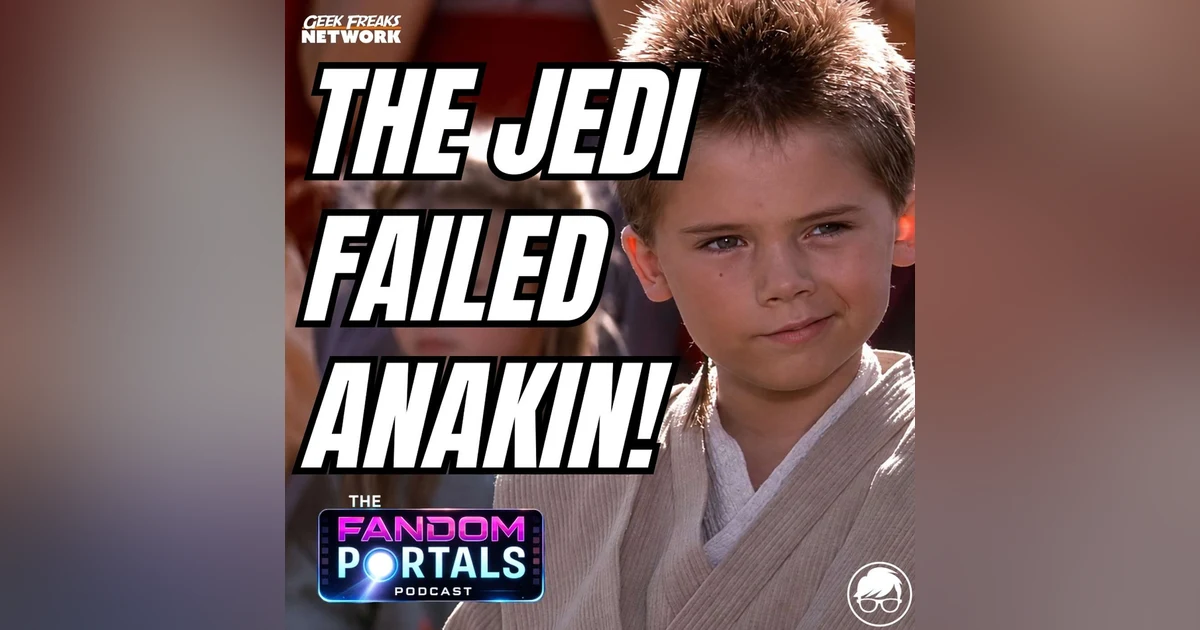
The Phantom Menace Was Right About Fear | Star Wars Episode I Explained Twenty-five years after its release, Star Wars Episode I: The Phantom Menace remains one of the most debated films in the franchise. While much of the conversation has focused on Jar Jar Binks, politics, and midichlorians, Aaron and Brash explore a deeper question: What if The Phantom Menace is really a story about fear? From Anakin Skywalker's separation from his mother to Qui-Gon Jinn's belief in prophecy, this...


 RSS Feed
 The Phantom Menace Was Right About Fear | Star Wars Episode I Explained
Twenty-five years after its release, Star Wars Episode I: The Phantom Menace remains one of the most debated films in the franchise. While much of the conversation has focused on Jar Jar Binks, politics, and midichlorians, Aaron and Brash explore a deeper question:
What if The Phantom Menace is really a story about fear?
From Anakin Skywalker's separation from his mother to Qui-Gon Jinn's belief in prophecy, this episode examines how fear influences nearly every major character in the film and plants the seeds for Anakin's eventual fall to the dark side.
The discussion explores whether Qui-Gon Jinn was truly the wise mentor fans remember, why Obi-Wan Kenobi may not have been ready to train Anakin, and how the Jedi Council's fear of being wrong contributed to their downfall. Aaron and Brash also break down the iconic Duel of the Fates, the revolutionary visual effects work from Industrial Light & Magic, and why The Phantom Menace deserves far more credit than it often receives.
If you've ever wondered whether the Jedi helped Anakin Skywalker or emotionally abandoned him, this is the episode for you.
Takeaways
Fear becomes dangerous when it is suppressed rather than understood.
Qui-Gon Jinn's actions may have unintentionally contributed to Anakin's downfall.
The Jedi Council's fear and arrogance blinded them to the return of the Sith.
Anakin's journey begins with emotional loss long before he becomes Darth Vader.
The Phantom Menace explores childhood pressure, identity, and belonging.
Obi-Wan was forced into a teaching role before he was emotionally ready.
The Duel of the Fates is one of the most important moments in Star Wars history.
Darth Maul represents the violence that emerges when fear takes control.
The film's visual effects helped revolutionize modern blockbuster filmmaking.
The Phantom Menace is far deeper than its reputation suggests.
Chapters
00:00 What If The Jedi Failed Anakin?
01:24 Synopsis of The Phantom Menace
03:32 George Lucas Changes Cinema Forever
07:31 The Evolution of Star Wars Lightsaber Duels
09:40 Qui-Gon Jinn: Maverick Jedi or Dangerous Idealist?
13:45 Obi-Wan and Qui-Gon's Complicated Relationship
23:20 The Jedi, Politics, and the Republic's Corruption
25:43 Did Qui-Gon Manipulate Anakin's Destiny?
32:39 The Chosen One and the Problem with Prophecy
34:14 The Most Important Lesson in The Phantom Menace
36:35 How Anakin Developed Invulnerability Bias
40:59 Emotional Isolation and Childhood Trauma
46:44 Why Obi-Wan Wasn't Ready to Train Anakin
56:58 Fear as the Central Theme of The Phantom Menace
59:31 The Jedi Council's Greatest Mistake
01:00:27 Duel of the Fates Explained
01:02:12 Could Qui-Gon Have Saved Anakin?
01:13:47 Jar Jar Binks Revisited
01:15:25 Jake Lloyd, Ahmed Best, and Fandom Backlash
01:20:33 Final Thoughts
Most Valuable Takeaway
Fear becomes dangerous when people suppress it instead of understanding it.
The Phantom Menace isn't simply the beginning of Anakin Skywalker's journey. It's the story of a frightened child being told he is special, powerful, and destined for greatness while simultaneously being separated from the people who helped him feel safe. The tragedy of Darth Vader begins not with anger, but with fear left unsupported.
Keywords
Star Wars, The Phantom Menace, Anakin Skywalker, Qui Gon Jinn, Obi Wan Kenobi, Darth Maul, Duel of the Fates, Star Wars Theory, Jedi Council, George Lucas, Star Wars Explained, Star Wars Analysis, Prequel Trilogy, Darth Vader Origin, Fandom Portals Podcast
Contact Us:
Website: https://www.fandomportalspodcast.com/
YouTube: https://www.youtube.com/@FandomPortals
Instagram: https://www.instagram.com/aaron_fandomportals/?locale=en Threads: https://www.threads.com/@aaron_fandomportals
Email: fandomportals@gmail.com
Letterboxd: https://letterboxd.com/fandomportals
Discord: https://discord.gg/7Q4TAmSP
00:00 - Big Question And Welcome
02:00 - CGI Leap And What Still Holds
06:15 - Lightsabers And The Prequel Style
07:27 - Qui-Gon As A Rule Breaker
20:55 - Tatooine Ethics And Saving Anakin
30:19 - Gifted Kids And Invulnerability Bias
37:37 - Attachment, Fear, And Emotional Suppression
44:19 - Obi-Wan Thrown Into Mentorship
45:57 - Palpatine Turns Fear Into Power
48:22 - Duel Of The Fates And Destiny
56:39 - Jar Jar, Child Actors, And Kindness
Big Question And Welcome
SPEAKER_00What if the Jedi didn't save Anakin Skywalker but emotionally abandoned him? And what if Star Wars Episode I, the Phantom Menace, has been misunderstood for 25 years? And its real messages about fear, pressure, and the dangers of suppressing your emotions. We discussed that and more about the Phantom Menace on the Phantom Portals podcast. You know what's hard to say? Phantom Menace and Phantom Portals. Very difficult. How are you today, Brash?
SPEAKER_03I am very well. Very well.
SPEAKER_00That's good. Very good to hear. Welcome to the Phantom Portals Podcast, everybody, the podcast that proves that your favorite film has something to teach you. If you want more from your movies, you are in the right place. My name is Aaron. I'm a teacher and a film fan, and I'm joined by Brash. And today, Brash, we are doing The Revolution. Came out in 1999, a movie of both of our childhoods, I would imagine, that turned our nine-year-olds' imaginations on their heads. Star Wars Episode 1, The Phantom Menace, reignited a passion for many parents, too, I would assume, who are viewed and loved the original trilogy. But the Phantom Menace, Brash. There's a lot to unpack there, and I think this story has been kicking around George Lucas's head for a while, from what I've researched and read, to the point where he always thought he could make a prequel trilogy for the original three Star Wars movies that he had made, because there was always the option to look into where the characters he created had come from, in terms of especially Anakin Skywalker, which we see in this movie particularly. But I feel like he didn't have the technology at the time to pull this off because this movie really stretched the boundaries on what films could do to the point where I think George Lucas was actually a a front runner, and this is a movie that would fail forward, so he would make it in this technologically advanced age, whether it succeeded or not.
CGI Leap And What Still Holds
SPEAKER_00But either way, it would move the cinema experience forward in terms of technological filmmaking. Because this movie alone has uh 1,900 visual effects shots, which is more than triple of what the original Star Wars had in 1977 with only 360 shots. So Industrial Light and Magic really pulled their weight on this one, Brash, for the visual effects. Do you think they hold up watching it in 2026? What do you think?
SPEAKER_03I was saying they did, because I only just done just before this, I was like, oh, I got time. So I sat down and watched like a bit of a snippet quick take on the on Phantom Menace and brought up a few of the like the CGI that it used in it. And realistically, like they weren't there, wasn't actually like there was a lot of CGI, but it wasn't so much like people and things. They still used a lot of practical effects. A lot of their explosions and sets and sceneries were all practical. Like I think the biggest CG things were like Coruscant and like the visuals of Coruscant, uh, some of the visuals of the boo, and you know, the most probably like the most CGI character was probably Wano.
SPEAKER_00Yeah, yeah, exactly. And also Jar Jar Binks as well, who's been credited as being one of the very first fully rendered digital uh characters ever made, played by Ahmed Best to a mixed reception, we'll say, from audiences. I feel like whether you like or hate Jar Jar, the technological achievement of putting him on screen is still one that is worth watching and noting when you're looking at this movie. But in terms of what you were saying, in t with the visual effects, this kind of works as like the gateway drug or the transitional movie between old Hollywood and new Hollywood. Because the movie that comes straight after this, Attack of the Clones, that was when George Lucas fully moved into a digital movie, movies being digitally filmed and digitally made. And Attack of the Clones is is known to be the movie that one of the first movies that was fully digitally created. So this movie sort of come off the back of that digital revolution, and they had to come up with some really unique ways to combine sound design, especially in the pod race scene, and also some visual effects, in order to pull it off. And as as you said as well, I think some of these really do carry weight today. There are some that you look at in especially in terms of force effects or uh renderings of large battlefields that I look at and say that's probably aged a little bit.
unknownYep.
SPEAKER_03The battle, that one, like at one point I get saw like a backscale of the boo, and like the grass just looked like flat green. Yeah, and then and they got cut to the gungans, and then you could actually see like normal grass and like like blades of grass. But yeah, there was uh yeah, I I know I picked up on that one too when I was in just watching the little skinny of it. We got to like the Naboo fight, and I was like, ugh, and they cut and they cut close to the Gungans on the field. I'm like, oh now it looks alright. I'm like, I swear to god, that looked just like green plastic.
SPEAKER_00Yeah, yeah, or the they have superimposed droids and gungans onto the Windows XP background desktop that everybody knows. The rolling green hills. But one thing they also did in this movie was they, and something that they carried on to a lot of the prequel Star Wars movies, which I absolutely love, was the the choreography lifesaber jewels. They definitely stepped it up in the prequel series, especially with the Jewel of the Fates, uh, which we'll talk about a little bit later in the podcast as well. But just the performances from Ewan McGregor and Ray Park, who play Obi-Wan Kenobi, and also Darthmall, flawless and only improved as they got to Revenge of the Sith, where Ewan McGregor and Hayden Christensen playing Obi-Wan and Anakin pulled off probably the best lightsaber jewel in Star Wars history, in my opinion. But it all started here in the Phantom Menace.
SPEAKER_03Yeah, yeah, no, 100%. That was peak, I think, especially in 1999. That was peak. That's what we wanted to see, you know, like a Jedi lightsaber jewel.
SPEAKER_00Absolutely, 100%. And also to the point where me watching it as a nine-year-old boy in the cinema and seeing Darts Malls lightsaber ignite on both sides, you're like, I didn't even think it was possible, but you know, they came and they gave us something fresh in that sort of aspect as
Lightsabers And The Prequel Style
SPEAKER_00well. But if we if we talk about what this movie offered us, and in terms of what George Lucas actually created, he actually had to do quite a little bit because we knew where the story was going and where it ended. But setting up a whole world, a whole galaxy, a whole political system, a whole Jedi order that had to live and breathe and instigate the fall of Anakin Skywalker, he had to create all these systems that all these characters could walk in. And one of the first Jedi's we see in relation to that wider scope of Jedi is Qui-Gon Jin. And I've been pretty vocal with you about how I feel about him as a character. But we're introduced to him and Obi-Wan as they're going to dispute and work in terms of the Republic for uh wondering why the trade blockade had been introduced in front of Naboo. So Naboo's under this chokehold, and the trade federation is there basically controlling everything that goes in and out of the planet, much to the dismay of the Naboo people. But uh basically the Trade Federation were gaslighting the Jedi Council and the and the Republic saying, no, no, we're not here. This is completely legal what we're doing, it's all good, we're not doing anything wrong, but then also being orchestrated by the puppeteers of Darth Sidious. But as I digress, we are introduced to that character of Qui-Gon Jin and Obi-Wan
Qui-Gon As A Rule Breaker
SPEAKER_00Kenobi. What were your initial thoughts of of Qui-Gon as a character? And he's a very different Jedi, in my opinion, to what we're used to.
SPEAKER_03Yeah, so he like for me, Qui-Gon represents like you can almost say that like he believes in fate or destiny, whereas the Jedi order sort of ends in this sense, because you can see him sort of not so much clashing, but you can see the difference in opinions with the raised from a young kid uh and new freshly new Padawan sort of Obi-Wan, who's quoting doctrine from Yoda to Qui-Gon and saying, hey, we're meant to do it this way, and Qui-Gon's like, no, shut up.
SPEAKER_00Nullifying any sort of feeling or teaching that he's having from Yoda in that instance, saying, I don't feel anything in the force right now. It's important to live in the present moment and be one with the force in that way. Whereas his Obi-Wan's thoughts are lingering on things distant, things in the past, and yeah, Qui-Gon definitely believes that the force is something that should be lived and breathed. And I feel like he also is one to challenge the status quo, which I think is primary to his character, and this is diverting off of from the Phantom Menace for a while. But we know that he was a Jedi that was trained by Dooku, Count Dooku, who was a former Jedi master in the Jedi Order. And he also had some what we will quote and say is progressive ideas, but really these two are just individuals who looked at the system that the Jedi work in and want to be true to the nature of the Jedi, where they work for the force, or the force works for them, or they navigate their morality based on those doctrines and teachings of the force, as opposed to the Jedi Council being a political tool that's used to smooth out the republic's demand, basically. So I think that's the conflict that occurs with Qui-Gon Jin, especially, and it really does uh become foregrounded to us in his relationship with Obi-Wan, who is his apprentice. So initially we see them in conflict, and the first thing that we see in terms of Obi-Wan in this movie is him challenging his master from a perspective of logic force teaching, which shows an inexperience, and Qui-Gon being the master in that sense is asking him to be more mindful. Now, like that's a completely different relationship to what we've seen Master and Apprentice be like in Star Wars previous to this. And I think that is also foregrounded in Claudia Gray's book called Master and Apprentice, where Qui-Gon and Obi-Wan they actually come at odds quite a bit in that book to show that Obi-Wan feels unseen by Qui-Gon, and Qui-Gon also feels like their personalities are at a mismatch to the point where he might not be the best master for Obi-Wan because their ideals are so completely different. And the book shows how they're traveling through that, and eventually, obviously, they come to an agreement that they're they're good for each other. But it's interesting to see how that's a canon novel, and it travels onto this one, showing that Qui-Gon is very quick to say, Hey, Obi-Wan's ready for the trials, I'll take Anakin on as my apprentice now, too, because our ideals are more aligned and I can train him to be the chosen one.
SPEAKER_03And I'll I kind of want to talk to that when we get to up to the Corsair bot about that, because that's I think is one of the most significant parts of the whole movie is that that one scene where Qui-Gon says, Obi-Gon's ready, I'll take on Anakin.
SPEAKER_00Yeah. Yeah. Without discussing it with Obi-Wan as well, because that actually happens in the Master and Apprentice book as well. Qui-Gon basically is put up for a position on the council by the Jedi Council because somebody is stepping down, and one council member opposes, and that's Master Yoda, but he doesn't tell Obi-Wan that he has been appointed because he's waiting to choose whether he's going to decide to do it or not. Obi-Wan sees that as a betrayal. So immediately we're jumping into this movie canon-wise, with Obi-Wan and Qui-Gon being at odds and being in friction. And they do banter off each other, and you can see how they say when they're jumping down into the hangar bay, you were right about something, Qui-Gon, the negotiations were short. Like there's that sort of short quippiness between them. But they're definitely not as close as I would say. Like Luke admired Obi-Wan when he was being trained by him, and even when he was being trained by Yoda, Luke was kind of a little bit of a rebellious sort of student in that aspect. But every time he was teaching him or any sort of lesson he was giving them, you could tell that he was fully invested into the fact that this person that's teaching me knows better than I do. Whereas Obi-Wan was challenging his ideas in terms of Qui-Gon pretty much from the get-go.
SPEAKER_03Yeah, because you have to you have to because you like as a apprentice, when they're younglings, they're taught like as you see in like Attack of the Clones, I think it is. Yeah, attack the clones. Yeah. Yoda when Obi-Wan's looking for uh the cat Camino and Yeah, I know what you're talking about. Into the room with Yoda, who's teaching a room full of younglings. So straight away, as when before they are partnered off with a master or a nice master, they train together in a group indoctrinized and like the ring guy, the Jedi code and everything is sort of given to them as like a hey kids, you wanna be a cool Jedi, you follow these rules. And then so when and quite because Qui-Gon was the same as Obi Wan at one point. So quite until he sort of sort of Dooku sort of keep going out of bounds and sort of Dooku was taught him no, you gotta look outside the order, like just because the order says it's right doesn't make it mean it's right. And doing it one way doesn't mean it's right, and then because uh in the details of the Jedi you see quite unstopped dooku from killing the person from going going that like that far. But yeah, Oberwan's sort of is just coming up as a new, like not new, I suppose, but they've been together for a little bit, but he's coming out of this indoctrinated preschool into like high school with only knowing one way to do things, and now Qui-Gon's like, hey man, just chill, be in the moment, relax. And in and over one's like, that's not how we do things.
SPEAKER_00It was almost like Qui-Gon's trying to teach him to be free thinking in the way that um he shouldn't concern himself with the oppressive viewpoints that are outside of this exact moment. Just look in on this space and see how you feel because generally your morality will guide you and the force will guide you in this way too. But I think one thing that Dooku did really well as a master to Qui-Gon is early on in Qui-Gon's career, he introduced him to the Jedi texts with prophecy, but he introduced those those prophetic readings with the idea that these aren't zealotry or religious, these are something that you need to think about in the context of the time that you're living now. Because yeah, they could tell the future, and a lot of the Jedi say, you know, keep your mind on the present, dwelling on the future is what creates fear and anxieties, and that's a pathway to the dark side. But I I feel like Dooku did well by Qui-Gon by ingraining him in these texts and helping him to read widely and therefore being able to create his own opinion on these very zealotrous beliefs in terms of their being a chosen one and also um bringing balance to the light and the dark side of the force. So I think Qui-Gon came up through the Jedi Order, through the Krace, just like Obi-Wan did. But when he got to the point where he had a master, they very much deviated in that sort of space. And a lot of the times you are selected a like you select an apprentice from the craches that are supposedly in alignment with your beliefs, but sometimes the force acts in mysterious ways. So putting Obi-Wan and Qui-Gon together was at the time probably seen as a good match, but as Obi-Wan progressed in his teachings, they were very different in their approaches, to the point where in the past, Obi-Wan has actually gone behind and has also in the movies as well, gone behind Qui-Gon's back to the council to say that he's doing XYZ in terms of against the council or the republic's wishes. This is especially prevalent when they go to Tatooine and Obi-Wan says, Why do I feel like we have adopted another insignificant life form or something like that? And and Qui-Gon's fully committed to what he's doing, and he's fighting off Padmaya Madala, who is hiding as the handmaiden at that point as well, but also Obi-Wan, who's saying he's defying the council yet again. And I I'm in two minds about how Qui-Gon approaches these, because on the one part you can say he's free thinking and going about his ideals, and then therefore abandoning his Jedi mandate to serve and protect, but then on the other hand of it, you could say that he is impressing himself upon a culture that doesn't really need or acquire his assistance, and that's almost, I'll say, godly, or in a superior sort of fashion. It's almost like going into a less developed country and imposing your views upon them because you see them as ethically superior. And I feel like that's kind of you could look at Qui-Gon's actions on Tatooine, where he's liberating these slaves, especially Anakin, and say that's exactly what he's doing. He's going in and saying, on Coruscant and through the Republic, slavery is really bad and it's outlawed. But it is a complete normality on Tatooine through the huts and through the gangs. It's how people live. And like if we look at I'm no way condoning slavery, no way, no how. But if we look at how Anakin is treated by Watto, the life that he has, especially with his mother there, like he's got a a job, we'll say, employment. He's not treated poorly by Watto. He's fed, he's able to practice his hobbies, he's in a family that loves him, his mother shows him affection all the time. And then Qui-Gon comes in and pulls him away from that environment, that secure attachment and that secure environment. And then everybody wonders why this child had feelings of abandonment and fear associated with various different risk-taking behaviors because he was in this nurtured place, and then Qui-Gon took him away from that and then offered very little support in terms of his emotional regulation. So there's two sort of arguments, and I want to touch on that a little bit later when we get more into depth with Anakin about whether it was a good move or a bad move. But yeah, Qui-Gon's definitely a very unique Jedi, and I think he he opposes Obi-Wan well.
SPEAKER_03Yeah, and like if you notice too, the portrayal of the Jedi and even of the Republic is one of almost like I wouldn't say dictated, but like of fear, like the Trade Federation when they're talking to cities, and he's like, they say this is like, is this legal to blockade and this is like I'll make it legal. But the thing is, if we don't like they said that in I think I can't remember if it's before or after, they're like we don't want to get on the bad side of the Jedi, like like fully in fear of what would happen if they were to oppose the Jedi, which also because Jedi are meant to be peacekeepers, but the Trade Federation like speak them as if they're some boogeyman that if they get one toe out of the line, the Jedi's gonna come through and wipe them out. So there is that sort of sort of and and that's as we said before, like a tool of the republic is what the Jedi have pretty much become, and they call themselves peacekeepers, but realistically they're probably the the council's like, oh, we're having an issue here. Send the Jedi there and make comply. And that's it. Just just do it in a peaceful manner. So they're like and and like like when I know when I first watched it I never picked I was too young. No, but like you pick up on that later as like not it's two sides to a coin. Not everyone sees the Jedi as these awesome peacekeeping heroes. Some people see him as nothing more than thugs and bullies for the republic.
SPEAKER_00Yep, and that is expanded upon in the novelizations that are widely canonized, and especially through the legends and also through the TV series that are coming out now as well. People are kind of looking at the Jedi in a different way. And you can sort of look back on this movie and see that the corruption is taking place under the Jedi's nose, and the whole prequel trilogy could be talked about as being an allegory or an investigation on the hubris of the Jedi, where they're thinking they're superior to everything that's going on, and that is why Sidious was able to sneak in and use basically the propaganda and the messages of the Jedi being evil peacekeepers, and that notion that they are very controlling and some in some aspects in some corners of the galaxy feared to perpetrate that narrative that you know Order 66 should occur and all the Jedi's have been wiped out because they took it too far. They're their job as peacekeepers eventually led them into tyranny and they they had to be wiped out and destroyed. So you can see the the seeds that are planted in the Phantom Menace that expand through the the prequel tril trilogy, and a lot of people like them, and some people don't like them. But I feel like George Lucas's vision for the world prior to the original trilogy, it can't be denied that he's created something absolutely amazing and and fully deep as well, that you can dive into in a million
Tatooine Ethics And Saving Anakin
SPEAKER_00ways. But if we're talking about let's dive a little bit deeper in terms of Qui Gon Jin and looking at his role and his actions on Tatooine in terms of going in and liberating Anakin and the effect that that has on him. So once once they're on Tatooine, there's a party that goes out into the greater streets of of the city, and they meet this boy Anakin and his mother, who's a slave to Wado, and basically they find out that their ship is absolutely destroyed from escaping Naboo previously, and they need parts which they're trying to find in order to get themselves back to Naboo. So now this is where I start to deviate from Qui-Gon being a good guy because he immediately finds Anakin, led by the force, apparently, to this child that is absolutely going to save the day. And he's wise enough to know that in a situation where this child is enamored by Jedi's and obviously has a kind nature and really wants to help people out, he goes in and he says, I see there's no fooling you, Anakin. There's lots of people that need our help, and our ship is damaged, and we have to get them back to. Naboo and Anakin immediately goes, I can help you out. And Qui-Gon goes, Yes, yes, of course you can. Of course you can help us out. And no, he doesn't. There is some arguments online that I've had with people where they say, Oh, well, Qui-Gon didn't make him. And yes, you're absolutely right. He didn't make him, but he's the adult in the room and he's a Jedi and he's wise and he knows how to manipulate a situation, especially with a kid as a impressionable, yeah, impressionable as Anakin is. And you know, his mother wants a better life for him as well. So you could say that he went into that situation, knowing the pieces on the table, and fully influence that situation to get out of it what he wanted, which is not very Jedi-like, I will say.
SPEAKER_01Yes.
SPEAKER_00Even to the point where when the dice was rolled to see which slave he would free, he used the force to influence it. And you could say that, you know, prophetically, the chosen one will bring balance to the force, but if Qui-Gon didn't make that interruption to fate, then perhaps the chosen one never would have risen or be trained, and he'd be freeing Shemir Skywalker instead. So, like, how much influence does Qui-Gon have in the fate of Anakin Skywalker? I think a lot. And he definitely that's not the first time that he influences Anakin in a in a sort of bad way because the Jedi prophecies and the politics are very much above Anakin's head, but he starts to fill his head with these ideas as well, and giving him these I won't say false hope because he acts on the hope and he he pulls him out of those situations, but it's it's definitely as they would say in Lord of the Rings, he's a disturber of the peace.
SPEAKER_03Yeah, and see what like Qui-Gon is is probably one of my favorite Jedi, and like uh we've had we've had talks about our different feelings on on Qui-Gon.
SPEAKER_04Yeah.
SPEAKER_03I'm I'm of the mindset that he's probably one of the better best Jedi if there was. But I do also fully understand that he he tries to well, my feeling is he tries to, and as we said before, in the moment, like assesses the situation in the moment and goes and thinks what is the best solution for this moment. Me freeing him fr Watto, I I don't think it's ever really told, but I'm pretty sure, and I think everyone else is pretty sure the way he picks up the dice, looked at the dice, that that's a way to dice, and it was meant to like and QuiGon knew this, and that's why he intervened because he knew that Wato himself was stacked on that deck.
SPEAKER_00That's true, because Wato did make the terms, you know, blue is the boy, red is the mother. He made that call. So yeah, okay, okay.
SPEAKER_03And I I feel like the dice would have been weighed in that. And for me, what would happen if Smee was uh freed and Anakin wasn't? Like nothing would really roll credits, nothing would reach directed by George Lucas. Nothing would really nothing would really change, and it actually might end up uh being worse because the who like we don't know the inner workings of how the slave trade works, which like is that house that they're living in, is that a property of Warrow that they are living in to work for him? Because it's not like they can just live on the street, because what's the use of a slave on the street they could end up dead or anything like that? You need them to be able to be healthy and working. But if she's not under his influence anymore, should she be in that house? Should she be kicked out of that house? And all you're free now, get leave, go.
SPEAKER_00Yeah, well, that does happen in Attack of the Clones, doesn't it? Because he sells her to somebody else and then she has to go live somewhere else, obviously. So I think you're right, in terms of the whole narrative would would completely change. Another thing that like doesn't sit right with me for Qui-Gon is if he went in there for purely altruistic means, like he was going in there and saying, I'll free this slave because it's the right thing to do, that would that would sit better with me, and then it so happened that he was the chosen one, that would sit better with me than him already knowing and then influencing a situation to free the chosen one, because then it seems like he's going in and manipulating a situation because he feels that the prophecy of the Jedi and the chosen one is more important, and therefore his ideal is above everybody else in the room and must be acted upon. And he says that to Padme as well when he says the Queen would not approve of this, and he goes, The Queen trusts my judgment. Little does he know he's talking to the Queen at that moment. But it's almost that that in that instance I look at Qui-Gon and I say he's very um what's the word, arrogant in terms of his wisdom in a situation where everybody else in that situation has cultural ideals that are different to his, but he perceives his as superior. So he will take this boy from this situation, be his and I don't think he ever feels this way or says this, but he will be his savior. He will train him to be a Jedi and bring balance to the force. Like that's his role in the force for and the force is calling him to do that. And I think that's a very I I think that's a very dangerous position for a Jedi to play in terms of being a peacekeeper and acting on the guidance of the force and then also impressing your will upon a situation that may or may not require it.
SPEAKER_03I feel like in that moment I think Qui Gon sort of uh loses that in that sight of patience himself. He comes across he comes across a boy with I'm gonna say it, high Medaclorian count. Yes, and is like, holy crap, this kid is off the scales. And then I think that for him is like he's just gone with then on this random planet where I found this random kid who has a higher Medaclorian count than even Yoda. And and it is for him, it's he sort of just sort of I think um taken them back. Yeah, with uh how like you said how Dooku showed him the doctrine and the prophecies and sort of that, he sort of just fills, oh my god, this is it, and then everything else sort of he lost sight of. I think that's very true. His main focus then was on oh my god, I think I found the one.
SPEAKER_00It'd be like finding Jesus Christ.
SPEAKER_03Yeah, and nothing distinct.
SPEAKER_00Yeah, and that is absolutely apparent when he takes him to Coruscant and he's put in front of the Jedi Council, and all the council members are asking him to be patient, let them assess him, do their processes, and Qui-Gon's basically there saying, No, he's the chosen one. I'll train him myself if you say no.
SPEAKER_03I'll train my own.
SPEAKER_02Yeah, exactly.
SPEAKER_03So I think you're right. I'll train him. Yeah, like I think he gets yeah, I think he he gets uh overzealous on the fact that he might have found the thing that his master was trying to teach, like show him. He he might have found it, and it and it's this is his opportunity to be the person who it may not be like a self selfish thing, but maybe a slight selfish thing of like, hey, I found the person who's gonna bring balance to the force.
SPEAKER_01Yeah.
SPEAKER_03So and I think in a way, too, of him wanting to pull Anakin and be the one that trains him and be really quickly, is he I think he feels because he also feels that the council is a bit on the not great side at the moment, he doesn't want them to influence him, uh Anakin at all. And wants to sort of like I I think his goal would be to get take Alan Anakin as an apprentice and go far away from Coruscant, far away from any sort of Jedi or influence of the Republic, too. Republic influence anything, and just go off and train him to be a Jedi. And I think if that happens, things could have been a lot different.
SPEAKER_00But Well, I absolutely agree because I think because he was in the mind's eye of the Republic, especially after his feats of greatness, in terms of Anakin, Shiv Palpatine even says early on in this movie, we'll watch your career with great anticipation. So he's already got his eye on him in that regard, and meaning like the Republic has an eye on this Jedi to see where he goes, to see what we can do with him. So that being said, though, I've also seen some beautiful renderings of what it would look like if Qui-Gon trained Anakin, and it's like it's got Liam Neeson as this older haired gentleman, and he's there like supporting him in his relationship with Padme and training him in various different meditative strategies and things like that, because that's exactly what he missed out on as a result of Qui-Gon not being his master.
Gifted Kids And Invulnerability Bias
SPEAKER_00But if we're looking at what Qui-Gon does well and what he doesn't do well, it I bring us to our my most valuable takeaway from the Phantom Menace movie is that fear can become dangerous when people suppress it instead of understanding it, and that emotionally isolating anybody, especially a child when they're feeling a particular strong emotion, is never helpful. So the scene that gets it for me is obviously Qui-Gon tells Anakin that he is gifted. You have Jedi reflexes, no human can pod race like you can, enamoring him to be able to do this feat of absolute greatness, which is win the pod race in Boon to Eve. So he encourages that ability for him, and yes, that's good in a child, but when you're talking about a gifted child like Anakin would be, there is this thing called invulnerability bias. And that means that a child that is encouraged to do these awesome things and told that they're special to the point of being superior to everybody else, they end up diving into these risk-taking strategies where they need to believe or they do believe that they can win against impossible odds and they can save the adults around them, and that has detrimental effects to them as they grow up into an adult, if that is exasperated and facilitated. Because success can occur despite the impossible odds. And that is exactly what happens with the pod race. He has these insurmountable odds. He's got a pod racing vehicle that is like insufficient in terms of everybody else's vehicle. But due to his skill and due to his alignment with the force, he's able to win that and therefore save his friends. So he he believes then that if I'm powerful enough, I can stop bad things from happening. And that is ingrained because Qui-Gon puts that belief in him to start with and then doesn't co-regulate with him afterwards to say, yeah, this was great, but let's temper our expectations. Also, I'm freeing you from your mother, I'm taking you away, and now I'm going to train you to be a Jedi. So not only are you special and you can change the fate of the world, but I'm going to teach you to do that even more. And then as his progression goes on, he obviously loses Qui-Gon, but Anakin still believes in those fundamental things where if I'm powerful enough, I can stop bad things from happening. And what's the bad thing that happens to him in the Attack of the Clones? His mother, he can't save his mother. And when he can't do something that he believes that he could, and he's told all his life that he's so great and he's so powerful and he can change all these things, it sends him into an uncontrollable spiral. And as a result of that uncontrollable spiral, he feels loss for the first time. And when he feels lost for the first time, he fears feeling that again. And then in revenge of the Sith, why does he turn to the dark side? Because he wants to prevent himself from feeling that loss at the hands of his wife Padme. Because connection, love, and possession is what apparently leads to the dark side because he has that fear of loss, all ingrained in him because he's told from the age of nine that he is a special boy with special powers, and he has saved an entire planet of Naboo, not once with the pod race to get their queen back, but twice in the Naboo cruiser at the end to blow up the Trade Federation ship. So he has this invulnerability bias and the knowledge that he's gifted, and he also has an advocate to talk to adults to say, no, he is a special boy, and I'm going to train him to be a Jedi. And Qui-Gon puts that ideal in his head, and I don't like him for that.
SPEAKER_03Yes. No, uh I yeah, and like it's a hard argument to go against because everything is everything you said is true from a certain point of view.
SPEAKER_01Nah, I got him.
SPEAKER_03But uh no, but yeah, yeah, um fundamentally you are correct, and I think it is because of the fact that because Qui-Gon said these things initially, but because he's the one who says it, and then couldn't follow through with anything else, and no one no one else really knew that Qui-Gon said these things to Anakin. So no one no one could either reaffirm that or be like, yes, you are special, but he goes to Obi-Wan thinking, yeah, I'm a special, I can do a lot of things, becomes like this arrogant sort of pad one, sort of a bit like what Obi-Wan was, but not so much in a follow-the-rules logic sort of way, you know, in a more of an arrogant, I'm really cool, I was always told I was gonna be cool, and I'm gonna be the rattest Jedi ever. But that's how Obi-Wan and Anakin are different in their arrogance. Um but no one's ever been able to or no one knows that he was told he was gonna be specials, no one knows to temper it back and be like, hey man, just because like just because you are strong in the force, just because Quaiwan said that there's a possibility that you could be the chosen one doesn't make doesn't mean it's true. Or like you're still gonna you're still gonna like realize that you can't you can't fix everything.
SPEAKER_00Well yeah, there are limits to your power. I think you could you could look at it in parallel. Anakin's journey in terms of being a special force-wielding chosen one can be looked at in parallel with gifted children in terms of athletes or even child stars, and you can see how some of them grow up to the point where they're very emotionally fragile, and under various pressure situations and conditions, they tend to fail or don't have the capability or the tools to to process emotional dysregulation. So I think also once he was taken from Naboo and he's put into the hangar of the ship, and there's that scene where he's talking to Padme and Jajar Binks in the the hangar, and he starts to say that he's cold and he misses his mother and things like that. That's the time where he kind of needs that co-regulation and that really supportive adult because children need safe adults during stressful transition times, and that's definitely what he was going through. Instead.
SPEAKER_03Yeah. So then he gets his validation that way. Okay. Yeah. But because he's got the point where, like, oh, maybe we we maybe we should like kids scared, maybe we should leave an adult him with him to, you know, make sure the kids are okay. They're like, nah. Just let him and the Astrojoids sit in this starship.
SPEAKER_00Yeah, exactly.
SPEAKER_03That's gonna be fine.
SPEAKER_00Yeah, and then you know, he even sort of gaslights our two in that way and he says, Oh, Qui-Gon told me to stay in this ship, so that's what I'm gonna do. Like, he you could even see that in that moment, Anakin's attitude, which we see exasperated in Attack of the Clones and then Revenge of the Sith as well. That sort of cockiness and cheekiness is already there within him because of his ability, because he knows he's gonna survive that situation, but he it in in the immediate moments after he leaves Tadoen, the first person that he talks to on that ship is Padme, right? So he's going through this emotionally stressful time. He's just left his mother and he has this secure attachment with his mother as well that he's then been taken away from. The first person he talks to is Padme. She makes him feel emotionally connected. So what happens in the future? He falls in love with this woman and marries her. So he like he attaches to the first adult that shows him any kind of compassion and carries that forward for the rest of his life.
Attachment, Fear, And Emotional Suppression
SPEAKER_00Well, we look at it in that situation, but then again, when he's brought in front of the Jedi Council, which is the scene we kind of wanted to talk about as well, and Qui-Gon says that he'll train him like right in front of Obi-Wan, who's his Padawan.
SPEAKER_02It's almost like what about me? Like telling your mistress that you'll you'll be with them instead of your wife right in front of them.
SPEAKER_00But but no, Anakin, I feel like in that space is told once again that he's the chosen one in front of these people, and he shows these abilities, and the people in that room all see him identifying the cup and the ship and doing all the things that the the force-sensitive child should do, but they're hooked on the fact that he's feeling this fear. And through my reading and through my research, it has been fundamentally shown that any person that goes through the Jedi training at an older age, Anakin being nine, Obi-Wan was three. Um, there's a Jedi called Rail Averos, who was also Dooku's apprentice. He was five, and before Anakin, he was the oldest Jedi apprentice that people had like known to be taken on by the Jedi at five years old. And they say that he's too old because he's he's got that fear already and that connection and that loss. And it goes back to the point of the Jedi order being basically brainwashers of these children because at a young age you don't form any connections other than the people that are around you, and your normal becomes what is normal. So being raised in this crash and being told all of these awesome ways to emotionally regulate, but never having any form of emotional attachment is hard.
SPEAKER_03So when they're older, control all these emotions that you'll never have.
SPEAKER_00Yeah, exactly.
SPEAKER_03Control you know, you must be able to control hate, but make sure you never hate.
SPEAKER_02Yeah, never never feel hatred.
SPEAKER_03Yeah. So And here's ways you can temper that, but you'll never feel it. Right?
SPEAKER_00Yeah, but Anakin's attachment to his mother is is so secure, and the reason that he fears that loss is because remember when they're leaving each other and he's walking with Qui-Gon, right? He's walking away with Qui-Gon, and Qui-Gon's just walking away thinking, Yep, mission done, wipe my hands of this planet. Awesome job. And Anakin looks back and turns to his mother and then runs back to his mother. And Qui-Gon sort of stops and waits, and his mother said they have that conversation where they say, Will I ever see you again? What does your heart tell you? I think I will, maybe, I'm not sure. So that uncertainty is there as well.
SPEAKER_02And Qui-Gon just stands there with his arms folded, like doing nothing to regulate the child or help the situation or comfort the mother.
SPEAKER_00Pretty much. Yeah, so I feel like that lack of support is what ingrains that fear into Anakin, and then also the neglect, well, I'll say neglect on that child in terms of his emotional stability is also what leads Anakin to that path of fear, and fear leads to the dark side because oppressing some emotion oppressing suppressing his emotions doesn't really remove them, it actually intensifies them. So studies have shown that kids that internalize their emotions and suppress them, they form these habits that they experience these high internal stress levels as a result of it because of their poor emotional processing. So we can see Anakin do that later on because he's removed from his mother, he's isolated from his secure attachment. He's told that attachment is dangerous as well by the Jedi, so don't do that. And also that encourages feelings of guilt. So he's got all these love feelings for towards Padme as he's growing up and he's has to suppress them because the Jedi won't allow it. So anything that makes him feel good and happy, he's actually starting to feel shame towards. And it's just yeah, it's just a system for disaster, it's a plug hole that Anakin's going down, and it's just a horrible place to be. But let's talk a little bit about Obi-Wan being thrown in the deep end in terms of basically following uh Fygon's word to train Anakin. What are your thoughts on Obi-Wan as a master to to Anakin? We can say he did his best, we'll say that.
SPEAKER_03Yeah, and so from my point of view. From a certain point of view, from a certain point of view. The father figure that Anakin never had. Obi-Wan tried to do that, but even Obi-Wan says you're like a brother to me.
SPEAKER_04Yeah.
SPEAKER_03So he's more like the older brother. And I know from experience that just because he's your older brother doesn't mean that it's gonna be responsible. So not that the things he teaches you may not be the responsible way to do things.
SPEAKER_01Yeah.
SPEAKER_03But that that's how I feel it. Like he did he did his best, but I also feel because he went straight from being a Padawan who probably wasn't quite ready to become a knight to straight away training a newly new youngly a new apprentice. I feel um it was rushed, and I believe what should have happened first well it's it's hard to say what should have happened first because in that also in that sort of scene with the Coruscant scene where uh say where Five and says, I'll I'll train Anakin everyone's ready to go for the trials. It's also the same scene where they tell it's the same scene where they tell the council about a dark force, like seemingly he doesn't really use the force, but he does flips and shit and has a red light tab, so like, hey packs out, ticks all the boxes. This guy's kind of I think this guy might be a Sith, and then the council's like, nah, yeah, and it's like okay, and and like, but one of the people who was saying, oh yeah, there's a guy with a red light tab bar doing flips and shit and attacking us. It's even Obi-Wan also stating that fact, who I would have thought they would they might have been like the Qui-Gon because Qui-Gon's like been opposite, they've been like But Obi-Wan's been a snitch for ages. Yeah, but Obi-Wan's like but Obi-Wan's like they know that Obi-Gon's on their side, and they should have been like, oh, so yeah, he's he's a boy scout, they shouldn't believe Obi-Wan. Even Obi-Wan's saying it, so it might not be this, it might not be Qui-Gon trying to dodge you the system. Yeah, it might actually be true. Maybe we should look into this. It's just nah.
SPEAKER_01No, you're wrong. You're wrong. It's impossible.
SPEAKER_03Seth haven't been around for a thousand years. Can't be. Let's just send a robot. I don't know. Just don't just shut him down straight away. Yeah, just just maybe maybe, maybe, or maybe we should just be. Maybe try and investigate this a little more. See if there's any sort of anything on toward happening, things that are just aligning maybe two coincidentally.
SPEAKER_00But you know what? I think Obi-Wan was definitely not ready to be the master because he he couldn't have been his father figure to start with, and he was barely ready to be his his mentor.
Obi-Wan Thrown Into Mentorship
SPEAKER_00He becomes Anakin's master out of loyalty rather than readiness. And because he doesn't have that stable emotional attachment to somebody who is morally and emotionally stable themselves, it meant it meant that Anakin was then unable to regulate his fear, his grief, his identity development, which then also led him to that hyperattachment and then also his emotional dysregulation. So and through trauma research, you can see people who go through that separation trauma. Do you know what they often have as as symptoms of that brash? Nightmares, obsession with safety, fear-based decision making, and emotional possessiveness. Does that sound like Anakin during the Clone Wars? I think it does. Tick, tick, tick, tick.
SPEAKER_03Maybe, maybe slightly.
SPEAKER_00Yeah. So, you know, Qui Gon represented the mentor that who who may have allowed Anakin to find that emotional balance, and he's he's that bal he's that mentor that would have operated outside of the strict doctrine of the Jedi, whereas Obi-Wan operates within it and thought he was doing the best thing for Anakin by teaching him the ways of the Jedi as Obi-Wan knew it. But unfortunately, he was teaching Anakin what he thought he needed and not what he actually needed, which is where the detriment came from. Which, you know, we could do another podcast on whether Anakin's fall was Obi-Wan's fault or Qui-Gon's fault. It could be both. Both of them messed up really badly.
SPEAKER_03Well, we could just blame it all with Palpatine.
SPEAKER_00Oh, Hunt, I think that's the true person we should blame because that's that's an interesting thing that we should look at too, in terms of fear being the emotional driver of
Palpatine Turns Fear Into Power
SPEAKER_00this movie. The only person in this movie that uses fear advantageously is Shiv Palpatine. So the first thing that he does in this movie is he creates discontent amongst Naboo in the Trade Federation and then therefore creates discontent in the Senate with Chancellor Valorum indicating a vote of no confidence. So he uses fear politically to influence those systems to put himself into power. Now, Anakin fears loss. You can see the people of Naboo fear being taken over. Obi-Wan fears detachment from Qui-Gon, and Qui-Gon fears being wrong about the Jedi being like the Anakin being the chosen one. So the only one that really operates in this space of power is Chief Palpatine, because every single major character in this story is influenced by fear, even to the point where you can talk about Jar Jar. He fears conflict and responsibility, and then he's promoted to Bombard General, which is a great decision. But the Jedi also fear an imbalance in the force, and everything that they do is based on that fear. So Maul, for example, he barely speaks a line in the movie, but symbolically he represents the inevitable violence that happens once fear takes control, and that's what the duel of the fates is. As soon as fear takes control and Palpatine is in power, the duel of the fates occurs, and Maul, the embodiment of fear, is there to dominate the situation and the institution. So I think that fear is definitely something that the characters in this story uh is succumbing to.
SPEAKER_03Yeah, and you could also say the councils or like the council may say that uh Anakin is fearful, but I believe the councils themselves are fearful. They get told of the Sith order, and the first thing they do is lock up and say, No, can't it can't be that. Well, we would have felt it.
SPEAKER_00Absolutely. So, yeah, they're they're operating this space of safety and control because if the Sith have emerged and if there is a corruption within the Senate, it's happened under their nose. So they're also fearful of being wrong, for one, but also fearful of what that means in terms of public perception of the Jedi.
SPEAKER_03Which is probably investigation.
SPEAKER_00Yep, all knowing. Or the records were deleted from the Jedi Archive, Master Yodo, you know. So yeah, I think that fear plays a really big part in this movie, and it's the embedding of the seeds of fear that grows that ends up being what leads to Anakin's
Duel Of The Fates And Destiny
SPEAKER_00fall. But before we end, we might just talk about the Jewel of the Fates quickly because it is one of the most significant scenes in this movie, but also in the Star Wars canon. So the Jewel of the Fates is the lightsaber battle between Darthmore, Qui-Gon Jin, and Obi-Wan Kenobi. And I believe it's Dave Falone that goes on record to say that the Jewel of the Fates, no, it's George Lucas. He says the Jewel of the Fates is literally the Jewel that decides Anakin's fate. So if that jewel had ended differently, Anakin's fate would have been different as well. But if you look at it from terms of the prophecy being the chosen one being bringing balance to the force, perhaps the jewel of the fates played out as it was supposed to.
SPEAKER_03Well, it's it's it's fate.
SPEAKER_00Yeah, well, yeah, in the end, Anakin did have the wrong master. He fell to the dark side, but he did bring balance to the force in the end through the actions of saving his son. Well, yeah, he first of all, he destroyed the evil emperor, who was the evil emperor of the Sith, and then he destroyed himself to save his son. So through Luke and through Anakin's choice to turn and the very last hour of Return of the Jedi, he did bring balance to the force. So when you're talking about the duel of the fates, fate being that Qui-Gon had to die in order for the balance of the force to occur in the Return of the Jedi later on. Whereas some people argue that the fate that is being destroyed in this duel of the fates is the fate of Anakin Squirewalker having a true and supportive master in Qui-Gon Jin.
SPEAKER_03Whereas if that happened And realistically, I think you can look at it both ways and still be right.
SPEAKER_01Yeah.
SPEAKER_03So if if you could call the Jewel of the Fates whoever wins this duel, be it well realistic, yeah, whoever wins the jewel, Qui-Gon or Maul, the fate of Anakin would have been could have been a lot different. Yet even if, say, Maul had lost and Qui-Gon won and Qui-Gon trains Anakin, there's no reason why Palpatine could uh Paletan uh Palatine couldn't shift his plans slightly to still get the same outcome.
SPEAKER_00I 100% agree. I think the reason he honed in on Anakin was definitely because he saw that vulnerability and that lack of support, and he knew how to change the narrative of how the Jedi were perceived, and Anakin was in a vulnerable space, having gone through various different traumas in the past, and also Palpatine knowing about his connection to Padme as well. He was definitely very manipulative in that sense, but he picked the right person to manipulate as well, being the chosen one, because the Jedi, in all of their hubris and humility, they offer a lot of teaching and guidance, but not a lot of support when you deviate outside of what their worldview looks like. So I'd be interested to talk to some people who are who are die-hard Jedi go-getters who think that they actually have because I'm kind of I think I shift on the side of the Jedi are pretty useless, to be honest, in my thinking. Useless to or outdated and naive is where I sit at it, especially during the prequel eras. I think the best Jedi that I have ever encountered would probably be Kanan Jaris, because just the way he connects with people and the way that he like loves and uses the force and teaches his apprentice and Padawan, it's all through connection, it's all through family, it's all through that vulnerability. He supports his Padawans the best that he can in those that he loves. He's a leader as well. I think he is the Jedi that the Jedi should be. Whereas the ordered Jedi Council and in the age of the Republic, I think the Jedi are at their absolute worst. And I yeah, I don't think they're the saviors that everybody. So you might say that I would be an easily manipulated pawn for Palpatine as well.
SPEAKER_04Yeah.
SPEAKER_00Yeah. Don't get me wrong, I do like Qui-Gon because of his difference. I like how he's represented as a different Jedi to everybody else, and I like how he challenges the status quo. That's something that I really enjoy about that character. What I don't like is that he he knows he's doing that and he does it to the point where I feel like he believes he's more wise than others who believe differently to him. Because he feels like, or I feel like, he he expresses himself as being more enlightened or more wise than those around him. And as a result of that, his word has to be listened to and his decisions must be followed because he's operating on a higher space of prophecy, of Jedi Council knowledge, and not that the Jedi Council are beneath him, but they're operating on a space that's reliant on systems and adhering to the Republic, whereas Qui-Gon answers to the force.
SPEAKER_03Yeah, and I but I I think because we have a larger span to get to know Canaan, whereas we get one movie sort of to look at uh to look at Qui-Gon, I think it's because if we had like the the book you read the apprentice and master book you read, with Qui-Gon in that and Obi-Wan's sort of relationship throughout that move uh throughout that book, it probably it probably seems that Qui-Gon's quite normal. Whereas I think when we brought up when we brought up in or when I brought up that once Qui-Gon finds Anakin, his I think that's when his demeanor shifts. I think that's where you probably see him as being not as great, yeah, and and higher than higher than high and mighty and more wise than anyone else, because I think it's because he thinks he found that treasure in the chosen one.
SPEAKER_01Yep.
SPEAKER_03And is like, I did it, I found it, I'm right.
SPEAKER_00And then this proves all the things that I've read in the Jedi archives for so long.
SPEAKER_03All the things I do in the way I am as being correct because brought me to the chosen one. So therefore I must be the one who's correct, and that's why he was probably so hard against the counsel saying, I don't care if you say no, I'm still gonna train him.
SPEAKER_01Yeah.
SPEAKER_03Because he he thinks he's he thinks he's he's founded in everything he's gone through, everything he's been taught, everything he believes for him has just been like validated.
SPEAKER_00Yeah, yeah. And I think the book definitely did that. So I'd recommend anybody who wants to go and read Claudia Gray's Master and Apprentice book because it did put me in the mindset of Qui-Gon a lot more, and it showed me that he is a man with flaws who does internalize a lot of his behaviors and analyze them and care about other people's feelings as well. Because when he was selected to be on the Jedi Council by the Jedi Council, there were two things that went through his head. One, he knew that one member of the council opposed that decision. He found out it was Yoda and he was very upset by that and wondered why. And then secondly, he was upset because it meant that, well, when Obi-Wan found out, he he felt sadness because Obi-Wan had found out in the wrong way that he would no longer be his master. But he also felt some anxiousness about being his master because of their personality difference. And to me, that shows the more human qualities of Qui-Gon as opposed to who we get in the movie, where he does seem a little bit more morally superior than everybody else that's around him. So it gives depths to the character to the point where you look at him and his decisions and the things that he does in the Phantom Menace a little bit more different. But that being said, Brash, you have mentioned that his demeanor changes as soon as he finds the chosen one, which I think is absolutely correct. He's definitely validated, he's more, I won't say anxious, but he's more determined to be sure of himself. Sure, yeah, and sure of himself to bring his decisions to fruition and also to convince the council and all those that will listen that this is the new way forward. So he gets a little bit more desperate in that space as well. So but yeah, definitely an interesting character.
Jar Jar, Child Actors, And Kindness
SPEAKER_00But I think we have fully encompassed the movie of the Phantom Menace, and we might end it there, Brash. I mean, we could talk about like Padme and Jar Jar and things like that, but Yeah, we could, because yeah, Pad Padme, Kira Knightley. Well, yeah, that double thing.
SPEAKER_03I I still I still can't tell.
SPEAKER_00I look I there are websites dedicated to finding out which scenes were Kira Knightley and which scenes were Natalie Paulman.
SPEAKER_03I I honestly though I can't say I look too hard, but honestly, every time I watched it, I can't tell.
SPEAKER_01No, neither can I. Absolutely because Judge Evings not as bad as everyone reckons. I don't think so.
SPEAKER_03Like I like when I was a kid, Judge Evans was like, oh, a fun character. And then that's who he was for. Yeah, and when that was there. When I got older, I was like, yeah, a bit annoying, but whatever.
SPEAKER_00Well, this is what I mean when it when we look at Star Wars and the prequel movies, we grew up with them when we were nine years old, and I freaking love them, right? And I think people that watched as older people who were used to the original trilogy really didn't vibe with that kind of Star Wars because maybe it wasn't what they expected. But even George Lucas says Jar Jar is a very different character to anything we've had on Star Wars before. It's kind of akin to when they first introduced Yoda and he was a little bit zany and wacky and a little bit more Muppety than what everybody was used to from a Star Wars movie. But essentially, Star Wars is for everybody, but there is definitely that marketable space for kids and young people too, and Jar Jar fits into that as well. But my favorite thing about Jar Jar is that Ahmed Best got his redemption in the Mandalorian series. He got to be the one that saved Grogu and got him out of the Jedi Temple because he he went through quite a bit of flack for that movie, and so did Jake Lloyd, who played Anakin Anakin Skywalker, which is sad because it's it's sad to know that the fandom can be so disheartening towards those that are acting in things that we like, but obviously they like because they're in it for their careers. And looking back on it, you know, you have famously said on the Fandom Porters podcast that child actors are absolutely horrible no matter what way you slice it. He wasn't terrible, but I think when George Lucas hired Jake Lloyd, there were a few actors there as well that he said were much more polished, but he said that sometimes in a take, Jake Lloyd would deliver something just so out of left field and so natural and so kid-like and so whimsical, he said that he would rather hire him on the 10% chance that he'd do that than hire someone methodical that he would have to coach through every scene. Because it captures the innocence of a child, which is what he wanted for Anakin. So and I think Jake Lloyd did that.
SPEAKER_03And I also think even though his delight his lines were delivered a little bit like statically, I think that's the main gripe most people had, but yeah, as I said, like the dialogue isn't the best anyway, to be honest.
SPEAKER_00Like it's hard to say, and nobody really talks like that. So Jake did the best that he could with it.
SPEAKER_03And um Mark Hamble said the same thing when he was playing Luke.
SPEAKER_02Yeah, like saying that, so yeah, no.
SPEAKER_03Yeah, but um, yeah, as like and as you pointed out, yes, I am not the biggest fan of child actors. Like, uh there are a lot of child actors that would do really well, like Goonies, I fucking mother Goonies, and the whole cast of child actors.
SPEAKER_00Even the Sandlock, the Sandlock is great as well.
SPEAKER_03I love the Sandlock, but yeah, they're more teenager-ish, but I think while rather than child, but you've got to forget, like, you can't you can't really hold a performance against a kid because they're a kid.
SPEAKER_01Like Yeah, 100%.
SPEAKER_03Like you get they they have the job that you need to do. Yeah. They're he's a kid. He's getting told to say a line and he says a line. Like you you can't really fault them.
SPEAKER_04Yeah.
SPEAKER_03So like that so adults giving him hate, I think, was a point a bit hard. A little bit harsh.
SPEAKER_00Yeah, I agree. And Jake Lloyd has been known to say publicly that he went through some mental health struggles as well. So anybody listening, don't do that to people that are acting. Like, have your criticism, sure, but just remember that they're a human.
SPEAKER_03Yeah, you know, it's like I know sometimes it's easy to be mean, but it's better to be good.
SPEAKER_00Especially when you're passionate about something and you want it to be good. I can see where your frustration's coming from and where people's frustration is coming from. But there is a human behind it too.
SPEAKER_02So go and write your own fan fiction.
SPEAKER_03Yeah, and no, I can't understand like people get passionate and yeah, love the media. But like at the end of the day, like, it is just a story.
SPEAKER_00Yeah, just be nice. So, alright. That is all we have time for on the Phantom Portals podcast, guys. Thank you so much for tuning in to our episode on the Phantom Menace. If you love our Star Wars content, make sure you check out our YouTube or our podcast. We have lots of episodes on Star Wars. We did one around this time last year on the Ewok Adventure, so you can go and check that out. That's in the catalog. And we did one as well on Darthmore Shadow Lord with a few more Star Wars ones to come. So check out our channel on YouTube or podcast. It's at Phantom Portals everywhere. And make sure you share this episode with a friend, especially if they're a Star Wars fan. Let them hear about all our opinions on Qui-Gon Jin. See if they like him. We'll see. This is Aaron. Keep learning, keep growing, keep loving fandoms. We'll catch you later. Bye. May the force be with you.


