How Spider-Man: No Way Home Redeems Andrew Garfield | Spider-Man Explained
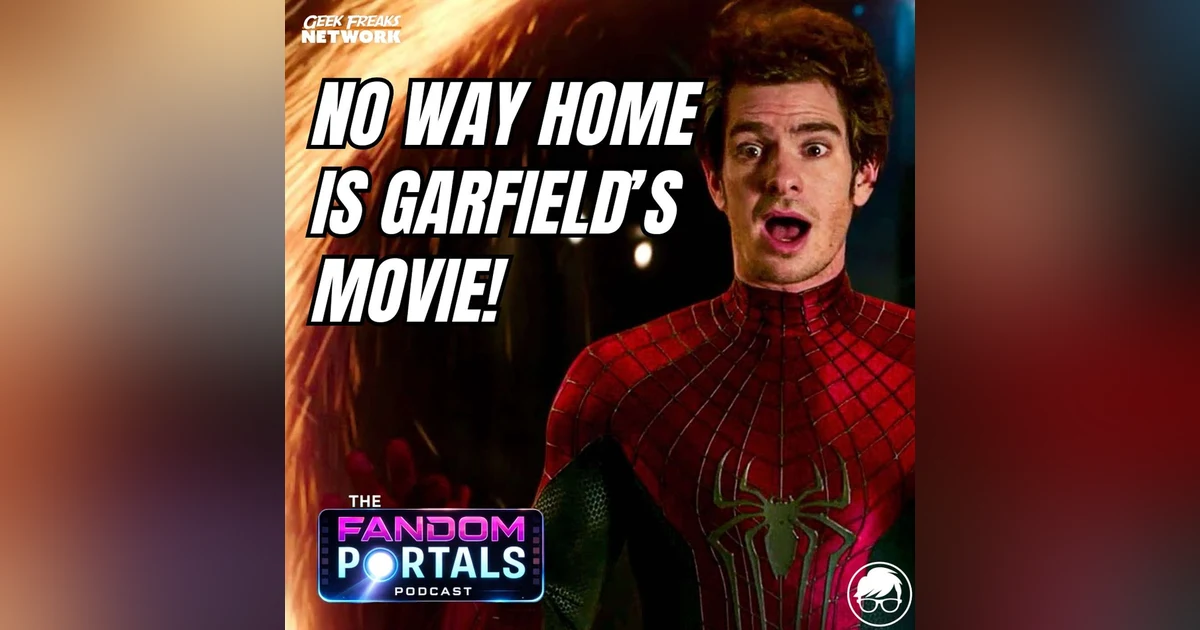

When people talk about Spider-Man: No Way Home, they usually focus on the spectacle. The returning villains. The nostalgia. The three Spider-Men sharing the screen. But beneath the excitement, the film quietly does something much more powerful. It gives Andrew Garfield’s Spider-Man the closure his story never received. In this episode of Fandom Portals, we explore why Spider-Man: No Way Home becomes the emotional story of Andrew Garfield’s Peter Parker and how the film allows his Spide...


 RSS Feed
 When people talk about Spider-Man: No Way Home, they usually focus on the spectacle.
The returning villains.
The nostalgia.
The three Spider-Men sharing the screen.
But beneath the excitement, the film quietly does something much more powerful.
It gives Andrew Garfield’s Spider-Man the closure his story never received.
In this episode of Fandom Portals, we explore why Spider-Man: No Way Home becomes the emotional story of Andrew Garfield’s Peter Parker and how the film allows his Spider-Man to finally move forward after the tragedy of Gwen Stacy.
We break down:
• Why Andrew Garfield’s Spider-Man enters the film frozen in grief
• The rooftop confession and what it reveals about guilt and responsibility
• How Tobey Maguire’s Spider-Man represents wisdom and healing
• Why Tom Holland’s Spider-Man represents a hero still becoming himself
• The emotional significance of the MJ catch scene
• How redemption and second chances define Andrew’s arc
Spider-Man stories are not really about spectacle.
They are about resilience.
And No Way Home proves that sometimes the most powerful hero moment is simply getting a second chance.
Timestamps
00:00 Why everyone misunderstands Spider-Man No Way Home
00:38 The deeper story hidden beneath the nostalgia
01:45 The tragedy that defined Andrew Garfield’s Spider-Man
02:26 Gwen Stacy’s death and unfinished emotional closure
04:47 The rooftop confession and Spider-Man’s grief
07:08 The three Spider-Men representing different stages of heroism
09:22 Andrew Garfield’s loneliness as Spider-Man
11:42 Why saying “I love you guys” matters more than it seems
14:02 The meaning behind the MJ catch scene
16:40 Cinematography parallels with Gwen Stacy’s fall
19:05 Redemption and emotional closure for Andrew’s Spider-Man
21:18 Why Andrew Garfield becomes the emotional core of the film
23:00 The true lesson of Spider-Man stories
Key Takeaways
Spider-Man resonates because audiences care about Peter Parker
Andrew Garfield’s Spider-Man represents unresolved grief
Tobey Maguire’s Spider-Man represents wisdom and experience
Tom Holland’s Spider-Man represents a hero still learning
The MJ catch scene symbolises redemption and emotional closure
Spider-Man stories are ultimately about resilience after loss
Characters and Films Discussed
Peter Parker
Gwen Stacy
Andrew Garfield
Tobey Maguire
Tom Holland
Films referenced include:
The Amazing Spider-Man 2
Spider-Man: No Way Home
Contact Us:
Website: https://www.fandomportalspodcast.com/
YouTube: https://www.youtube.com/@FandomPortals
Instagram: instagram.com/fandomportals/?locale=en
Threads: threads.net/@fandomportals
Email: fandomportals@gmail.com
Letterboxd: https://letterboxd.com/fandomportals
Discord: https://discord.gg/7Q4TAmSP
00:00 - Nostalgia Versus The Real Story
00:34 - Why Peter Parker Matters Most
01:19 - Gwen Stacy And Unfinished Grief
03:06 - Rooftop Confession And Darker Turns
05:40 - Three Spider-Men As Mentor Growth Healing
07:42 - Loneliness And Learning To Connect
10:54 - The MJ Catch And Redemption
13:41 - Resilience Takeaways And Closing
Nostalgia Versus The Real Story
SPEAKER_00When you're talking about Spider-Man No Way Home, everybody talks about the nostalgia. The villains returning, the three Spider-Men together, Tom Holland finally hearing those words with great power comes great responsibility. But under all of that, after the spectacle, there's something much more powerful. One Spider-Man in this movie receives something that the others don't. He gets closure. And today we are exploring why Spider-Man No Way Home quietly becomes Andrew Garfield's story and why the emotional heart of the film belongs to his Spider-Man. Welcome to the Fandom Portals podcast, the podcast that proves that your favorite film has something to teach you. I'm Aaron, a teacher and a film fan, and today we're here to continue our Spider-Man content, deep diving into the films and characters that taught us the most. Now, Spider-Man is one of the most beloved characters in film history. Not because of the suit, not because of the villains, and not even because of his powers. But Spider-Man resonates because audiences also care about Peter Parker. They care about whether he can keep going after that loss. They care about whether he can stand back up after amazing failure. And in Spider-Man No Way Home, we see three different versions of that journey in three different points of that journey. And today we're going to explore why Spider-Man No Way Home is Andrew Garfield's story. Before Spider-Man No Way Home, Andrew Garfield last appeared in the Amazing Spider-Man 2. And when we left Andrew Garfield in this movie, he was definitely a Spider-Man with some unfinished business. The movie ended in an obvious tragedy. I think everybody remembers the scene very well where Gwen Stacy falls from the clock tower and she meets her demise at the end, despite Peter, Andrew Garfield's best efforts. Now, this scene is poignant and not only poignant because it is really well shot, but it's also a signature point in the journey of Andrew Garfield Spider-Man in his Peter Parker journey, because this scene is reminiscent of the fact that Peter has suffered through loss. And as an audience, because that film obviously was the end of his run, we never got to see what happens to him after that. In Nowhere Home, we get a glimpse of it. And it really proves to us that the loss of Gwen Stacy was something that really resonated with this character. But the web forming Mahan is probably one of the most heartbreaking images in any Spider-Man movie. And it shows Peter reaching for a moment that he really can never get back. But the impact still happens. And that is where we meet Andrew Garfield when we find him in No Way Home. It's a few years after that event, obviously, and he is still grappling with the consequences of his failed attempt to save her life. Even Andrew Garfield has said in interviews relating to the amazing Spider-Man 2, years and years later, he said that it ended a little bit abruptly and that he never got the closure. And that's it's a movie that means a lot to him. So being able to come back and revisit that character was something that he was really excited to do. Now, if we look at the three Spider-Man that appear in No Way Home, Andrew Garfield's Spider-Man is definitely one that is frozen in grief. We can tell this because there's the scene in No Way Home where he has that rooftop confession to Tom Holland's Spider-Man where he delivers the famous line that I stopped pulling my punches. He says, I lost Gwen, she was my MJ, and I couldn't save her, and I'm never going to forgive myself for that. And Andrew delivers these lines alone in the frame. You can see that there's darkness behind him as well in the background, and that's intentional because this scene is obviously emotionally driven. And he also ends up saying that I don't want you, Tom Holland Spider-Man, to end up like me. And this line shows a whole bunch of regret, remorse, and it shows this Spider-Man is still scarred and he's got that untreated grief that he needs to work through, that he obviously hasn't done so in a correct way. This is a Spider-Man that got up the best that he knew how to after that traumatic event. As he said, you know, he kept going because that's what Gwen would have wanted. But you always saw Andrew Garfield's Spider-Man moving through his challenges alone. And you can see, like whenever he was trying to solve a problem in the Amazing Spider-Man or The Amazing Spider-Man 2, he'd recluse to his room, he'd try and piece all the puzzle pieces together. Or when he was walking through the schoolyard, he never really had anybody to rely on. And and this is really different to Tom Holland's Spider-Man, who's always had Ned and he's always had MJ. And you can see that in this scene as well, because the scenes with Andrew revealing the fact that he stopped pulling his punches and he got rageful and he got bitter is juxtaposed right next to a flash of Tom Holland, and he's in the frame with MJ and with Ned. And, you know, I think that he feels a little bit of shame as a result of him not pulling his punches because Andrew's Spider-Man was always one, as all the Spider-Men do, run with the theme of with great power comes great responsibility, and he was then using and abusing his power in that way. So in these scenes, Tom has seen looking upward to Andrew as well, and you can see that as almost like a mentor thing where you're looking up to Andrew as the more experienced Spider-Man, and it can symbolize that in a lot of cases. But I think in this instance it's more of like a cautionary tale where Toby stands in as the mentor more so than Andrew. And, you know, I think that in the end, the audience know that Tom has that support network with MJ and Ned, whereas Andrew is was left all alone. And to the audience as well, he was left all by himself to go through that grief because we always saw, and through social media, we see it again and again of him standing alone through the weathers, through the changing conditions of him standing near Gwen's grave, obviously grieving. So we meet Toby in this movie as a completed hero. Whenever he came onto the screen, obviously there's the audience ready reactions, but everybody felt a sense of comfort, which is definitely something that Toby McGuire's Spider-Man gave all of us. And he represents a Peter who's already endured the struggle. So in Spider-Man No Way Home, he's the one that stops Tom from killing the goblin. And the best part about that scene is that he doesn't say a word. So he stops the glider from stabbing into the Green Goblin, which is another throwback scene to when the glider actually stabbed into Toby's version of Goblin, and he he just stares at him with this knowing look. And it's not judgmental, it's more of a softness about where he knows where he's coming from, and he just doesn't want him to walk down the darkened path. So Toby doesn't need any dialogue in that moment either. His calm presence tells us everything that we need, and it's definitely a Spider-Man that has learnt from some lessons that he's gone through before. And with Tom Holland's Spider-Man as well, he's obviously the protagonist. So when I say that this is Andrew Garfield's movie, I'm not taking away from the fact that Tom Holland plays a really important role in this movie. His Spider-Man is a Spider-Man that's in transition. He's still becoming Spider-Man. He's just gone through some major trauma with May's death, and Tom Holland's Spider-Man is still becoming the hero that we're going to recognize, and his story is still being written. Audiences obviously know that too, with more Spider-Man movies on the rise. Where it was when Andrew Garfield went through a traumatic event like this in his Spider-Man journey, his movies cancelled, and we never got to see the end result of that. So I think audiences would agree that Andrew enters this movie in this state of grief, in this state of unfinished business and incompletion. And John Watts, the director, also said that it's very fun in this movie to see Andrew Garfield getting a second chance at playing Spider-Man, but then also his Spider-Man getting a second chance at redemption as well. So it's like real life meets art in that way as well, which I think audiences connected to as well. Now, one thing Andrew Garfield in this movie, his Spider-Man is also the loneliest Spider-Man. We talked about his rooftop confession scene where he always does things alone. But this was really brought up for me in the scene where the three Spider-Man are trying to fight these villains and they're all trying to go their own way about it, and they're all messing it up because they've never worked as a team before. And then they come together, they talk about how they can use their strengths best in this moment to overcome the challenge. And then before they all break up, Andrew Garfield's Spider-Man puts a hand on both of their shoulders and says, Wait, wait, wait, I love you guys. And I feel like that was really something that first came off as comedic. But when you look a little bit deeper, I think you can understand where Andrew comes from in this moment because he did live that life of isolation. He was always a loner at school in the Amazing Spider-Man 1. He was a skater and a thrasher, and he isolated himself through his problems. He figured out everything all by himself, and he always solved those problems solo and he relied on no one really. And every time someone helped him in those moments as well, whether it be Ben trying to be his emotional support, Uncle Ben or George Stacy when he was fighting the lizard or like Gwen Stacy when he was fighting Electro, they always never ended up coming back. And so Andrew knows the weight of loss, but he also knows the effects of things that are left unsaid. So before he leaves to fight which could be the last battle for either one of them, he makes sure that he tells them exactly how he feels. And this solidifies Andrew as probably the most emotional Spider-Man, but it's also one who connects with the audience the most as well because he also feels connected to the two other Spider-Mans and understands their experience in this way as well. And I think that that was really big for him to reach out and say that because he's a Spider-Man that's used to working alone and he's reaching out to try and make these connections. So if we're looking at Toby's Spider-Man, for example, he went through school pretty isolated as well, but he always had a best friend in Harry that that went through everything with him. And Andrew Spider-Man had Harry as well. But as we saw in The Amazing Spider-Man 2, Harry left for boarding school when they were both 14 and helped him through a little bit of his dramas with his parents when they left. And Tom was always with Ned and MJ and also had a mentor in Tony Stark. And Andrew Spider-Man, he didn't really have anybody in that moment, but he ended up building a really good relationship with Gwen. She knew everything about him. She understood him at a personal level as well. Like she would often say that she loves Peter, but she loves the fact that he's Spider-Man. And that was really important for him to know that she didn't just like him because of the mask that he wore, but she liked who was underneath. And Andrew Spider-Man didn't just lose Gwen in the moment when she passed away. He lost the only person that understood him. So reaching out and saying, you know, I love you guys is really big for that character. So I think that was a moment that really stole the show for Andrew Garfield's Spider-Man as well. And for the first time since Gwen's death, Andrew's Peter actually knows that he's not alone because he's got these two other connected individuals who's gone through a similar experience to him, and that's really invaluable when you're going through a traumatic event or when you're trying to work through some of your own struggles. The scene that tops it off though, the scene that really solidifies the fact that Andrew Garfield is the emotional heart of Spider-Man No Way Home is the MJ catch scene. So this is a scene that Andrew Garfield was presented with when they asked him to come back. And they basically said, the only thing that's in stone that's concrete for your character in this movie is that you're going to catch MJ. And Andrew Garfield said, Well, that's enough for me because he thought that there was a lot left that was unsaid for his character. There was a lot left that was not completed, and he knew the effect that it would have on the audience and also his character to relive that moment and be able to make up for it. So with that scene, it's it's very well done because the cinematography mimics the cinematography used in the Amazing Spider-Man 2 to help audiences form that mental connection between MJ's fall and Gwen's fall. The sound becomes that swollen silence. Once again, we see Zendaya is shot from the same way that Emma Stone was shot when she's falling in slow motion, arms outstretched. And you can also see Tom's hand just misses MJ's hand, just as the web hand misses its mark on Gwen as well. When Andrew catches MJ in this moment, he feels that sense of relief, release, and gratitude, and also acceptance. And he also, I wouldn't say revels, but he's definitely proud of having helped Tom's Spider-Man prevent a darker pathway for him that could have unfolded. And this scene really emphasizes that redemption for Andrew Spider-Man and it pins him as the most empathetic Spider-Man as well, having cared so much about obviously his own healing, but not wanting Tom to go down that path, which harkens back to his line about not wanting him to turn out the way that Andrew Spider-Man did. The movie recreates Gwen's death almost shot for shot in that way, but the outcome is what changes in this moment because Andrew obviously catches MJ and the camera lingers on Garfield's face in this moment, and he's a very expressive actor, and he begins to cry, and MJ says, you know, are you okay? Which is the biggest lie. And he says yes. And I think that means more than what we give it credit for. Andrew Garfield actually said in relation to this that in a Spider-Man movie where all three Spiders are on the screen, everybody wants to see the nerd stuff, everybody wants to see the comparisons between all three, and everybody wants to see the quipping and the backcracking and the comparing of the villain stories. But he said his Spider-Man needed this moment, his Spider-Man needed to catch MJ. And as a result of that, he got closure, he got that redemption, and audiences saw that as well. And his emotional vulnerability in this space was what really enabled us to connect with his character. So overall, we can look at the three Spider-Man as Toby representing a mentor and that wisdom side of Spider-Man. Tom is the protagonist, and his journey is still being written. He's the one who we're we're moving through these scenes with. And Andrew is the emotional center. Toby represents that wisdom, Tom represents growth, and Andrew represents the healing, you could say. And Andrew Garfield has actually said that it was one of the most joyful things he's ever done. And he said that everyone was going to be happy to see Toby and Andrew on the screen, and all the pressure was on Tom, and it was going to be the greatest thing ever, or it could have been the worst thing as well. But he had an amazing time on the set. And I feel like Garfield steals the show not because he has the biggest scenes, but because his character carries the deepest wounds and the deepest scars, and he leaves them all out on the table for the audience to see. But we know his history from the past two movies, and the fans of the amazing Spider-Man movies, such as myself and others, wanted to see his character get that closure and that redemption. And one of the greatest things that John Watts did in this movie was allow him to get that and made it one of the emotional core points of the movie. So the Spider-Man stories aren't just really about spectacle, they're about resilience, and we know that. And Spider-Man is the hero who keeps going even when life knocks him down. And that's one of the things we see Andrew do as well, because Toby has survived his struggle and gotten to the other side of it with wisdom. Tom is still learning about his struggle, but Andrew was stuck in the struggle. And I think Andrew's Spider-Man was frozen in grief for almost a decade, and No Way Home finally, finally allows him to move forward. And that is why Spider-Man No Way Home belongs to Andrew Garfield as the emotional core of the movie. Thank you for watching the Phantom Portals, guys. We also have a podcast available. You can find all the episodes anywhere that you find good podcasts. If you enjoyed this deep dive into Spider-Man, make sure you subscribe for more Spider-Man analysis. But we also analyze other movies and try to find the lessons that these movies are trying to teach us. So if you're somebody who likes to get more from your movies, definitely follow and share our episodes with a friend because it really does help us. And until next time, keep learning, keep growing, and keep loving fandoms.


