Lanterns Episode 1 Deep Dive | Is Hal Jordan’s Arrogance Actually His Greatest Strength?


 RSS Feed
 Is Hal Jordan arrogant because he thinks he’s better than everyone else—or because decades of being right have taught him not to listen?
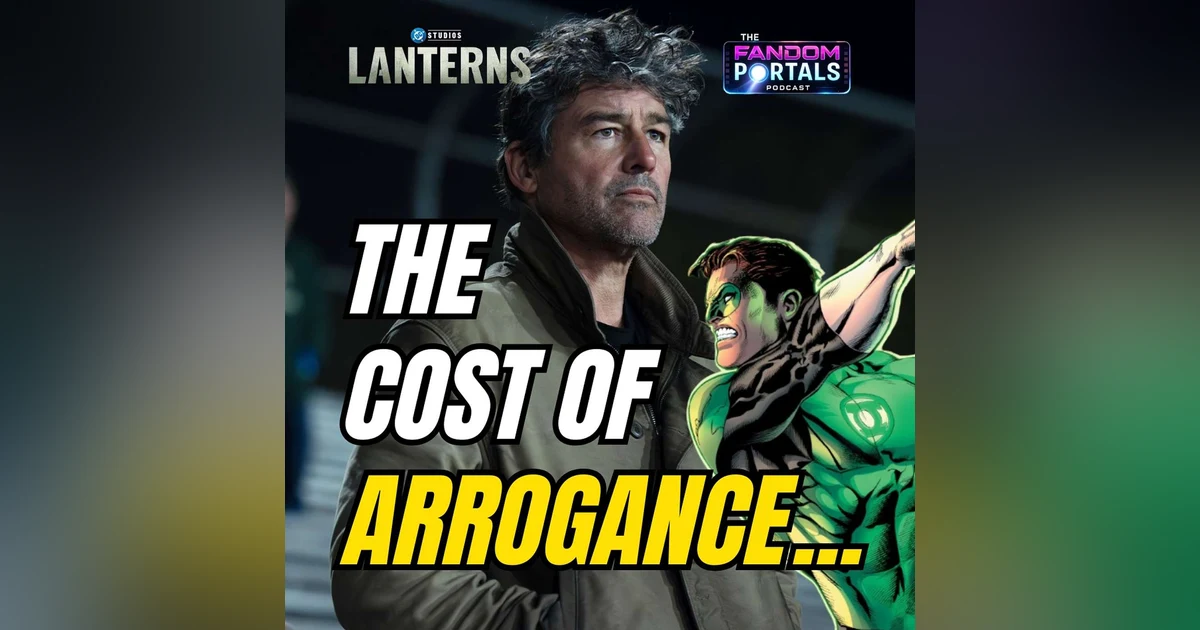
In this Lanterns Episode 1 character analysis, Aaron takes a deeper look at Kyle Chandler’s Hal Jordan, his complicated mentorship of Aaron Pierre’s John Stewart, and one of the most interesting ideas introduced by the new DCU series: the qualities that make Hal an exceptional Green Lantern may also make him a terrible mentor.
Episode 1 repeatedly shows Hal ignoring procedure, trusting his instincts and frustrating everyone around him—and then proves him right. We explore how confidence can evolve into arrogance, why John sees Hal as fearless while Sheriff Kerry sees him as lonely, and whether Hal can teach John to trust himself without simply creating another version of Hal Jordan.
We also examine Hal’s mysterious death, his connection to Rushville, the Manhunters, his history with Sinestro, and why John Stewart may eventually need to teach his mentor something just as important as anything Hal can teach him.
#Lanterns #GreenLantern #HalJordan
In This Episode
Why John Stewart sees Hal Jordan as fearless
Why Sheriff Kerry instead sees Hal as lonely
How Hal changed between 1996, 2006 and 2016
The psychology behind confidence and arrogance
Why Hal's reckless instincts keep being proven right
How being Green Lantern may have reinforced Hal's behaviour
Hal Jordan and John Stewart's mentor/student relationship
Why John's personality is almost the opposite of Hal's
What Sinestro can teach us about mentors who become too certain
Why the Hal Jordan hologram matters
John's role as Hal's eventual successor
Why great mentors eventually have to become unnecessary
Hal Jordan's shocking fate in 2026
The Manhunter mystery and Rushville
Whether Hal's determination could eventually become obsession
What Hal Jordan teaches us about confidence, humility and leadership
Chapters
00:00 Is Hal Jordan Fearless or Lonely?
00:50 What Is the Purpose of Arrogance?
01:45 Hal Jordan Before John Stewart
03:10 The Psychology of Arrogance
04:11 Hal Jordan Mentors John Stewart
05:03 Is Hal Actually Fearless?
06:19 When Fearlessness Becomes an Identity
07:25 The Loneliness Behind Hal Jordan
08:12 Why Hal's Arrogance Actually Works
09:08 Hal Breaks Every Rule in Rushville
10:23 Hal Jordan Is Right Again
11:17 Why Overconfidence Can Be Useful
12:42 Why John Stewart Admires Hal
13:09 Hal's Best Green Lantern Lesson
13:35 When Confidence Becomes Dangerous
14:23 Sinestro's Warning for Hal Jordan
15:46 The Hal Jordan Hologram Explained
17:07 How Hal Became This Way
17:59 John Stewart Is Hal's Replacement
18:25 What Makes a Great Mentor?
19:44 Why John and Hal Need Each Other
21:40 The Danger of Copying Your Mentor
22:25 Can Hal Let John Become Better?
23:12 Hal Jordan's Death Explained
24:05 Are the Manhunters Involved?
24:25 Is Hal Jordan Really Dead?
24:57 Why Rushville Matters to Hal
25:43 Determination vs Obsession
26:32 The Cost of Hal's Fearlessness
27:23 What Hal Needs to Learn From John
27:46 The Real-Life Lesson From Hal Jordan
29:01 What Makes a Great Mentor?
29:47 Is Hal Jordan a Bad Mentor?
30:09 Question of the Week
30:33 Final Thoughts
Question of the Week
Does Hal Jordan's arrogance make him a bad mentor—or is learning how to deal with Hal part of John Stewart's journey toward becoming a great Green Lantern?
Let me know in the comments.
Keywords
Lanterns, Lanterns Episode 1, Lanterns Episode 1 explained, Lanterns Episode 1 review, Lanterns HBO, Lanterns DCU, Hal Jordan, Hal Jordan Lanterns, Kyle Chandler Hal Jordan, John Stewart, Aaron Pierre John Stewart, Green Lantern, Green Lantern DCU, Lanterns Hal Jordan death, Hal Jordan death, Lanterns explained, Lanterns analysis, Lanterns theories, John Stewart Green Lantern, Hal Jordan Green Lantern, Sinestro, Manhunters, Lanterns Manhunters, Green Lantern Corps, Hal Jordan character analysis, John Stewart Hal Jordan, Lanterns Episode 1 breakdown, DCU, DC Studios
Contact Us:
Website: https://www.fandomportalspodcast.com/
YouTube: https://www.youtube.com/@FandomPortals
Instagram: https://www.instagram.com/aaron_fandomportals/?locale=en Threads: https://www.threads.com/@aaron_fandomportals
TikTok: https://www.tiktok.com/@aaron_fandomportals
Email: fandomportals@gmail.com
Letterboxd: https://letterboxd.com/fandomportals
Discord: https://discord.gg/7Q4TAmSP
00:00 - Arrogance As The Big Question
01:42 - A 1996 Interview About Fear
03:12 - What Arrogance Looks Like In Practice
09:07 - Rushville Rewards Hal’s Instincts
11:06 - Why Overconfidence Can Survive
15:50 - The Halogram And The Missing Years
19:06 - Mentorship, Humility, And Succession
23:23 - 2026: Hal Jordan’s Body In Rushville
25:29 - When Willpower Turns Into Obsession
27:35 - Turning Fiction Into Real Lessons
29:59 - Question Of The Week And Farewell
Arrogance As The Big Question
SPEAKER_00John Stewart looks at Hal Jordan and sees one thing, fearlessness. Sheriff Carey looks at the exact same man and sees something completely different. She sees loneliness. So which one of them actually understands the real Hal Jordan? Because episode one of Lanterns gives us a man who's arrogant, dismissive, almost impossible to advise, and then repeatedly proves that his instincts are right. So what if Hal's arrogance isn't hiding weakness? What if decades of being good at the job actually created that arrogance? And what happens when that man is suddenly asked to mentor his own replacement? We find out that and more on this episode of the Phantom Portals Podcast. Welcome to the Phantom Portals Podcast, the show that proves that the biggest pop culture movies have something to teach you. I'm Aaron, a teacher and a film fan, and today we're looking specifically at Kyle Chandler's Hal Jordan after episode one of Lanterns. Because underneath the mystery in Rushville, I think the episode is already asking a fascinating question. What's the purpose of arrogance? Where does it come from? Why can it sometimes actually help us? And when does confidence become so strong that we stop believing anybody else has something to teach us? If you enjoy deeper conversations about the stories and fandoms we love, then please subscribe to Fandom Portals on YouTube or follow the podcast on Spotify and Apple Podcasts.
A 1996 Interview About Fear
SPEAKER_00Full spoilers for episode one of Lanterns from here on out, guys, because to understand this version of Hal Jordan, I think we have to start 20 years before the investigation in Rushville. And with something Hal says about fear that might explain almost everything. The very first version of Hal Jordan that Lanterns introduces us to isn't actually the Hal Jordan who trains Jon Stewart. It's Hal in 1996. He's being interviewed on 60 Minutes. He's famous. He's Earth's Green Lantern. He's wearing the costume publicly. And when asked what separates him from everyone else, the conversation eventually comes down to one question. Are you afraid? Hal talks about losing his father when he was young. And his conclusion is essentially that once something like that happens to you, there is nothing left to fear. The episode then jumps forward through different versions of the same man. The public hero in 1996, the friendlier halligram backed up in 2006, the hardened mentor we meet in 2016, and finally Hal's Body in Rushville in 2026. And I think that's where this conversation about arrogance has to begin. Because the show appears to connect Hal's fearlessness with his arrogance. But I don't think the message is simply Hal isn't scared, therefore Hal is arrogant. There's something more.
What Arrogance Looks Like In Practice
SPEAKER_00There's something more complicated. And I think it's happening in a psychologically different way. Because arrogance is not just confidence. Researcher Nelson Cohen and his colleagues describe arrogance as something that exists on a spectrum. At the mild end, somebody can overestimate their own knowledge or ability. As it comes stronger, that distorted self-assessment can become a sense of superiority. And at its worst, that superiority begins to affect how we treat everybody else around us. The problem isn't simply thinking I'm really good at this. The problem becomes I'm better at this than you, therefore your perspective matters less than mine. That's a much bigger description of the how we have in 2016. He doesn't simply believe he's competent. He assumes his competence, gives him permission to control the situation. John has been selected as his backup and eventual successor. He's been selected by the Guardians. And Hal doesn't seem particularly interested in that happening at all. He's supposed to train John, but his training involves things like putting John in deliberately dangerous situations, abandoning him, and forcing him to figure it out the best he knows how. And he needs to do that under pressure. And John is almost the complete opposite. John is rigid, he's procedural, he's a former marine. He wants to understand the rules before he starts breaking them. Hal seems to look at rules as suggestions provided for people whose instincts aren't as good as his. And yet John still respects him somehow. That's really important because during the interrogation in Rushville, Kerry notices the tension between them and assumes John doesn't respect Hal at all. But John immediately corrects her. I think that exchange could end up being one of the most important scenes in the entire season because John might be recognizing something real in Hal, but he might not have the language to define it properly yet. What John calls fearlessness could actually be several different traits bundled all together. Hal is decisive, yes. He's experienced, of course. He commits quickly, he doesn't seem particularly worried about embarrassment, he trusts himself under pressure, and when everybody else is hesitating, Hal acts. From that perspective, and from somebody learning to become a Green Lantern, that probably looks really incredible. Remember what Green Lantern mythology says about Hal. Hal Jordan was created by John Broom and Gil Kane in Showcase number 22 in 1959 as a test pilot selected by Abin Sewer's Ring. And DC still characterizes Hal as somebody who can operate without fear, and his entire history is built around exceptional willpower. Then Jeff Johns takes that idea even further during the modern Green Lantern era in Green Lantern Rebirth. Fear becomes an actual part of the mythology through parallax. The idea isn't really that Green Lantern never experiences fear, it's that will allows them to continue functioning through that fear. That's the heroic version. But Lantern seems interested in asking what happens when fearlessness becomes part of someone's identity? Because imagine telling yourself for 20 years I'm the fearless one. I'm the man who acts. I'm the person who doesn't hesitate at all. I'm the person everybody else calls when things become dangerous. Eventually admitting uncertainty doesn't just mean I don't know. It can start to feel like I'm not Hal Jordan anymore. And I think Kerry's comment about loneliness introduces another possibility. Maybe Hal's fearlessness isn't only about courage. Maybe part of it is about vulnerability. The 1996 Hal connects his fearlessness directly to losing his father. His logic seems to be, I've already experienced one of the worst imaginable things. So what is there left to be afraid of? But there's one other way of looking at that. If attachment gives us something to lose, then emotional distance can make us feel safer. That's not diagnosing Hal Jordan. We've had one episode, of course. We don't know enough about him yet. But the show itself is deliberately putting those two ideas next to each other. John says he's fearless, Carrie says he's lonely. Maybe both of them are seeing a different side of the same survival strategy. Hal's ability to react without hesitation makes him extraordinary. But the version of Hal we meet in 2016 also seems increasingly disconnected from the idea that he needs anybody else. And that's where confidence starts to turn into arrogance. Confidence says, I can handle this, and arrogance begins when it becomes I can handle this better without you. But there's a problem when criticizing Hal for thinking that, because episode one spends most of his runtime giving him evidence that he's actually correct. This is what I find most interesting about Hal Jordan in this episode. His arrogance has a purpose, and more importantly, it works almost always. If Hal was arrogant and incompetent, this would be a really simple story. John would eventually realize, hey, this old guy doesn't know what he's talking about, and Hal would make a terrible decision, and John would save the day. Lesson learned. Don't be arrogant. But Lanterns doesn't do that. It makes Hal difficult, it makes him rude, it makes him dismissive, and then repeatedly demonstrates why he learnt to trust
Rushville Rewards Hal’s Instincts
SPEAKER_00himself. When Hal arrives in Rushville after the football field shooting, Sheriff Carey makes it clear that he doesn't have jurisdiction. There isn't yet enough evidence that this is an extraterrestrial threat. John's instincts is much closer to respecting that procedure, and Hal's instinct says something's wrong. And Hal pushes. Then they spot a man at the scene, Hal suspects he's an alien, the man runs. John eventually catches him, and Hal's instinct was right all along. Then Hal wants access to this suspect. Kerry isn't going to simply let him walk into the jail and interrogate somebody. So Hal comes up with one of the most Hal Jordan solutions possible. He starts a bar fight deliberately. So he'll get arrested. It's childish, it's manipulative, it's disrespectful of local authorities, and Kerry immediately sees through it and sticks him in a broom closet instead. But look at the mentality underneath that. Hal identifies the outcome he wants from the start and assumes he can bend anything in everything between himself and that outcome until he gets there. Rules become obstacles. Other people's objections become inconveniences. And why wouldn't Hal think like that? The next time he gets access to this suspect, he is absolutely right again. The man actually is an extraterrestrial. The danger is real. The threat escalates. The alien reveals that he can trigger an explosive device in his own body. And when that happens, Hal reacts quickly enough to contain the blast and save everyone around him. So imagine being Hal in that situation. And if you're keeping score, he might be telling himself, everyone tells me I'm wrong, but I'm right. Everyone tells me to wait, I act, and then I'm right again. They tell me to follow the rules, I ignore them, and then I save lives. Repeat that for years. At what point does listening to other people stop feeling like wisdom and start feeling like wasted time?
Why Overconfidence Can Survive
SPEAKER_00There's actually psychology that helps explain why overconfidence doesn't simply disappear from human behavior, even though it can obviously cause terrible decisions. Dominic Johnson and James Fowler published a model in a book called Nature, examining why overconfidence might persist. Their argument was that in some environments, especially where the reward for competing or acting is high enough, overconfidence can actually provide an advantage. Someone who slightly overestimates themselves may be more willing to enter the competition, take the opportunity, or act decipher smoothly. They can obviously produce disasters when their judgment is wrong, though. But sometimes the person who acts confidently gets a reward that the more cautious person never even pursues. That is Hal Jordan. He's a test pilot after all. He turned into the Green Lantern, and think about the type of behavior those roles reward. Fast decisions, confidence under pressure, tolerance for risk, the ability to act when there isn't enough information. And the consequences in Green Lantern's world are enormous. If Hal spends 10 minutes forming a committee while an alien device is about to explode, then people die. So I don't think episode one is telling us that Hal's arrogance is entirely dysfunctional. I think some of it may actually be an adaptation to the job. In a crisis, confidence has a lot of value. Decisiveness has value too. And sometimes you need somebody who stops discussing the problem and does something. And that's why John admires him. Hal possesses something John doesn't have yet. John is still seeking certainty from the rule book. Hal has learned that sometimes there is no certainty. And you have to make the call. You accept the risk and you live with the result. And that is a lesson that is actually worth teaching. And Hal actually says something in the bar that proves he understands that responsibility of the power he has. When he's talking about the ring, he essentially tells John that the ring is a dangerous weapon, and knowing when to use it is the whole game. That's good mentorship. That's wisdom. It's accumulated through experience, and Hal has plenty of that. The ring gives you almost unimaginable capacity to act. The lesson isn't use it whenever you like. The lesson is develop the judgment to know when its use is justified. But here's the contradiction. Hal understands restraint when he's talking about the ring, but I'm not sure he understands restraint when he's talking about Hal Jordan. And that's where successful arrogance becomes dangerous. Every time Hal's instincts save the day, there are two possible lessons he could take from it. The healthy lesson is my experience helped me make the right call in this situation. The arrogant lesson is, my experience means my call is always more valuable than yours. Those are not the same thing. One produces confidence, the other eventually produces a sense of superiority. And this is where Sinestro becomes such an interesting shadow hanging over Hal. In Green Lantern law, Sinestro was one of the corpse members. He was one of their greatest lanterns. He was enormously capable. DC describes him as having an almost unbreakable will. He wasn't incompetent, he wasn't weak. His downfall comes because his certainty in his own ability to produce order becomes more important than everyone else's freedom. Control becomes the solution to everything. And DC has repeatedly positioned Sinestro as Hal's former mentor. We're not sure if that's the case in Lanterns, but I'm sure his presence will be known in the episodes to come. Even current Green Lantern material in the comics still explicitly describes Sinestro in that manner. And that's what matters because Hal already comes from a Green Lantern history where the mentor is brilliant, the mentor is powerful, the mentor is confident, and the mentor eventually becomes so certain in his own judgment that he stops accepting meaningful challenge. I'm not saying Hal is becoming Sinestro. No. I don't think episode one gives us that. But I absolutely think that history makes the way Hal mentors John more interesting. Because maybe one of the questions this show can ask is whether we unknowingly reproduce the leadership styles that shaped us, even when we know that they have flaws. And episode one gives us the perfect way to demonstrate that Hal himself wasn't always this hardened, because John gets to meet two versions of the same mentor. The
The Halogram And The Missing Years
SPEAKER_00halogram might be one of my favorite ideas in the episode from a character perspective. Lantern Rings can preserve a backup version of their lantern's consciousness. Hal apparently hasn't updated his for some time, for about a decade, in fact, so when John interacts with that stored version, he is effectively talking to an earlier version of Hal Jordan. And that difference is deliberate. Deal with it. The show is telling us in that moment, by showing us both versions, that the question becomes, why is he like this? And we just don't know it yet. There are missing years here, things we don't know. There are experiences the show hasn't revealed. There is clearly history with Sinestro there. We know that from the trailer. There are relationships we haven't explored. So I don't want to pretend we can diagnose the guy after one episode, but we can identify several pressures that could plausibly push someone like Hal in this direction. And the first is repeated success. We've already talked about that. If self-trust keeps producing results, self-trust gets stronger. The second is experience. Experience is incredibly valuable, of course, but experience carries a trap. The more situations you've seen, the easier it becomes to believe you've already seen this situation. Instead of asking, what's actually happening? You start asking, which thing I've already experienced does this remind me of or look like. Often that's expertise. Sometimes it's bias. And the third thing is status. Hal isn't simply a Green Lantern. He has been the Green Lantern. In 1996, he's on 60 Minutes. People know who he is. In 2016, strangers are still excited to meet him. Being Green Lantern isn't just his occupation. It's wrapped into his identity. And now John Stewart exists. And John isn't just his apprentice. He is succession. He's proof that the institution is preparing for a world where Hal Jordan doesn't do this forever. Some people describe the 2016 Hal as territorial about the role and reluctant to seriously train the person chosen as his backup. And the series itself establishes that John is being trained in case something happens to Hal. That's psychologically fascinating because good mentorship requires the mentor to work towards becoming less necessary. It's actually a part of the job description. Think about that. You're a great teacher. Your student eventually should not need you anymore. If you're a great coach, the athlete eventually competes without you. And if you're a great parent, your child will eventually go off on their own and make decisions without asking you. If you're a great mentor, your success is partly measured by the other person's independence. That's beautiful when your identity is secure. It's threatening when your identity depends on being indispensable.
Mentorship, Humility, And Succession
SPEAKER_00And that there is where arrogance can poison mentorship, because an arrogant mentor can still teach you an enormous amount. They may be extremely knowledgeable. They may have years of valuable experience. They may genuinely make you a better person. The problem is that they can begin treating knowledge as a hierarchy. I know more, therefore I am more valuable. Therefore, you should listen, and therefore disagreement means you haven't learnt enough yet. That's not mentoring. Eventually, that's dependency, and it's also mean. And John creates a particularly interesting challenge for Hal because John isn't like him at all. John is rules-based. He respects structure. He wants to understand the procedure and he pushes back when Hal treats everything so casually. And I don't think the series is telling us John is automatically correct either. John's rigidity has its own weaknesses. Hal clearly sees that. Some of his brutal training methods appear designed to force John out of that comfort zone. You can't become Green Lantern by asking for permission every time your life is threatened, and Hal knows that. So Hal may genuinely have something important to teach John as well. Maybe Hal is trying to teach John to trust himself. But John may have something equally as important to teach Hal. Maybe John is trying to teach Hal that he can trust somebody else too. He can trust in him. That's why their mentorship has the potential to be so good. They don't simply have an older teacher and a younger student. They have two people whose weaknesses are almost positioned to challenge each other's strengths. John needs some of Hal's decisiveness. Hal may need some of John's restraint. And John needs to learn that rules cannot account for every crisis. The psychological research on leadership on this lines up, and it's surprisingly well lined up too. A large analysis of humble leadership describes humility not as weakness or self-depreciation, but as accurately viewing yourself, recognizing the strengths of others, and remaining teachable as well. Across studies, humble leadership is associated with better follower attitudes and behaviors. Other research connects leaders, openly valuing other people's input with greater psychological safety and willingness amongst followers to speak up. That's crucial in mentorship because you do not want a student who only speaks when they think you'll agree with them. Eventually that person stops learning and they learn compliance. And this is the danger for John. John respects Hal because he thinks he's fearless. But what exactly is John going to copy? This is where mentorship gets tricky. Students don't only learn the lessons you say. And it's the same with parenting as well. Sometimes they learn the behavior that you model. Hal can tell John the ring is. Dangerous. Use judgment. But if John spends every day watching Hal ignore that advice, break procedure, dismiss disagreements, and succeed anyway, John might learn another lesson from that. John might learn that Green Lanterns don't need anybody else's opinion. And that would be a disaster because the goal of mentoring John shouldn't be to create another Hal Jordan. It should be to help Jon Stewart become the best version of Jon Stewart. And this is where I think the difference between the Halogram and the 2016 Hal matters most. The younger Hal appears more comfortable with the idea of mentorship. The older Hal seems resistant to succession. So perhaps the bigger question isn't whether Hal has enough knowledge to mentor John. Of course he does. The question is whether he can give John something much harder. He needs to give John room, room to make a different decision, room to be wrong, room to challenge him, room to eventually become better than him. Because the hardest moment for an arrogant mentor isn't when the student fails. Failure confirms the hierarchy. See, you still need me. The hardest moment is when the student succeeds differently, because now the mentor has to accept that their way was never the only way. And episode one ends by making that succession problem much more urgent than either man realizes in 2016. At the
2026: Hal Jordan’s Body In Rushville
SPEAKER_00end of episode one, we jump forward ten years and it's 2026. John returns to Rushville, Kerry takes him back to that same football field, and sitting in the same stands connected to the mystery that began years earlier is Hal Jordan. Frozen, dead with what appears to be a gunshot wound through his head, and the ring is gone. Now I'm not going to pretend we know exactly what happened here. We don't. The mystery has barely begun. It's only episode one. And yes, I also have some questions about the manhunters being involved in this situation too. But Green Lantern Law already gives us synthetic beings created by the Guardians, and Lanterns is clearly using those manhunters as part of its wider mythology. So until we understand fully what is going on here, I think all we can do is understand exactly what they can do and see if this interpretation gives us a little bit of skepticism. So let's keep an open mind about this part of the series. I also wouldn't build a theory around Hal secretly being alive yet as well. The creators are publicly talking about Hal's death as a genuine dramatic event. Damon Lindelof specifically said the emotional states become enormous if Hal dies while his relationship with John is unresolved. And Tom King has said the consequences of Hal's death will continue to reverberate. He's also said that the ring that Guy Gardner has was Hal Jordan's ring. So for now, let's just take that death seriously. Because thematically, there's something haunting about where Hal ends up. Rushville matters to him. The original alien crash that led him to becoming the Green Lantern is connected to this part of Nebraska. His stored consciousness flags Rushville all the time. The 2016 shooting draws him back, and Hal becomes convinced something larger is happening there. And ten years later, he's apparently still connected to the same mystery. Now we don't know whether his arrogance causes his death. That would be way too strong of a conclusion from just one episode. But I do think the show is already building a fascinating
When Willpower Turns Into Obsession
SPEAKER_00line between determination and obsession. How the greatest quality is that he doesn't let things go, he doesn't give up. That's willpower. That's the Green Lantern. But every strength has a point where it can become destructive as well. Confidence can become arrogance. Persisting can become stubbornness. Courage can even become recklessness at times, and commitment can also become obsession. The behavior doesn't always look different from the outside. The difference is where the person is still responding to new information or not. Think about Hal's entire episode one philosophy. He believes something's happening in Rushville. Everybody tells him he's pushing too hard, but he pushes. And he's right. That's exactly the kind of experience that teaches someone, never let them talk you out of your instincts. What happens the one time his instincts are wrong? What happens when the person who spent decades trusting himself finally needs somebody else to tell him, hey, Hal, you need to stop? Would he listen to that? That's the question I think his arrogance makes dangerous. Not because Hal is stupid, the opposite, in fact. He's very good. And sometimes the hardest person to convince they need help is the person who's spent their entire life proving they can handle things on their own. Which takes me back to Carrie when they discussed that he's not fearless, he's lonely. Maybe she isn't criticizing him. Maybe she's identifying the cost of fearlessness. Because if fearlessness becomes I can't depend on anybody, if confidence becomes I don't need anybody, if willpower becomes nobody can stop me, then eventually the thing that made Hal extraordinary can also leave him completely alone. And that's where this episode's mentoring story becomes really tragic because John isn't just there to learn from Hal. Potentially John is someone who could have challenged Hal, who could have become the voice that Hal needed. But for that to happen, Hal would have to see his student as more than just his replacement. He'd have to see him as somebody whose judgment has value now. Not someday, not once Hal is gone now. And
Turning Fiction Into Real Lessons
SPEAKER_00this brings us to our portal out segment, the part of fandom portals where we leave the fictional universe behind and ask, what can we actually take back into our own worlds? And for me, Hal Jordan gives us a much more complicated lesson about arrogance than simply don't be arrogant. Because some of the traits that look like arrogance can be incredibly useful. Confidence matters, self-belief matters. The willingness to trust your judgment matters too. There are moments where hesitation costs you an opportunity. There are moments where everybody else will tell you something can't be done. And you need enough self-belief to try anyway. Hal Jordan is good at this job, partly because he has those qualities. The problem begins when success changes the story we tell ourselves. It goes from I was right to I'm usually right to I know better to I don't really need to listen to anybody anymore. And that's where confidence stops being a strength and starts becoming arrogance. I don't think humility means pretending you're less capable than you are. If you're good at something, you're allowed to know that you're good at it. Humility is being able to hold those two thoughts at the same time. To be able to hold, I know what I'm doing, but I could still be wrong. And that's especially important in mentorship because the best mentor isn't the person who convinces their student that they're brilliant. Best mentor eventually helps their student develop enough confidence and judgment to stop needing that mentor's approval. And that's the challenge I think Hal Jordan faces with John. Hal can teach John how to act without certainty. John might have to teach Hal something harder, which is how to live with it. Because maybe John is wrong when he says Hal is fearless. Maybe Kerry is wrong when she says he's simply lonely. Maybe what we're actually watching is a man who has spent decades transforming fear into confidence, confidence into competence, and then competence into identity. And then identity into arrogance. And if that's true, the question isn't whether arrogance makes Hal Jordan a worse Green Lantern. Episode one proves that sometimes it makes him incredibly effective. The question is whether the qualities that made Hal great at being a Green Lantern also make him terrible at letting someone else become one. Which leads me to our question of the week.
Question Of The Week And Farewell
SPEAKER_00Do you think Hal Jordan's arrogance makes him a bad mentor? Or is learning how to deal with Hal actually part of Jon Stewart's Green Lantern journey? And I mean learn from Hal, not necessarily become him. Let me know in the comments on YouTube and if you're listening on Spotify, jump into the episode comments there and give me your answer as well. Because after episode one, I'm not convinced John's biggest lesson is going to be learning how to become fearless. I think it might be learning the difference between courage and simply believing you're always right. Now, if you've joined this deeper look at Lanteds, subscribe to the Fandom Portals on YouTube. And if you'd rather listen, follow the Phandom Portals podcast on Spotify or Apple Podcasts. We've got plenty more to talk about as the relationship between Hal and John and the mystery in Rushville develops. I'm Aaron. Keep learning, keep growing, and keep loving fandoms, and I'll see you guys through the next portal.


